


 rahulNovember 16, 20262 Mins read1
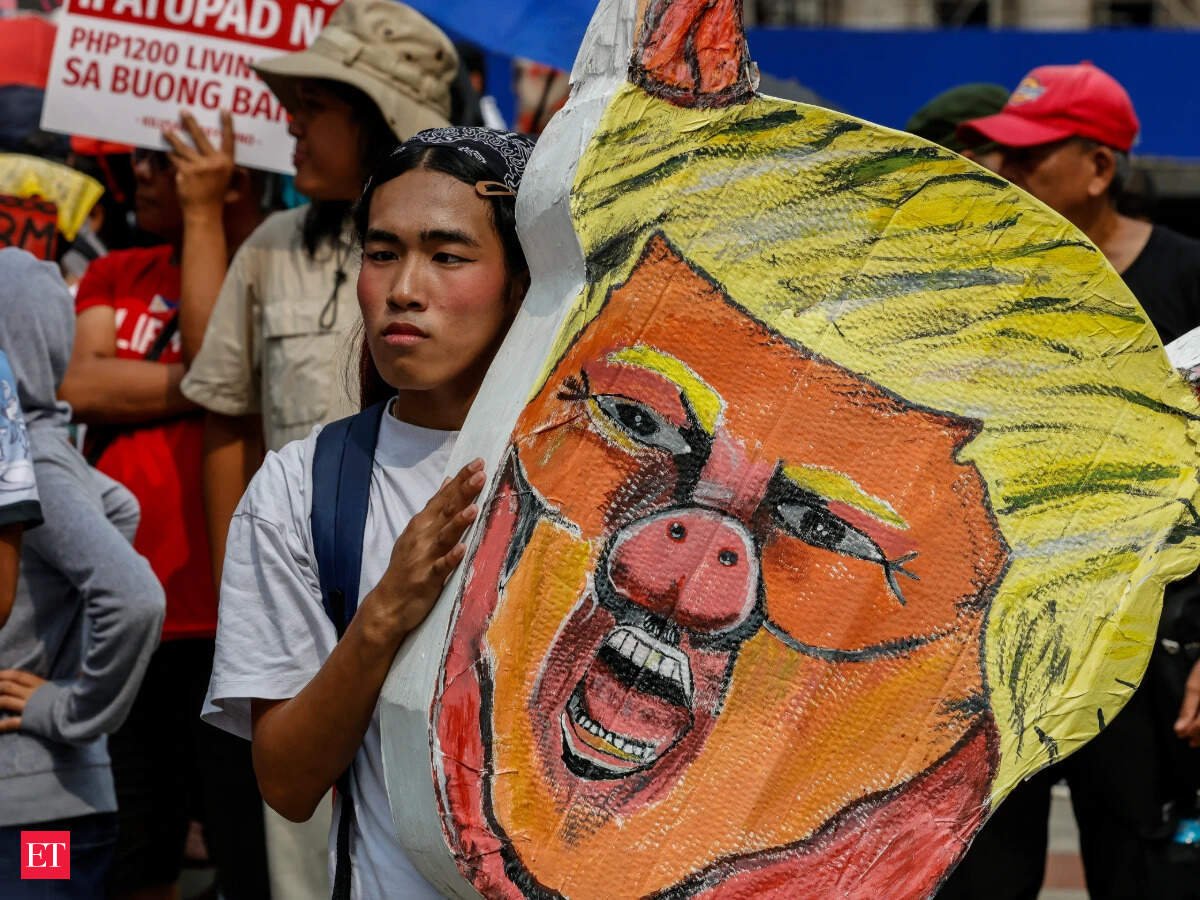
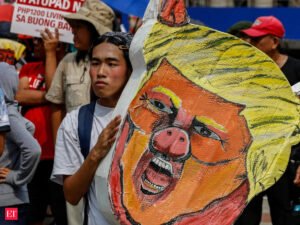
The protesters marched towards the summit venue but were stopped by police, leading to clashes. They included members of the New Patriotic Alliance, a network of activist groups that campaigns for democracy and social justice in the Philippines.
The demonstration was part of a series of protests planned around the summit. Activists have said they want to oppose Trump’s visit and draw attention to wider political and regional issues.
Protest leader Teddy Casino criticised Philippine President Ferdinand Marcos Jr for welcoming foreign leaders while allegedly failing to address the concerns of Filipinos.
Also Read: PM Modi says ASEAN ties at heart of India’s Act East Policy ahead of Philippines visit
“The issues that we are here of course because Donald Trump will be arriving…is our opposition to the war in Iran, because this has caused so much hardship for the Filipino people in terms of rising prices and the economic crisis. Secondly we are against the Pacilica project that will displace thousands of indigenous peoples and result in environmental destruction. To Donald Trump our message is: you are not welcome here,” Casino said, according to Reuters.
Trump is expected to arrive in Manila on Tuesday to attend the Asean-US Special Summit.
Trump’s expected visit comes days after Republicans suffered major setbacks in the November 3 US midterm elections. The results have added to the political challenges facing his administration at home.
His visit is also taking place against the backdrop of growing competition between the US and China for influence in the Indo-Pacific region. Asean, which brings together countries across Southeast Asia, is an important part of this regional equation.
The 49th Asean summit brings together leaders from 11 member countries and key dialogue partners, including the US, China, India, Japan and Australia. The grouping represents 693.2 million people and has a combined GDP of around $4.25 trillion, based on 2025 figures.
Food and energy security, regional stability, migrant workers’ welfare and transnational crime are among the key issues on this year’s agenda. The Middle East crisis has added urgency to discussions on energy supplies, with Asean officials saying the region is already feeling its impact.
The South China Sea dispute is another important issue. Asean and China have reached provisional agreement on about 80% of the draft Code of Conduct, but differences remain over the agreement. The negotiations are aimed at establishing rules to manage tensions and avoid confrontations in the disputed waters.
India’s participation is significant as it looks to strengthen its economic and strategic engagement with Southeast Asia under its Act East policy.
Prime Minister Narendra Modi is in the Philippines from November 16 to 18 to attend the 23rd Asean-India Summit and the 21st East Asia Summit. He is also expected to participate in the first Quad summit under the Trump administration, scheduled for November 17.
India’s trade with the Asean region stands at around $122 billion, making the bloc an important economic partner. Discussions during Modi’s visit are expected to cover regional security, critical minerals, technology and resilient supply chains.
The Philippines will hand over Asean’s rotating chairmanship to Singapore at the end of the summit.