


 rahulNovember 9, 20264 Mins read0
The controversy has escalated into a public exchange between Goyal and sections of the medical community. Prominent hepatologist Cyriac Abby Philips, popularly known as TheLiverDoc, has accused the company of making scientifically unsupported claims.
Goyal has pushed back, defending the technology, questioning the credentials and motives of some critics, and insisting that Temple is “a fitness tracker, and wellness device” and that it is “not a medical device”. He says the metrics still await clinical validation.
At the heart of the dispute is whether a wearable attached to the side of the forehead can reliably measure changes in blood circulation inside the brain, and whether the proprietary metrics it generates have been scientifically validated to support the broader health and longevity insights associated with the product.
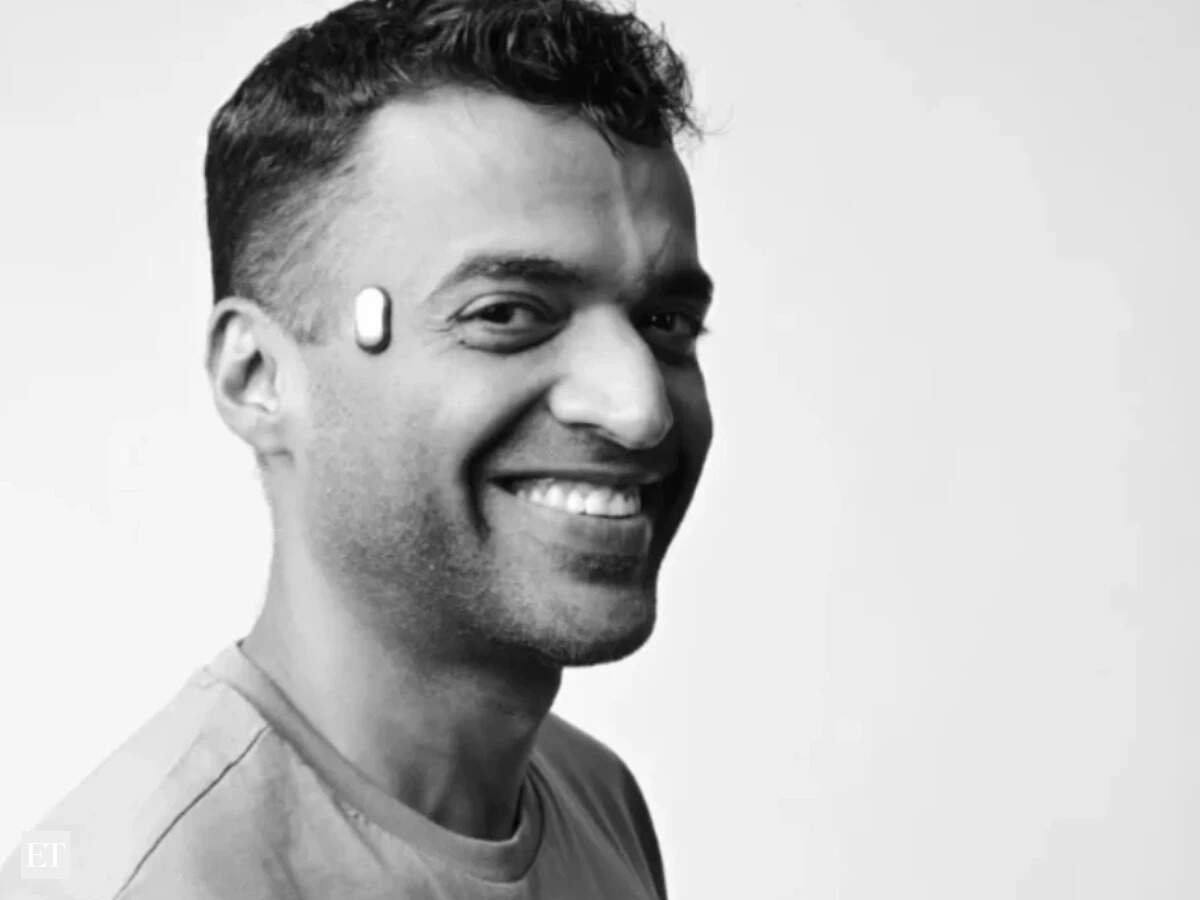
The device, which uses optical sensors and is worn near the temple, opened for pre-orders in India on November 1 at ₹85,000. Deliveries are expected to begin in about three months. Temple is not in general public use yet, with early access limited to a select group of users, including investors and people associated with Goyal. Two company-funded preprints report that Temple’s “BrainFlow” index tracks changes linked to brain circulation under controlled conditions. Neither has been peer-reviewed or independently replicated.
Temple, according to Goyal, is designed to continuously track physiological signals using sensors placed on the forehead. Its two principal proprietary measurements are BrainFlow and Entropy.BrainFlow is intended to track relative changes in blood circulation associated with the brain. Goyal has described the device as capable of monitoring such changes continuously, rather than relying on occasional measurements in clinical settings.
Also read: The Liver Doc takes on Deepinder Goyal again, questions ‘entropy’ claims
Entropy, which Goyal has now identified as the product’s principal focus, is a proprietary score intended to indicate how hard the body is working to sustain itself. The company presents it as a measure of physiological workload, influenced by factors such as sleep, exercise, stress, food, caffeine, and meditation. The score ranges from 1 to 250, with lower readings associated with deeper rest and higher readings with greater physiological exertion.
The central objection is anatomical. Temple uses optical sensing (photoplethysmography) near the superficial temporal artery, which supplies the scalp and face. Doctors, however, say the brain is supplied mainly through the internal carotid and vertebral arteries. According to doctors, scalp circulation can shift with exercise or temperature without reflecting flow inside the brain, and one measurement site may not represent the whole brain.
Hepatologist Dr Cyriac Abby Philips has also called the product a “scam” and accused the company of misleading buyers.
Goyal has answered his critics on X.
On motive and money, he said Temple has spent USD 30 million, including USD 20 million of his own. He argued that a scam would not recover a fraction of that from a few thousand sales. The 14-day no-questions-asked returns policy would expose a non-working product within days, he added. Goyal said he left the Eternal CEO role to pursue Temple. He also said employees invested in an earlier round and that the current round is mostly customers.
On evidence, he says wearable makers typically start with internal studies and publish validation later, citing Whoop. Temple, he said, holds itself to a higher standard, with pre-prints followed by peer-reviewed work. He said buyers can wait for peer review, and that over-claiming would bring regulatory trouble everywhere.
On the science, he says the second pre-print tested BrainFlow against time-domain near-infrared spectroscopy, which can separate brain from scalp blood-volume changes. In head-down tilt, he said, correlation with the brain signal was 0.91 and with the scalp 0.49, so Temple “tracks the brain, much more than the scalp”. On the Doppler study, he noted that when participants lay down, heart rate fell and cerebral blood velocity rose, and BrainFlow followed the Doppler. A heart-rate-only device would have missed this, he said. He has offered to loan devices to qualified researchers to test any Temple metric independently.
On positioning, he said Temple makes no medical claims and is not proven to diagnose or prevent disease. He said it is made for the world, with India expected to account for no more than 1 per cent of sales. He said regulatory clearances will precede any claim needing them. Its main feature, he said, is “Entropy”, with BrainFlow only the original reason for building it. He called Roomdeaf AI an expansion, not a pivot, and promised a note on how BrainFlow is calculated, including its limits.
Goyal has also apologised for grouping Indian doctors together, saying he meant a few individuals.
“In my entire history of building Zomato, Eternal, and now Temple – we have never asked anyone to post anything online, for money or otherwise. I type all my posts myself. Everything you see is pure ‘building in public’,” he said in a post on X.
“A lot of founder friends have asked me so many times to engage with some agency or the other to manage the narrative and infuse supporting posts. I always refuse.”
On pricing, Goyal said if the Rs 85,000 price tag has upset people, he was sorry.
“There’s a lot of work that went into Temple, and we priced it at what we think it’s worth. If you think it’s overpriced, you can wait for user reviews to decide if it’s worth your money.”
He went on to ask people now to support his venture just because it is an Indian startup.
“We want to compete globally. We don’t need/want nationalist support. Support us if you want to support early innovation, which could help you live a better life, and will continue to add more proof to its science over the years.”