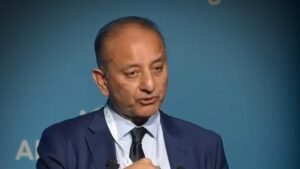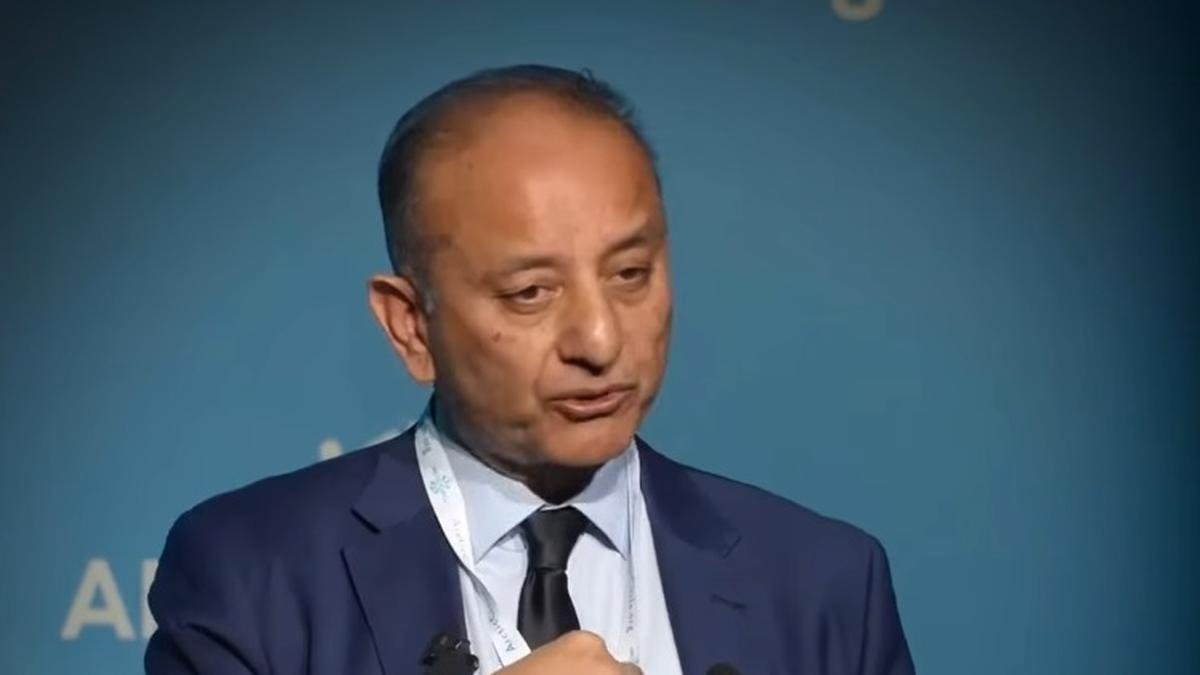




The first Pakistani Minister to visit India in more than three years, Musadik Masood Malik, has been a vocal critic of New Delhi’s decision to place the Indus Waters Treaty “in abeyance” following the April 2025 Pahalgam terrorist attack.
Dr. Malik is Pakistan’s Federal Minister for Climate Change and Environmental Coordination and will represent his country at the Shanghai Cooperation Organization (SCO) Civilisational Dialogue to be held here from November 20 to 22, Islamabad announced on Saturday.
The last Pakistani Minister to visit India was Bilawal Bhutto who had visited Goa in May 2023 for the SCO Foreign Ministers meeting.
Battling for control of the Indus
The Hindu had reported on October 28 that the Indian government had invited Pakistan’s Minister for National Heritage and Culture Aurungzeb Khan Khichi to attend the SCO Civilisational Dialogue event, the first such Ministerial-level invitation since 2023. However, the Pakistani government has nominated a different representative.
“The Government of Pakistan remains committed to promoting dialogue among civilisations and fostering people to people contacts within the SCO framework in a spirit of mutual respect,” the Pakistan government said in a statement on Saturday.
India and Pakistan engaged in military hostilities after the terror attack in Pahalgam, following which India placed the 1960 Indus Waters Treaty (IWT) “in abeyance”. Mr. Malik, a technocrat turned Minister, said in a press conference in June this year that Pakistan would “cut off those hands” that are attempting to control the Indus waters.
Asserting its claim on the Indus, Pakistan has been highlighting the Indus Valley civilisation of Mohenjodaro and Harappa and other ancient sites in the country in recent months. On World Heritage Day on April 18, Pakistan Prime Minister Shehbaz Sharif had referred to the Indus Valley civilisation in his remarks, saying, “Pakistan’s cultural heritage is enriched with a multifaceted civilisation. Our homeland carries the legacy of some of the world’s oldest civilisations, reflecting a vibrant tapestry of human creativity and diversity.”
‘Shared civilisational past’
On Friday (November 13, 2026), Union Culture Minister Gajendra Singh Shekhawat said India and Pakistan have a shared “civilisational and cultural” past, adding that New Delhi hopes that Pakistan will attend the upcoming SCO Civilisational Dialogue. China, Kazakhstan, Iran, Tajikistan, and Uzbekistan are among the countries that have already confirmed their participation.
“I believe that Pakistan’s civilisational and cultural progress is no different from ours,” Mr. Shekhawat said, in response to a question about the invitation, given the tensions with Pakistan. “They [Pakistan] separated from us less than 100 years ago, but prior to that, we [India and Pakistan] have evolved together. So we should not have any differences over these issues,” he added.
Mr. Shekhawat said that the purpose of the SCO Civilisational Dialogue, first proposed by Prime Minister Narendra Modi, was to see how the SCO could “go a step beyond geopolitical, strategic and bilateral relations and strengthen our cultural ties so that in the future we can have better relations and communications between the people of our countries.”
Soon after Mr. Shekhawat’s comments, however, the Ministry of External Affairs said that India would follow “national policy” regarding Pakistan in view of the Pahalgam terror attacks, indicating that it may not grant Punjab Chief Minister Bhagwant Singh Mann clearance to attend an international Punjabi cultural conference in Lahore at the end of the month.
Published – November 14, 2026 06:10 pm IST