




COP31, being held in the Turkish city of Antalya, began on November 9 and ends on November 20.
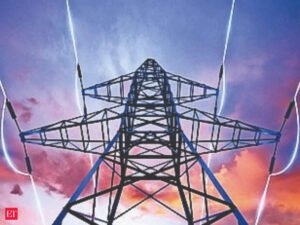
Nearly 100% of Indian households are connected to the grid but electricity as a share of final energy consumption accounts for approximately 19%, and it goes up to 23%, when commercial energy use is included. According to the International Energy Agency (IEA), India’s share of electricity in final energy consumption is expected to expand significantly to 32% by 2035 with transport electrification playing a major role. IEA experts say that this increase can be achieved using existing technologies.
India’s share of energy consumed as electricity is shy of the global average of 23%. However, given the growth in India’s electricity demand, expected to grow annually at 5-6% and its domestic policy targets, the country could still join the electrification pledge. India’s reluctance to join can be ascribed to its unwillingness to sign on to any commitment outside the negotiations. Observers say that India is also concerned that it could lead to taking on new targets and commitments. There are concerns that the target might specify clean energy. On this front, India faces some real constraints despite its growing renewable energy capacity.
“If India doesn’t sign, it won’t be because it opposes electrification,” said Neshwin Rodrigues, senior energy analyst, Asia, at Ember, an energy think tank. “Higher electrification is already under way, and India’s own draft electricity policy expects electricity’s share of total energy use to double by 2047.”
Beyond the reluctance to sign, India does have some serious challenges when it comes to increasing the share of electricity in final consumption. Grid infrastructure bottlenecks, high upfront costs, and technical limits with regard to heavy industry are largely the reasons for the lag, even though India has achieved near-universal household connections and has progressive policies in place.
Electrification that is dependent on clean renewable energy requires investment in grids and storage.