Why Apple has raised Mac, iPad and HomePod prices in India | Technology News


Earlier this month, Apple’s outgoing CEO Tim Cook warned that price increases were “unavoidable” because of an “unsustainable” rise in memory chip costs. A week later, the company raised prices for several Macs and iPads, while leaving iPhone prices unchanged.
Ahead of the change in prices, Apple took down its online store as it usually does when announcing new products. However, when the store came back online, prices of Macs rose by about 14 per cent to 26 per cent, while iPad prices increased by around 39 per cent to 40 per cent. The price rise was also reflected on the Apple Online Store in India. The price revision hasn’t impacted Apple’s lineup of iPhones.

According to analysts, the decision marks one of the clearest examples yet of AI infrastructure costs spilling over into consumer device prices. “The AI-driven memory shortage is now showing up in consumer prices at a scale we haven’t seen before. Apple is not immune to rising memory costs,” said Francisco Jeronimo, vice president, client devices, IDC.
“The fact that Apple left iPhone prices unchanged suggests where its priorities lie. Since the iPhone generates more than half of the company’s revenue, Apple appears focused on protecting iPhone demand while assessing pricing for its next-generation lineup.”
Apple products get dearer in India
The latest price revision by Apple has also impacted its line of devices being sold in India. There has been a significant increase across several Mac, iPad, and HomePod models. Compared with their original launch prices, several Apple products are now between roughly 14 per cent and 46 per cent more expensive.
When it comes to price hikes, the HomePod Mini, which was priced at Rs 10,900, saw the steepest increase of 46 per cent and is now sold at Rs 15,900, a jump of Rs 5,000. The HomePod rose from Rs 32,900 to Rs 44,900. When it came to tablet devices, the 11-inch iPad Air reported a 30.82 per cent increase, with its price soaring from Rs 64,000 to Rs 84,900. The 11-inch iPad Pro rose from Rs 99,900 to Rs 1,19,900.
| Product | Old Price (₹) | New Price (₹) | Increase (₹) | % Increase |
| MacBook Air (512GB) | 119,900 | 149,900 | 30,000 | 25% |
| MacBook Neo | 69,900 | 79,900 | 10,000 | 14% |
| HomePod | 32,900 | 44,900 | 12,000 | 36% |
| HomePod mini | 10,900 | 15,900 | 5,000 | 46% |
| iPad Air 11-inch (M4) | 64,900 | 89,900 | 25,000 | 39% |
| iPad Pro 11-inch | 99,900 | 139,900 | 40,000 | 40% |
| MacBook Pro | 189,900 | 239,900 | 50,000 | 26% |
*Prices shown are for the base variants of each device.
Meanwhile, in the Mac lineup, the base model MacBook Pro saw its price increase by Rs 50,000, from Rs 1,89,900 to Rs 2,39,900. The MacBook Air (512GB model) increased by Rs 18,000, while the recent addition, the MacBook Neo, which was launched at Rs 69,900 climbed to Rs 79,900. The MacBook Neo, which was Apple’s entry into the affordable category of computing devices, saw the smallest percentage increase in the lineup at 14 per cent.
Story continues below this ad
“The MacBook Neo price increase is particularly notable. It’s one of Apple’s fastest-selling laptops, so raising its price indicates Apple believes demand will remain strong despite the higher cost,” said Jeronimo.
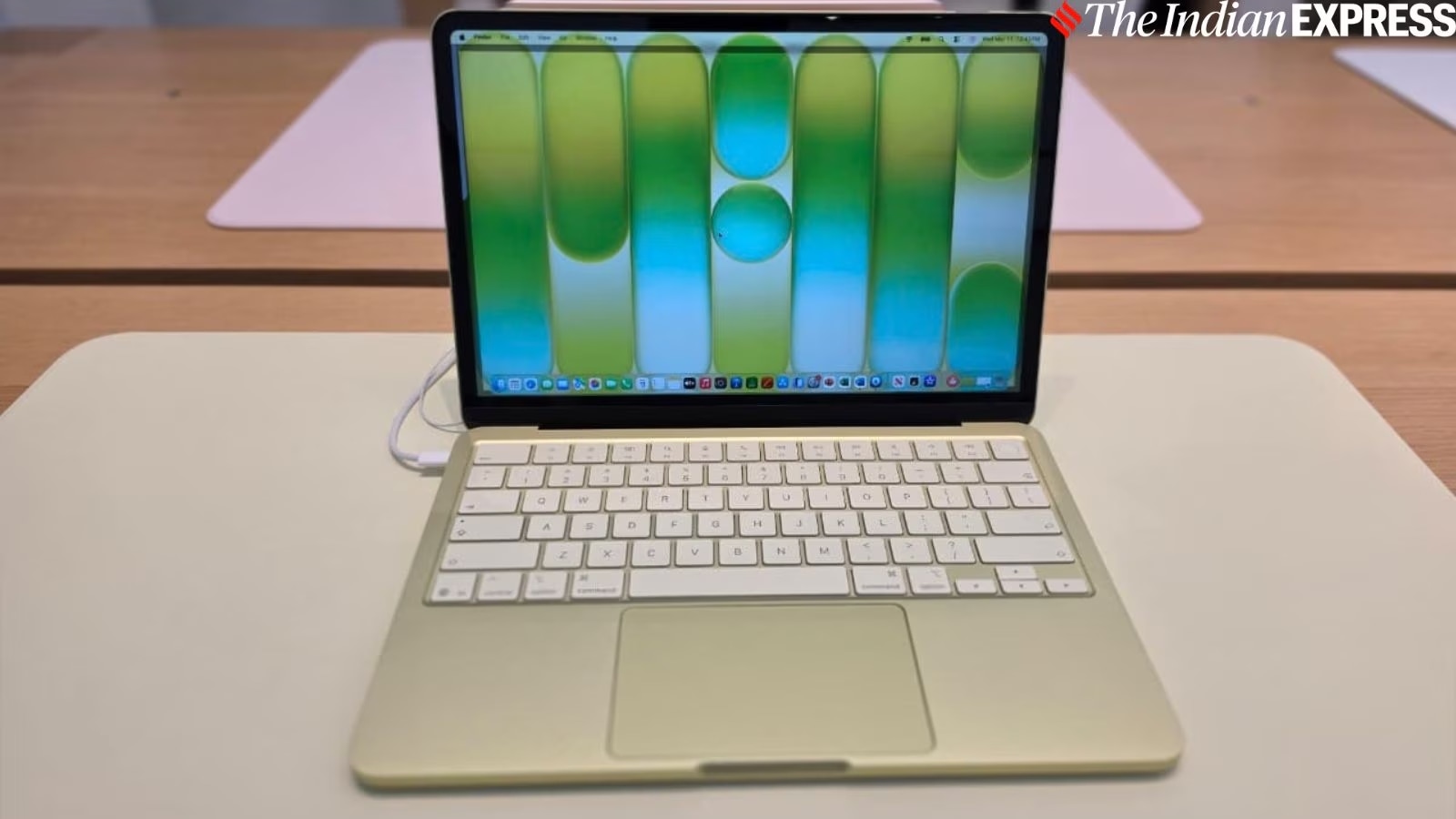 Macbook Neo. (Image: Anuj Bhatia/The Indian Express)
Apple likely less affected than peers
Overall, the revision reflects substantial price increases across Apple’s product lineup, with the HomePod and HomePod mini seeing the sharpest percentage hikes. Mac prices have risen by roughly 14 to 26 per cent, while iPads have become around 39 to 40 per cent more expensive.
“Even with these increases, Apple is likely to be less affected than many competitors. Its customer base is more premium, less price-sensitive, and many buyers upgrade through trade-in and instalment programmes, reducing the impact of higher sticker prices,” said the IDC executive.
The ongoing price hike is driven by a shortage of memory chips such as DRAM and NAND flash that are used in smartphones, laptops, tablets, etc. The crisis is also an outcome of AI companies buying huge volumes of advanced memory for data centres to train and run AI models, pushing memory suppliers to give priority to high-margin orders. This in turn has reduced supply for consumer electronics, further pushing memory prices higher.
Story continues below this ad
With component costs rising, device makers seem to be increasingly passing them onto consumers instead of absorbing them. Apple says it can no longer absorb the higher cost of memory components, leading it to raise prices on Macs, iPads and other affected products while leaving iPhone prices unchanged for now.
Apple is not the only company to have increased prices due to the memory crunch. Companies like Dell Technologies, HP, and Lenovo have cautioned that the higher memory costs may affect PC pricing and margins. Apple is among the first major consumer electronics companies to announce a broad retail price hike publicly that is linked to the AI-driven memory shortage.