

 rahulNovember 11, 20262 Mins read2
The federal government’s inflation barometer revealed that heightened prices aren’t going away.
Released Tuesday, the U.S. Bureau of Labor Statistics’ (BLS) Consumer Price Index (CPI) revealed another rise of 0.4 percent in October after a 0.6 percent increase the month prior. While the rate of inflation slowed from a gallop to a canter, Spooky Season still yielded higher growth than the 0.3 percent Dow Jones economists projected.
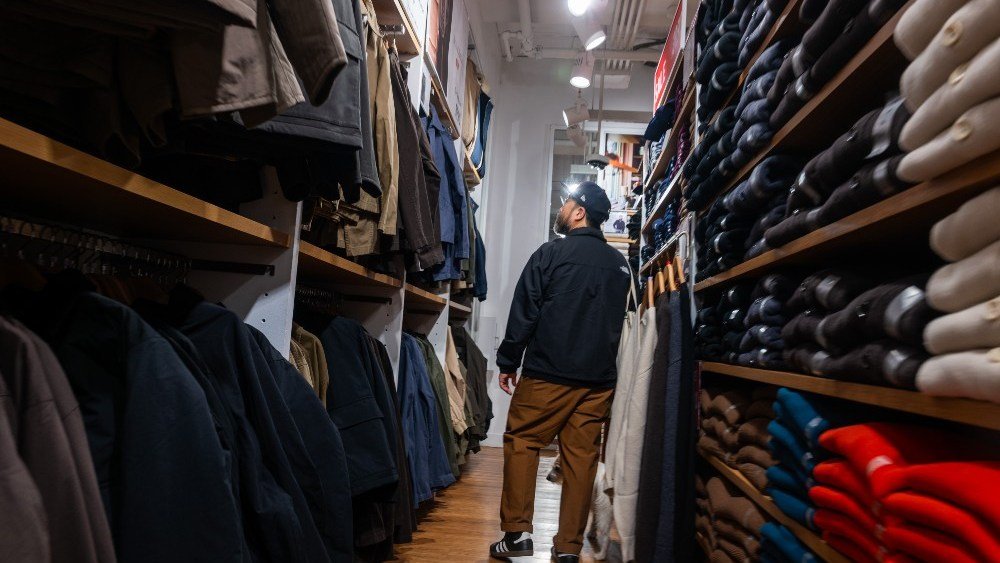
The index for all products aside from food and energy grew 0.3 percent last month, mirroring the results seen in September and August. Apparel in particular saw growth of 0.1 percent, a small contraction from the 0.3 percent increase seen in September, with varied results across categories.
Men’s suits, sport coats and outerwear saw 1.8 basis points of price contraction after growing a near-equal amount in September, while the same products for women fell by 2.6 percent. Boys’ apparel prices fell 1.1 percent, along with women and girls’ apparel (0.6 percent) and women’s apparel (0.8 percent).
There was price expansion in other areas. Men’s underwear, nightwear, swimwear and accessories saw 1.5 percent growth, while men’s pants and shorts trended upward by 1.8 percent. Women’s dresses saw the biggest jump in price at 3.7 percent, bucking the deflationary trend for other women’s apparel items.
Footwear prices saw an average 1 percent expansion, with men’s footwear up 1 percent, women’s shoes up 0.9 percent and children’s footwear for boys and girls up 1.2 percent.
Price expansion across fashion categories was, overall, modest on a month-over-month basis. However, BLS did not collect survey data for October 2025 because of a lapse in appropriations that caused a government shutdown, so year-over-year data isn’t available.
In looking at September 2025 apparel index data, the closest year-ago metric, apparel prices increased by 2.4 basis points, suggesting that the larger fluctuations in pricing from tariff shocks and supply chain snarls may have stabilized, somewhat, in 2026. That doesn’t mean the headwinds caused by those factors has abated, just that brands and retailers may be choosing not to up prices significantly ahead of the biggest shopping season of the year.
The cost of other necessities could impact how much shoppers spend on fashion this holiday, too.
October’s energy index rose again by 0.7 percent after growing 5.2 percent in September—news no consumer wants to hear. The gasoline index increased 1 percent month over month, while electricity saw 0.9 percent over the month.
Food costs, too, accelerated, growing 0.5 percent in October with snacks, beef, poultry, fish and eggs among the goods in expansion territory. Meanwhile, shelter costs were 0.3 percent higher than the previous month, which the BLS credited with more than 30 percent of the headline CPI increase.
The development will send a critical signal to the Federal Reserve as it contemplates raising interest in December—a possibility that Fed Governor Christopher Waller floated Tuesday before the report’s release.
“Let’s just say it. September’s inflation data were bad. There was no silver lining,” he said at the Bank of England Watchers Conference in London. If, he added, “October CPI inflation data out later today are similar to the past two monthly readings—with core CPI inflation around 0.3 percent or even higher—then a stronger policy move may be needed. In that case, I believe a 50 basis point hike in the policy rate should be considered at the December meeting.”
His prediction proved prescient. As such, CME Group’s FedWatch tool projected that an interest rate hike coming out of the Fed’s next meeting on Dec. 8-9 is a near certainty.
The group put the possibility of a 0.25 percent rate hike at a probability of 88-91 percent, a 0.5 percent “big step” hike at 11.5-14 percent. Holding or freezing in the face of elevated—and growing—inflation? Zero percent probability, CME projected.