



The Rohingya are a distinct genetic group with genomic ancestry closer to Bangladeshis but considerable genetic mixture from the Burmese lineage. While this isn’t surprising from a linguistic-cultural perspective, it is the first such comprehensive study from a genomic analysis perspective.

“Burmese” here is a stand-in for East and Southeast Asian ancestry in general. The study underlines what is now a basic principle of human population genetics that all ethnic populations are a result of intermingling of multiple population groups through history.
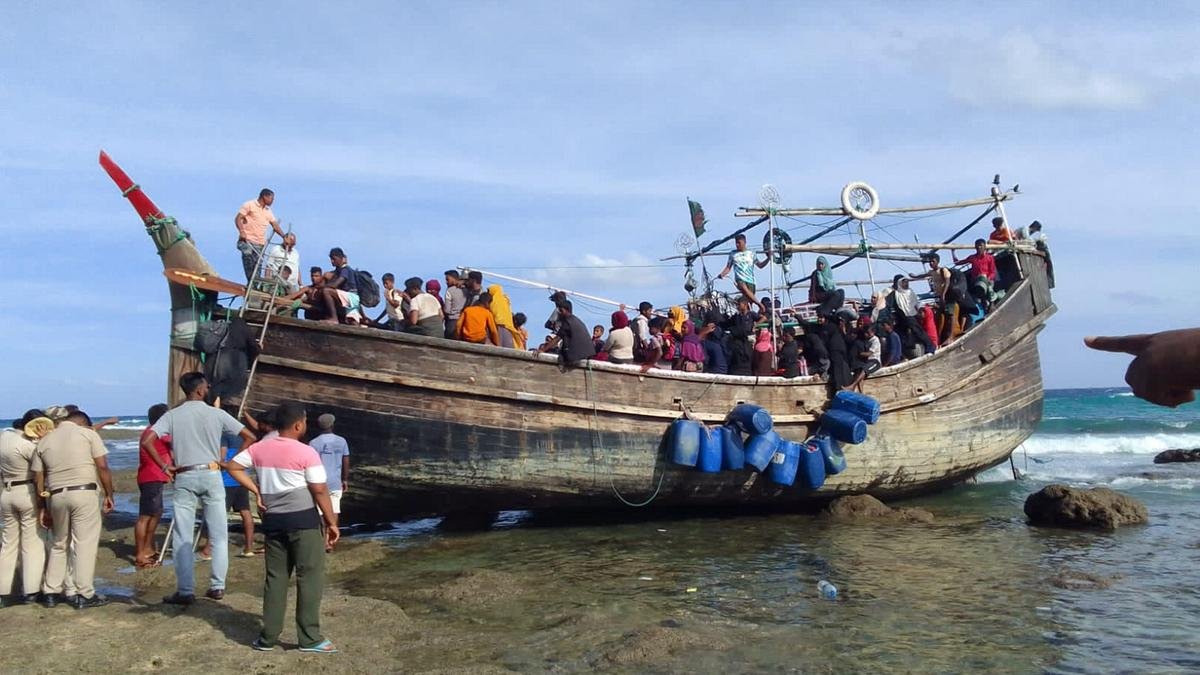
The analysis comes on the heels of a Thursday (November 19) verdict by the International Court of Justice. In a 9-6 ruling, the court held that Myanmar had committed genocide against the Muslim minority Rohingya in the north Rakhine State. This was the verdict on a 2019 case brought to the court by The Gambia in which it accused the Myanmar government of trying to destroy the Rohingya.
The Burmese state has tried to portray the Rohingya as “outsiders” from Bangladesh to justify atrocities against them.
The genetics study, which appeared on November 17 in the peer-reviewed journal Scientific Reports, does not say anything about citizenship, but notes: “This study addresses a critical void in the evolutionary history of a deeply marginalised group and unequivocally reinforces that modern human populations are intricate mosaics of diverse ancestral lineages,fundamentally shaped by historical migrations and gene flow that transcend contemporary political boundaries.”

Mosaics of diverse lineages
The main authors of the study are affiliated with a range of institutions including the Banaras Hindu University (BHU), Varanasi; BRIC-Centre for DNA Fingerprinting and Diagnostics (CDFD), Hyderabad; the University of Dhaka, Bangladesh; University of Calcutta; and Amity University, Uttar Pradesh.
“Our analyses reveal a complex genomic architecture that closely mirrors their linguistic affiliations. The Rohingya exhibit a foundational genetic affinity with eastern South Asian Indo-European speaking populations, predominantly aligning with present-day Bangladeshi communities,” the authors report.
The Rohingya migrated into the Arakan region within the last millennium and, following this, the ancestral Rohingya mixed with those with Southeast Asian ancestry from local Myanmar-related populations, they underline.
For their analysis, the researchers took blood samples from 25 Rohingya volunteers at the Cox’s Bazar refugee camp in Bangladesh, with informed consent and ethics approval from the University of Dhaka. For comparison they sampled 45 neighbours: 27 Bangladeshi Muslims, nine Bangladeshi Hindus, and nine people from the Bawm tribal community. They then merged these results with published data from around the world, for a final dataset of 2,217 people. Each person’s DNA was read at about 370,000 key places along the genome, where nucleotide letters commonly differ between people.
Published – November 19, 2026 09:39 pm IST