


 rahulNovember 5, 20268 Mins read0

In a stunning and swift repudiation of the federal government’s agenda on the economy and trade over the past 22 months, Tuesday’s midterm voters co-signed a Democratic stampede into the halls of Congress in January.
The “blue wave” projected by pundits was recharacterized by evening as a “blue tsunami.” By the wee morning hours on Wednesday, it was confirmed that Democrats had overtaken both the House of Representatives and the Senate, flipping seats in districts and states that bewildered even the so-called “map daddies” of cable news.
North and South Carolina. Kansas. Georgia. Texas. Michigan. Ohio. Maine. States with deep red roots reversed course on Tuesday, many in historic fashion. And the change won’t just be visible in Washington; gubernatorial races across the nation ended in major upsets for Republicans, too.
There are plenty of policy issues that played a part in voters’ dissatisfaction with the status quo, from a protracted and highly unpopular war in Iran to a turbulent trade strategy that has alienated some of the country’s closest allies—both of which have had a hand in driving up prices on gas and household necessities.
“I think it was very definitely a referendum on what has been coming out of Washington D.C.: the cost, the chaos and the corruption. I think all of those things combined started to hit people where they felt it,” two-term Democratic Governor of Kansas Laura Kelly told Sourcing Journal.
Like the many battlegrounds that went blue, the Sunflower State—which elected Adam Hamilton as the first Democratic senator since 1932 and Cindy Holscher, another Democrat, to succeed Kelly as governor—has grappled with heightened prices for both producers and consumers.
“Tariffs, I think, were the first thing that really caught people’s attention here in Kansas, because we’re such a huge agricultural state, and our our two largest trading partners are Mexico and Canada,” Kelly said.
“There’s just no way that a farmer can get away from the fact that diesel costs twice as much as it used to, costs for inputs have just skyrocketed, and it’s putting them out of business or putting them deeply, deeply into debt,” she added. “For everybody else who doesn’t live on a farm, they’re still going and filling up their gas tank with gas that costs twice as much, and everyday staples are going through the roof.”
“The kinds of things that the Trump administration has done have hit everybody,” she said.
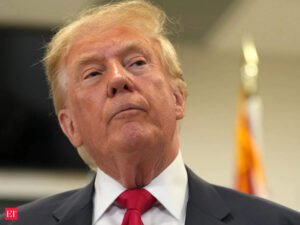
President Donald Trump has repeatedly scoffed at cries from the national electorate about the impact of rising costs.
“He likes the word ‘tariffs’ and hates the word ‘affordability,’ and the American electorate apparently felt the opposite way,” Steve Lamar, president and CEO of the American Apparel and Footwear Association (AAFA) told Sourcing Journal.
According to the Washington, D.C.-based trade organization’s leader, “tariffs were definitely on the ballot” this November. Voters “see these policies that are very much in the news—very much identified with President Trump—and they know that those raise prices.”
Lamar believes this voter reckoning has been a long time coming, and the upcoming holidays have only served to deepen shoppers’ concerns.
“When you look at the Consumer Price Indexes over the past couple of years, you have seen continued inflation. By and large, it’s a story of continual increases,” he said.
The last hotter-than-expected CPI report from September saw prices balloon beyond economists’ expectations as inflation ticked up to 3.7 percent, well above the Federal Reserve’s target rate of 2 percent.
“This is a very different experience than what people saw in the previous 15 to 20 years, where clothing and shoe prices have largely been flat or deflationary—sort of an outlier, or an opposite, of what you might see in the regular economy,” Lamar said. “In the last couple of years, those numbers have broadly been on an increase.”
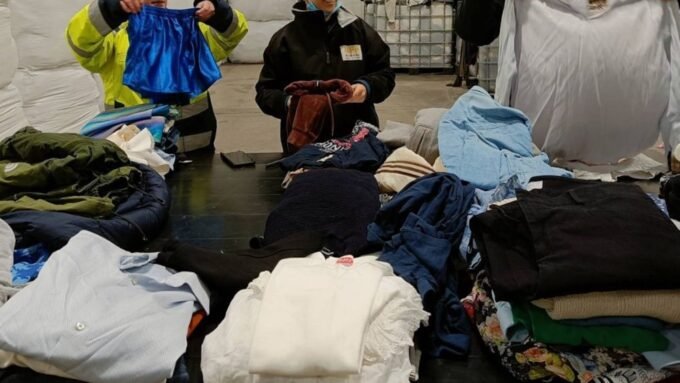
A combination of heightened supply chain costs for transportation, cargo fees and energy, as well as the direct cost of new duties, have contributed to the apparel and footwear sector’s price expansion. “When you have an economy that is so dependent on imported goods, particularly in our sector where 97 percent is imported, you absolutely are going to be raising the price with tariffs,” he said.
The invalidation of the administration’s preeminent tariff strategy in February hasn’t provided relief for consumers; in fact, frustration has been growing as the president and his cabinet double down on duties.
“The courts threw out the [International Emergency Economic Powers Act] tariffs, so there was an opportunity for the importers of record to get refunds—but then the question is: what do companies do with those refunds?” he said. “Many of them had to then turn around and pay the government for Section 122 tariffs or Section 301 tariffs, or hold them in reserve for future Section 301 tariffs.”
According to Lamar, consumers see brands and retailers receiving refunds for duties they paid into, “maybe not appreciating the fact that there’s still new tariffs that are in place.” That “builds the opportunity for frustration” with both industry and government.
So when Tuesday came around, Lamar expressed shock but not surprise that voters opted for such widespread change.
“I think the people have spoken. They sent pretty clear signals on affordability and accountability, and the question is going to be: how well does this new Congress listen?”
In Lamar’s view, a divided government may actually be a pressure cooker for much-needed evolution in Washington. Historically, such a configuration “has produced some of the most significant pieces of legislation that we’ve seen” in the modern era, “and one of the reasons for that is, if you want to get something done, you have to reach across the aisle; you have to compromise.”
For example, Democratic President Bill Clinton signed the African Growth and Opportunity Act (AGOA) into law in May of 2000 with an all-red legislative branch in power. Negotiations were fraught with tension, with Republicans at the time favoring free trade and Democrats questioning how the preference program would impact workers at home and abroad.
But, legislators worked together to polish the stone. AGOA eventually engendered bipartisan support, and has remained in place for 26 years (with the exception of a brief lapse last year). “Trade policy functions best when it is durable,” Lamar said.
Democrats will need to adopt a sleeves-rolled-up, hands-dirty mentality if they want to succeed in collaborating on productive trade policy that can stand the test of time—and if they want to maintain the foothold they’ve gained.
“The electorate was able to connect the dots between Trump tariffs and higher prices and economic conditions that they did not like. They will also connect the dots between a Congress that doesn’t get anything done and continued high prices,” Lamar said.
While the results of the midterms were nothing short of “remarkable,” Trump’s tariff regime isn’t likely to come crashing down anytime soon, according to Josh Teitelbaum, senior counsel at Akin Gump Strauss Hauer & Feld.
“Unfortunately, it means little concrete change because the president will continue to lead on trade policy,” he said. “Congress has delegated significant enforcement and negotiation authority to the president, and this president in particular has taken that authority and run with it.”
That’s not to say that Congress doesn’t plan to move forward with efforts to repeal and reform existing tariff authorities, though. “Democrats now have the votes to pass that legislation. It’s not drafted yet; it’s still very much in the early stages of development,” he said. But when they do bring these bills to the floors of the House and the Senate, “they will put Republicans in the awkward position of having to defend what a midterm election has now revealed to be a very unpopular policy,” he said.
For example, in September, Senate Democrats introduced the End Trump’s Tariff Tax Act, which would invalidate the forced labor tariffs imposed under Section 301 of the Trade Act of 1974 and repeal the 50 percent duties imposed on Canadian goods under Section 338 of the Trade Act of 1930, “which were incredibly unpopular in key midterm swing states like Michigan and Maine,” Teitelbaum said.
While it would have been near impossible for such an initiative to gain traction had the makeup of Congress remained the same, the trade lawyer believes similar efforts are likely to accelerate in 2027, when Democrats control both chambers of Congress.
“The expectation is that the president will veto any of these bills if Congress manages to pass them and send them to his desk, so the question is whether or not there are enough Republicans to overcome his veto if he does that,” he said. “For Democrats, it’s kind of a win-win situation; either they can achieve their goal, or they can make congressional Republicans look bad in the process and tie them further to an unpopular president’s unpopular policy.”
Asked whether the voter referendum on tariffs could prompt the president to take his foot off the gas when it comes to new duties, Teitelbaum said it’s unlikely.
“He has a personal commitment to imposing tariffs, and they are central to his administration’s plan to change the world trading order,” he explained. In recent weeks and months, the impact of tariffs on prices at retail has been somewhat obscured by the rising price of gas, housing and healthcare. In the administration’s view, “Those are the bigger pieces of the affordability problem that Americans are facing, rather than the incremental price increases that tariffs may be having,” Teitelbaum said.
Even if they can’t immediately achieve wholesale policy reversal, fighting against tariffs in the near-term could have longer-term benefits for Democrats.
“It shapes the 2028 primary debate,” Teitelbaum said. “Some of the nominees [for president] will be coming from the Senate or the House, and their positions on these votes will help inform the various policy planks of the two parties.”
“If the expectation is that trade policy will continue to be led by the president, it will be up to whoever steps foot into the Oval Office on Jan. 21, 2029 to have a plan on what to do with the thicket of tariffs that the president has implemented in the second term,” he added.
Kim Glas, president and CEO of the National Council of Textile Organizations (NCTO), said the group was still analyzing the midterm election results in key textile-producing counties. But a trend became apparent even during the early hours of vote-tallying on Tuesday: “They swung pretty wildly from the presidential election,” she said. “Across the board, Democrats significantly outperformed their 2024 election results. By every measure, last night was stunning.”
South Carolina saw the election of Annie Andrews, the first Democratic, female Senator in the state’s history. She took Greenville County, once known as the “Textile Capital of the World,” which is currently home to operations for Milliken & Co.
“You can kind of see the paradigm in North Carolina also,” she added. Parkdale Mills, Hanesbrands, Inman Mills, Signet Mills, Unifi Manufacturing and others have played longstanding roles in the local economy. “In Gaston County, Democrats improved by 25 points over 2024. In Yadkin County, Democrats improved by 21 points over 2024. There are some counties that stayed red, but are less significantly less red,” Glas said.
Rural counties in Appalachia, too, like Rabun County, Georgia, also saw the effects of the blue wave, even if they didn’t flip completely. “Democrats improved 15 points over 2024, and that’s a very rural and conservative county,” she added.
“There’s a lot of distress facing these communities,” Glas said, referencing counties across the country’s production and agricultural strongholds. “There’s been economic harm; workers are struggling. We’ve lost 44 textile plants [over the past three years], which for some of these communities is the tax base, the employment center.”
“You have many automated, sophisticated textile operations with half the lights out in their factories and their workers concerned about their jobs. They’re making next generation product, but they can’t compete in this environment,” she added.
Energy prices have gone up, a result of the Middle East conflicts that impacts factory operations. Affordability concerns loom large, and while inflation hasn’t hit textiles, it’s drastically raised prices on food and other necessities. “I think among the workforce, that creates uncertainty,” she said. “Consumers spend less on other things, so you’re seeing depressed buying generally because people are concerned about their economic future.”
In Glas’ estimation, the answer isn’t a total rejection of Trump’s trade policy or the tariffs, which she believes can be useful in curbing unfair or predatory trade practices perpetuated by offshore producers. Rather, she said, “I think that Democrats and Republicans need to work together to make sure that the trade policy is actually achieving results.”
“There’s an overwhelming sentiment that Washington needs to help fix what [American producers] are now facing,” she added. “I don’t think this is a referendum that we want more division for the next two years and nothing gets done. There’s a lot of insecurity out there about paychecks and the economy, and people want certainty.”