Kamal Haasan hails government’s willingness to engage amid student protests: ‘Moment bigger than paper leaks’
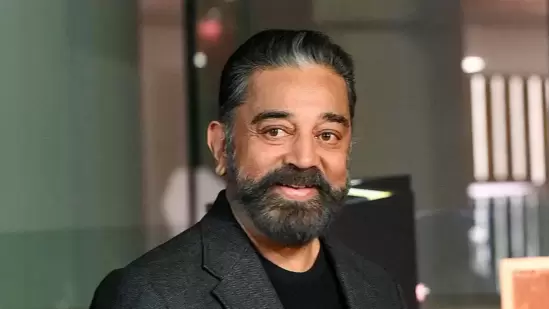

As the NEET paper leak stir continues to spark nationwide protests, Tamil superstar and Rajya Sabha MP Kamal Haasan has welcomed the government’s willingness to engage in dialogue. The actor-politician said replacing confrontation with conversation is a step in the right direction, adding that the development is proof of democracy at work.
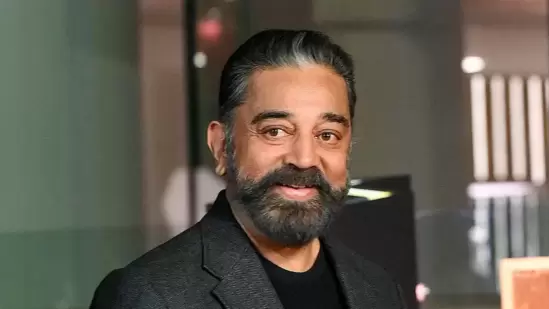
Now, he is hoping that it will translate into meaningful reforms in the country’s education system.
Kamal Haasan opines
On Saturday, Kamal took to X, formerly known as Twitter, to welcome the government’s willingness to engage in dialogue amid the Cockroach Janata Party (CJP) led students’ protest. He also urged people to ensure the conversations lead to meaningful and lasting reforms in the education system.
The actor also stressed that accountability cannot be selective, saying that while pellet guns and lathi-charges have no place in a society, attacks on security personnel and damage to public property must also be scrutinised with the same fairness. “Glad to see dialogue replacing confrontation. Dissent deserves dialogue. This is democracy in action,” he began.
Kamal continued, “Pellet guns, electric shock batons and nail-studded lathis have no place in the land of Bapu. Equally, attacks on security personnel and public property must be examined fairly. Accountability cannot be selective.”
The Tamil actor and Rajya Sabha MP from Tamil Nadu believes the moment is about far more than exam paper leaks, calling it an opportunity to push for sweeping reforms in the country’s education system.
He asserted, “This moment and opportunity is bigger than paper leaks. I urge a National Commission on Education and Examination Reform, with a three-month roadmap to restore trust in examinations, reduce academic stress and modernise education, one that also hears Tamil Nadu’s voice, where young Anitha’s death first showed the human cost of a single high-stakes test.”
“The Government’s willingness to engage is welcome. Now let us ensure that dialogue leads to lasting reform. The road ahead is long, but Indians must walk it together,” Kamal wrote while wrapping up his tweet with hashtags: #DoBetterIndia and #TogetherForChange.
His tweet comes a few days after he voiced his support for the protesting students. At that time, the actor-politician tweeted, “We should have listened when one child cried. Instead, we waited until far too many of our children died. A system where coaching replaces learning, anxiety replaces curiosity, and criminality replaces merit is rotten. A nation has failed when its children are met with barricades and batons instead of answers.”
More about the protest
For nearly a month, students have been protesting at Delhi’s Jantar Mantar under the banner of the Cockroach Janta Party (CJP), demanding the resignation of Union Education Minister Dharmendra Pradhan over the alleged NEET paper leak and other examination irregularities. Activist Sonam Wangchuk joined the movement, with him and several students undertaking a hunger strike to press for their demands. Alongside seeking accountability, the protesters are also calling for sweeping reforms to India’s education system.
On July 20, CJP called for a march from Jantar Mantar to the Parliament, attracting a huge response, with thousands descending on the designated protest site. It was met with several challenges. This included lathi charge and use of tear gas shells by security forces to disperse the crowd marching towards the Parliament.
Meanwhile, educator and activist Sonam Wangchuk, who had been on a hunger strike in solidarity with students for over 20 days, ended his fast on Thursday night on his 26th day strike. Prime Minister Narendra Modi also issued a statement saying the accused in NEET leak have been arrested and the government is setting up fast-track courts to expedite the case.
Despite Sonam Wangchuk ending his indefinite fast, the atmosphere at Jantar Mantar remained charged. The protest site continued to draw large crowds, with people waiting between 50 and 100 minutes in a serpentine queue stretching up to Janpath Metro station on Tolstoy Marg.