
Is it a good idea to get close to our neighbours?

I was at work when my phone started flashing in the corner of my eye. My neighbour. I turned it around so the screen faced the desk, but when I peeked again a few minutes later, it was still flashing with her name. What does she want now? I texted my wife, not for the first time, who replied something to the effect of, Don’t ask. When I got home, I discovered that she’d come over to discuss the emergency in person: five blades of grass from our garden were touching the outer edges of her conservatory. Not always, just when the wind blew. “They could stain,” she said.
I’ve had my fair share of difficult neighbours over the years—not hard, when you’ve lived in upwards of 20 properties; I’m sure I’ve been no angel, either. There was the guy who used to leave his TV on full blast playing action movies while he went on holiday; the students who started a Pearl Jam tribute band and practised in the garden all night and day; and, once—and this is true—a neighbour who tried to set fire to the flat next door. In big cities, where there are so many people living on top of one another, stacked into apartments like sardines, it’s hard not to become intimately acquainted with the strangers around you. But at a time in which we’re becoming more isolated, less friendly, and spending less face-to-face time with those around us, how much should we be getting to know each other, really?
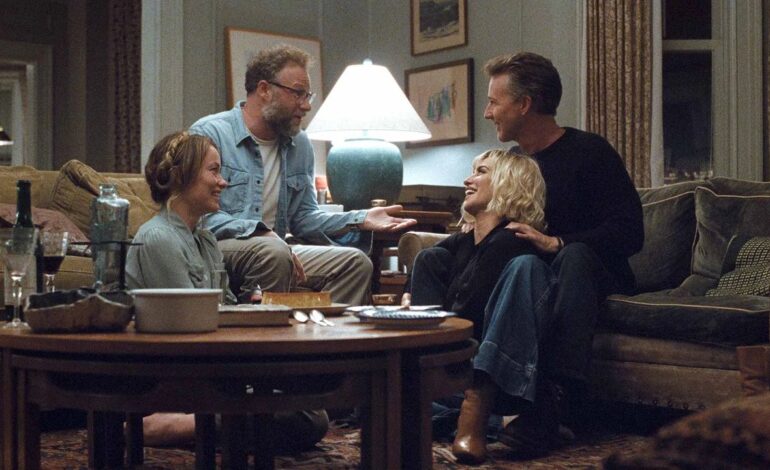
It’s a question that’s been percolating around my brain a lot recently. Partly because I watched The Invite—Olivia Wilde’s excellent comedy drama about a couple inviting the couple upstairs over for meat and cheese. And partly because, similarly to The Invite, my wife and I recently bought a flat and have been pondering if, when and how we should invite the couple upstairs over for meat and cheese. Because on the one hand, it feels important and community-minded—and fun, if you get on with each other—to get to know the people around you. But on the other, you might end up having to block your neighbour’s phone number because she won’t stop ringing you at work to complain about individual blades of grass.
Everyone seems to have a different opinion. When I ask British Vogue’s film and culture editor Radhika Seth how much we should get to know our neighbours, she says “not at all. I’m from London. You should wait until your neighbours leave before you leave the house so you never bump into them”. Another friend of mine agrees, pointing out that becoming too close to our neighbours, particularly if you share the freehold, can make things “awkward”. “What if you want to settle an issue, but you can’t because you’re too friendly?” she asks. It’s a fair point: in The Invite, Wilde’s Angela blanches at the idea of her husband, Joe (Seth Rogen), complaining about their neighbours’ insanely loud sex.
But there are good things to be found in getting close to our neighbours, too. Mainly, they can look after your pets when you’re on holiday (we have a tree frog that requires live crickets to be fed into his mouth via chopsticks, so it’s important to find someone who’s up for that). They can sign for your parcels and lend you things when yours are broken—and vice versa. For a lot of people, positive neighbourly interactions can improve mental health. One recent study found that simple acts of kindness towards neighbours can reduce loneliness and support general wellbeing. In my former neighbourhood, one retired woman would throw garden parties in the summertime and invite everyone on the street. I remember thinking that was lovely, even though it could never be me.