


 rahulNovember 28, 20263 Mins read1
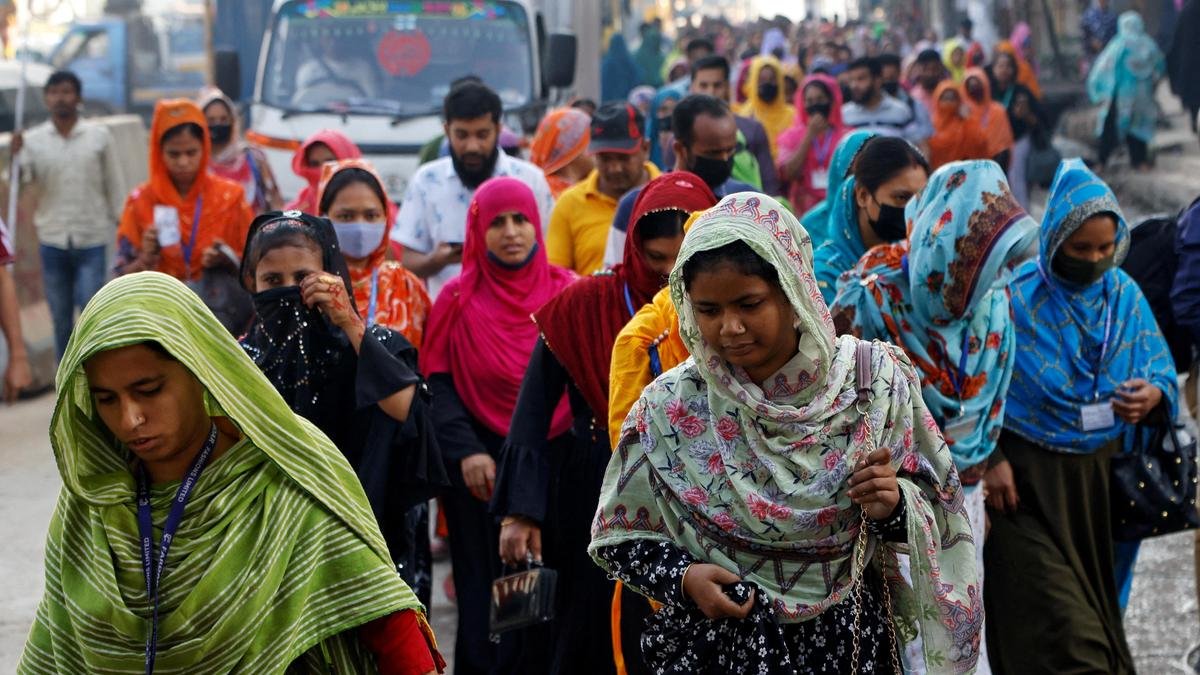
Global fashion retailers including Zara and H&M shifted nearly a tenth of their monthly orders from Bangladesh to other Asian manufacturing hubs in the first half of November, as labour unrest disrupted production and rising costs eroded the country’s competitive edge, three factory owners said.
Between November 1 and 18, brands diverted about $254 million worth of orders from Bangladesh, with most moving to neighbouring India, the owners said, a shift that represents a major blow to a key pillar of Bangladesh’s economy and could extend beyond the current unrest.

Industry leaders have said rising wages, energy shortages and political uncertainty have weakened the low-cost advantage that helped make Bangladesh the world’s second apparel exporter after China, prompting global brands to diversify sourcing.
The protests have caused more than $400 million in production losses, according to the Bangladesh Garment Manufacturers and Exporters Association (BGMEA), in an industry that accounts for more than 80% of Bangladesh’s export earnings and nearly 40% of its manufacturing jobs.
India has emerged as the biggest beneficiary, while buyers are also looking to Vietnam, Cambodia and Indonesia to reduce supply-chain risks and improve delivery reliability, industry leaders said.
Those pressures intensified on Wednesday when Bangladesh approved a 36% increase in the minimum wage for garment workers, the smallest rise in four decades.
The increase fell well short of workers’ demands to more than double wages, triggering fresh clashes with police even as Abdur Rahman Tarafder, secretary of the Ministry of Labour and Employment, said the wage increase was “satisfactory” and that he hoped all workers would resume work from Saturday.
Industry leaders said the increase would nevertheless narrow Bangladesh’s labour-cost advantage over India, although union groups argue the wages remain low by global industry standards.
Babul Akhter, a union leader and workers’ representative on the government-appointed wage board, said brands should not use the unrest to justify shifting orders out of Bangladesh.

He said retailers already factor political instability and labour unrest into sourcing decisions, making such moves “hard to justify” and raising “serious doubts” whether the unrest was more than an excuse.
Factory owners, speaking on condition of anonymity because of concerns about their relationships with international buyers, said the unrest had prompted Zara, H&M, Marks & Spencer, Celio and other global brands to divert orders, with India receiving the bulk of the business.
Zara owner Inditex declined to comment on Reuters’ questions, while M&S, H&M and Celio did not respond to requests for comment.
Indian textile shares rallied after the Reuters report, with Gokaldas Exports jumping as much as 11% and Trident gaining about 5%. Other potential beneficiaries, including Welspun Living, KPR Mill and Vardhman Textiles rose around 2% each.
M. Mohiuddin Chowdhury, a director of the BGMEA, said higher wages, utility and raw-material costs were adding to pressure on manufacturers “at a time when buyers are demanding lower prices and competition from rival sourcing countries is intensifying”.
Factory owners said the bigger concern was that diversions of business could become permanent.
Persistent energy shortages, exacerbated by the Middle East crisis, have added to production disruptions and forced some factories to rely on more expensive alternative power sources.
But Chowdhury said that price became secondary when brands were under pressure to meet strict delivery deadlines.
India can offer buyers a delivery advantage of about a week, while Vietnam and Cambodia can cut lead times by as much as 15 days, Chowdhury said.
Rival sourcing hubs can typically complete production and delivery within 60 to 90 days, compared with about 120 days in Bangladesh, he added.
The disruptions have also created production backlogs, with manufacturers around Dhaka losing an estimated 20 to 25 production days. Some are considering overtime and costly air freight to meet delivery commitments.
Khan Monirul Alam, managing director of Alps Apparels Group, which mainly supplies European brands, said the unrest was already hitting new business.
Analysis | Sheikh Hasina’s return gambit tests Bangladesh’s political fault lines
“Since November 1, most of my buyers have stopped placing orders because of the unrest,” Alam said. “They are telling us our orders have been shifted, postponed or cancelled and that they have already found alternative solutions.”
Political tensions surrounding former prime minister Sheikh Hasina’s possible return to Dhaka from India have added to concerns about further disruption.
Industry leaders said restoring stability and uninterrupted production would be critical to retaining international buyers. Chowdhury warned that orders shifted elsewhere during periods of instability might not return even after conditions improved.
“The challenge is restoring buyers’ confidence before temporary shifts become long-term sourcing decisions,” he said. “Brands have options. They will not wait for us if instability persists.”
Published – November 28, 2026 12:57 am IST