Everything Samsung announced at its big London event: Wider Fold 8, New Watch Ultra 2, and more | Technology News
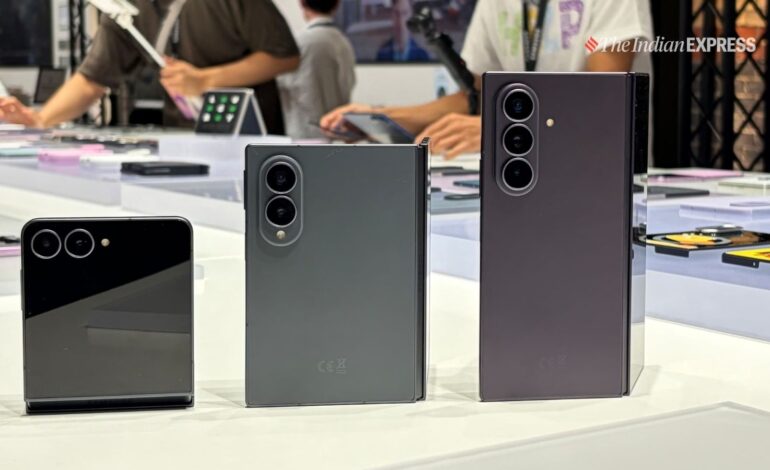

During my week in London, I not only realised that I am packing fewer clothes for summer, but I also didn’t expect Samsung to launch not one, not two, but three foldable phones. Galaxy Unpacked offered a detailed look at how Samsung sees foldables as an increasingly important part of its flagship strategy going forward, and that no single foldable form factor is perfect for everyone.
Samsung is making sure that whenever Apple unveils the iPhone Fold or the Ultra, whatever it ends up being called later this year, it is already prepared with a full lineup of foldables: a wider foldable with an almost 4:3 aspect ratio, a book-style productivity device, and a traditional clamshell foldable.

The wider Fold 8, in particular, isn’t just about leading the market; it’s about staying ahead of the competition, beating Apple to the punch, and establishing the wider foldable as the de facto form factor for the category. Maybe that was the intent behind having three foldable phones.
During Wednesday’s event, Samsung doubled down on its hardware leadership, highlighting how its latest devices are designed to enable more AI features on-device and why smartwatches remain relevant despite the recent boom in screenless wearables that seem to be everywhere these days.
Ahead of the launch event, I spent some time with the Galaxy Z Fold 8, Fold 8 Ultra, Flip 8, Watch Ultra 2, Watch 9, and the upcoming Intelligent Wear.
Here’s a preview of everything Samsung announced during its packed Galaxy Unpacked event in London.
An experimental (and not so “safe”) wide Fold 8
Samsung is in a position where it can’t afford to play it safe anymore, with Apple expected to launch its first foldable phone soon. Foldables may still be a niche category, but the devices haven’t evolved enough to become truly meaningful for everyday consumers. Last year, however, Samsung changed course, focusing on the Fold 7’s thin, lightweight design, which was genuinely impressive.
Story continues below this ad
But as I said earlier, the market could change dramatically once Apple enters the foldable category. Samsung needed a major shift in how it positioned foldables, and I am glad the company took a risk with the new Fold 8, which is shorter and wider. This isn’t a conventional-looking foldable, nor is it an entirely new design that hasn’t been attempted before.
What Samsung has done is reimagine a wider smartphone and made it its own. You may not have heard of the BlackBerry Passport or the Microsoft Surface Duo, and that’s completely okay.
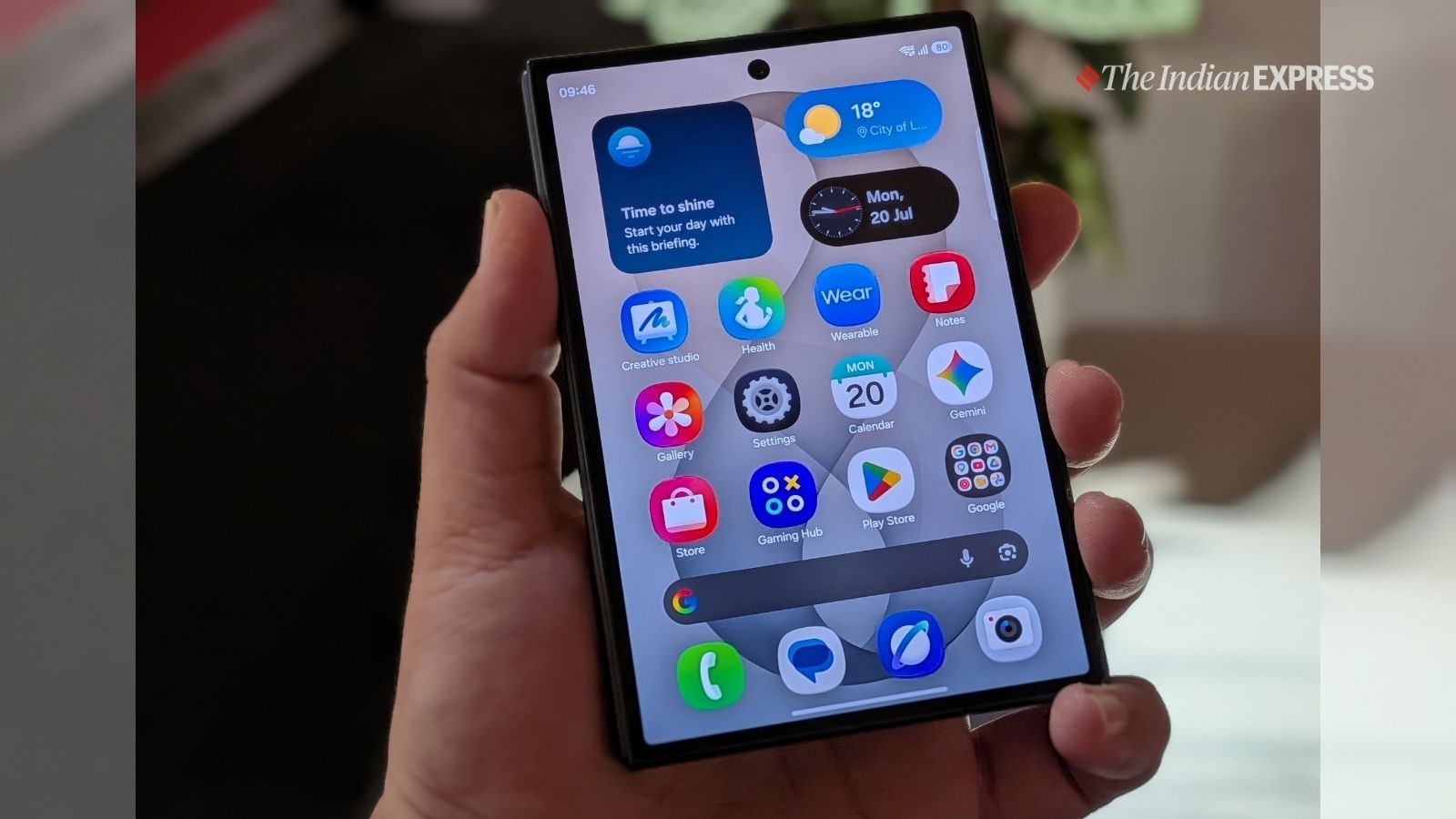 The Galaxy Z Fold 8’s squarer inner display offers a more immersive experience for videos, gaming and multitasking. (Image: The Indian Express/ Anuj Bhatia)
Both phones featured unusually wide displays but failed to achieve commercial success. Huawei, meanwhile, recently became the first mainstream smartphone maker to launch a passport-sized foldable with the Pura X Max. While most people outside China may never get to see the device in person, Samsung is bringing a similarly squat, square-shaped foldable to the rest of the world, including India. I briefly used the device in London and came away impressed.
What impressed me most about the Fold 8 (starts at $1900) was its new wider aspect ratio, which makes the device better suited for widescreen content such as videos and games, as well as for accessing social media platforms like Instagram. The annoying black bars are significantly reduced when watching YouTube videos, and the new titanium hinge has been specifically designed to minimise the crease on the inner display.
Story continues below this ad
Despite its extra-wide form factor, the phone is remarkably lightweight and slips into a pocket with ease. I have already shared my first impressions of the Fold 8, which you can read here.
Fold 8 Ultra and Flip 8 are incremental at heart
While most of the limelight may be on Fold 8, Samsung continues to show faith in its regular Fold and Flip designs, which have helped establish the company as a major player in the foldable smartphone market. They may be less risky, but consumers already know what to expect from the book-style Fold 8 Ultra (starts at $2100) and the clamshell Flip 8 (starts at $1200)
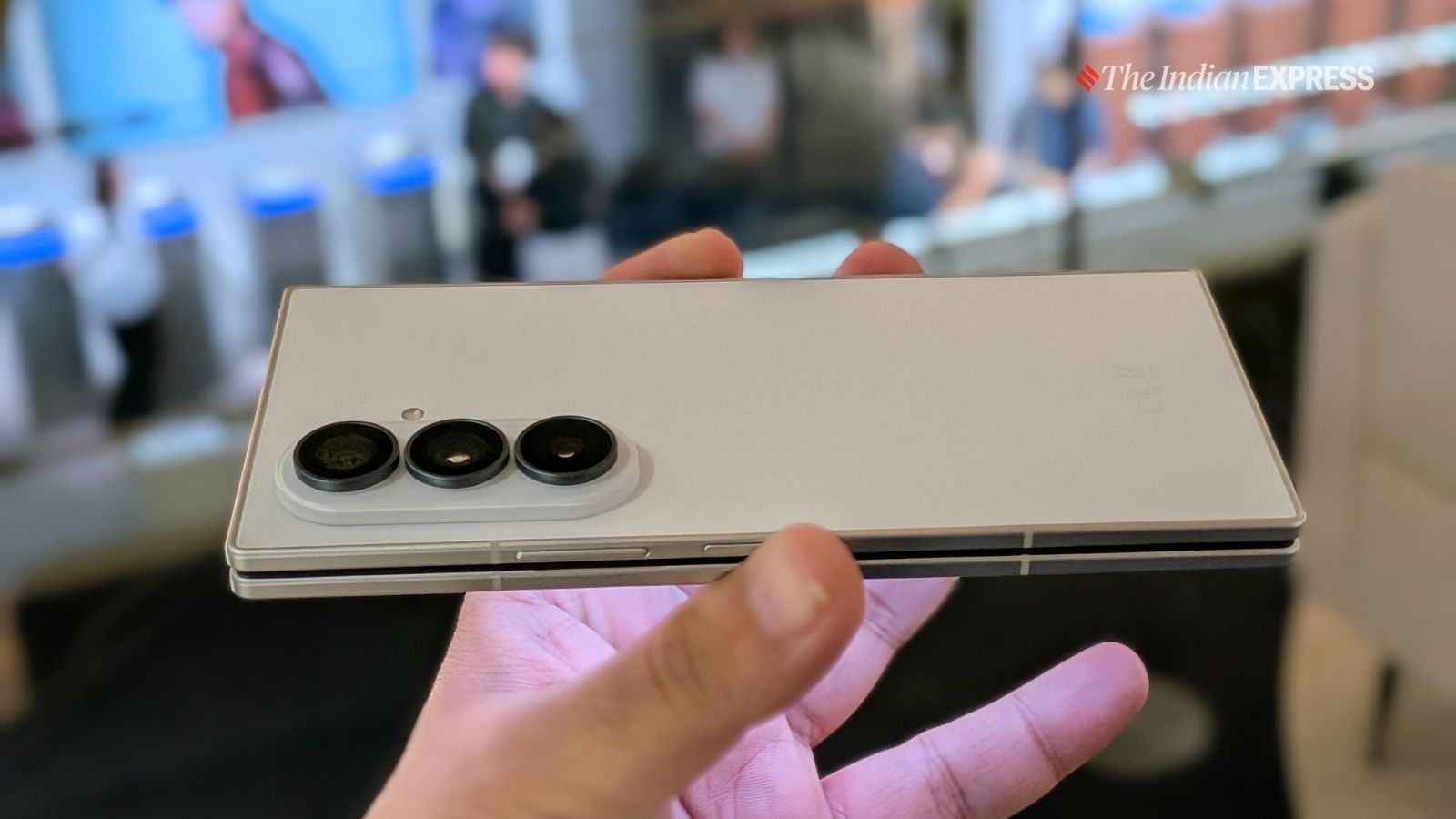 The Galaxy Z Fold 8 Ultra retains Samsung’s book-style foldable design while adding a larger battery and upgraded titanium hinge. (Image: The Indian Express/ Anuj Bhatia)
I, too, had tempered my expectations, but after spending some time with the Fold 8 Ultra, which now sits above the wider Fold 8 in Samsung’s lineup, I understood why the company believes the book-style design will continue to appeal to professionals over the Fold 8’s shorter and wider form factor.
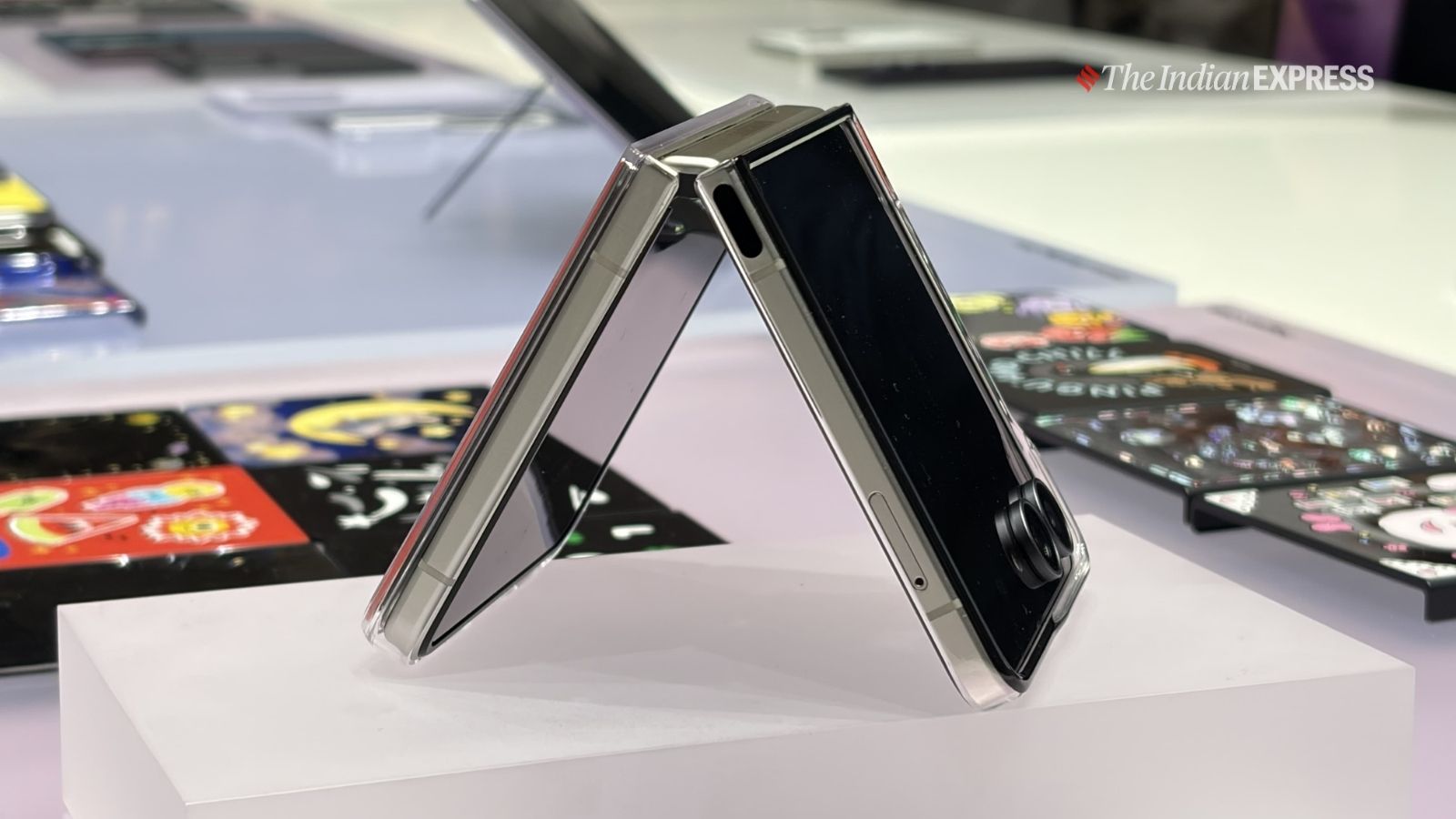 Samsung Galaxy Z Flip 8 continues the familiar clamshell foldable design with iterative hardware improvements. (Image: The Indian Express/ Anuj Bhatia)
The Ultra is the more conventional book-style foldable, as I mentioned earlier, but it comes with several notable upgrades, including a new titanium hinge designed to reduce the crease on the inner display, a larger 5,000mAh battery, and other hardware improvements. Those upgrades also push up the price, making the Fold 8 Ultra Samsung’s most premium flagship smartphone.
Story continues below this ad
Meanwhile, the Flip 8 looks very similar to the existing Flip 7, so it is arguably a less interesting device than the other two.
Watch Ultra 2 and Watch 9 are top-tier smartwatches
During Galaxy Unpacked, Samsung announced two new smartwatches: the Galaxy Watch9, the latest version of its flagship smartwatch, and the Galaxy Watch Ultra 2 (starts at $699), an updated version of its rugged, Pro-grade model. I briefly wore both smartwatches and found the Ultra 2 to be my personal favourite. It’s noticeably lighter on the wrist, features a brighter display, and packs a larger battery for longer battery life.
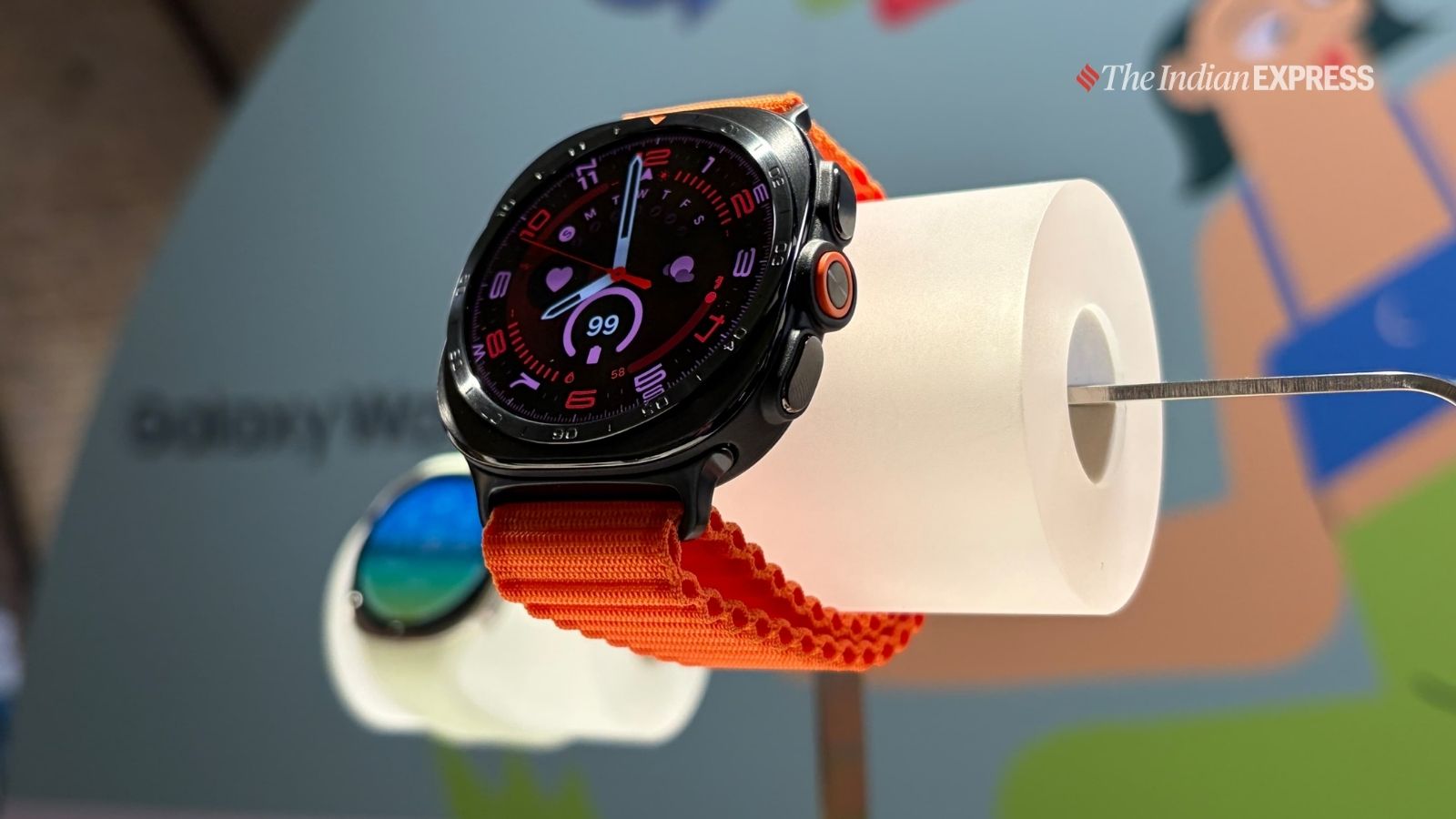 The Galaxy Watch Ultra 2 features a brighter display, a lighter design and Samsung’s latest health-tracking features. (Image: The Indian Express/ Anuj Bhatia)
It also comes with an IP69K dust- and water-resistance rating, and Samsung has added several new fitness features, including a trail-running mode and a Nutrition Alert feature that uses perspiration data.
The watch is now powered by the Snapdragon Wear Elite chip, which marks one of the biggest internal upgrades to the device.
Story continues below this ad
As for the Watch 9 (starts at $379.99), it also brings a series of incremental upgrades. Both smartwatches feature Samsung’s AI-powered health capabilities, which use the BioActive sensor to continuously track biometric data and deliver personalised health insights along with proactive wellness recommendations.
New “Intelligent Eyewear” teased
I was pretty excited to try Samsung’s upcoming smart glasses as I headed to the demo zone. However, a Samsung executive wouldn’t let me try the new smart glasses developed in partnership with Google, Warby Parker, and Gentle Monster. The glasses are slated to launch later this fall, although pricing has yet to be announced. What I can tell you is that they will be available in a range of styles and feature a single camera, microphones, and speakers, much like Meta’s Ray-Ban smart glasses.
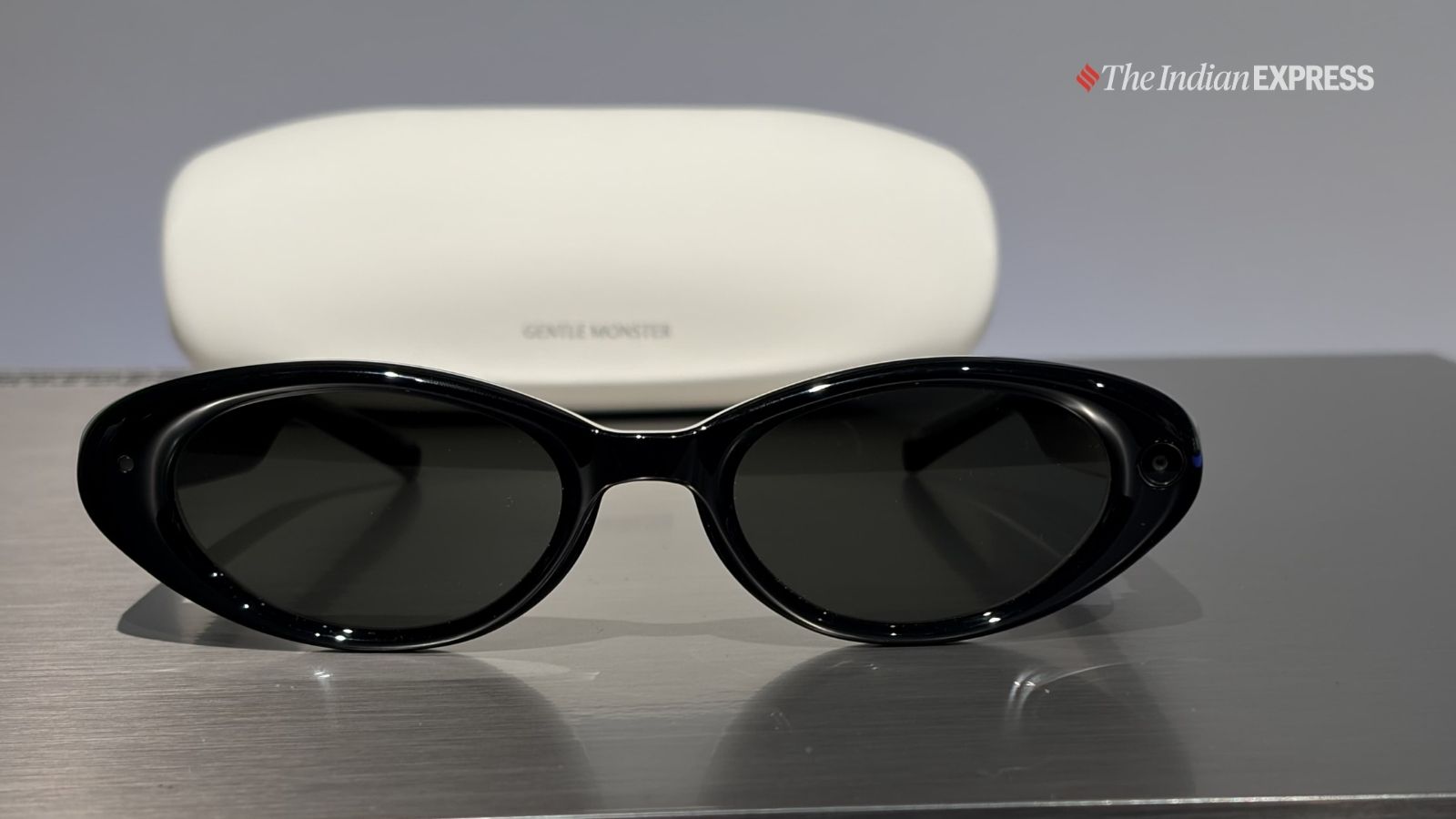 Samsung’s upcoming AI-powered smart glasses, developed with Google, Warby Parker and Gentle Monster, were previewed at Galaxy Unpacked. (Image: The Indian Express/ Anuj Bhatia)
They will also work with Wear OS smartwatches, display notifications and smart widgets from Android phones, and offer limited compatibility with iPhones. By the end of the year, I expect the market to be flooded with smart glasses, but Samsung’s glasses could stand out by deeply integrating Google’s Gemini AI. I hope they are designed with privacy in mind.
More on Samsung’s glasses whenever I get full access to them.