


 rahulNovember 10, 20263 Mins read0
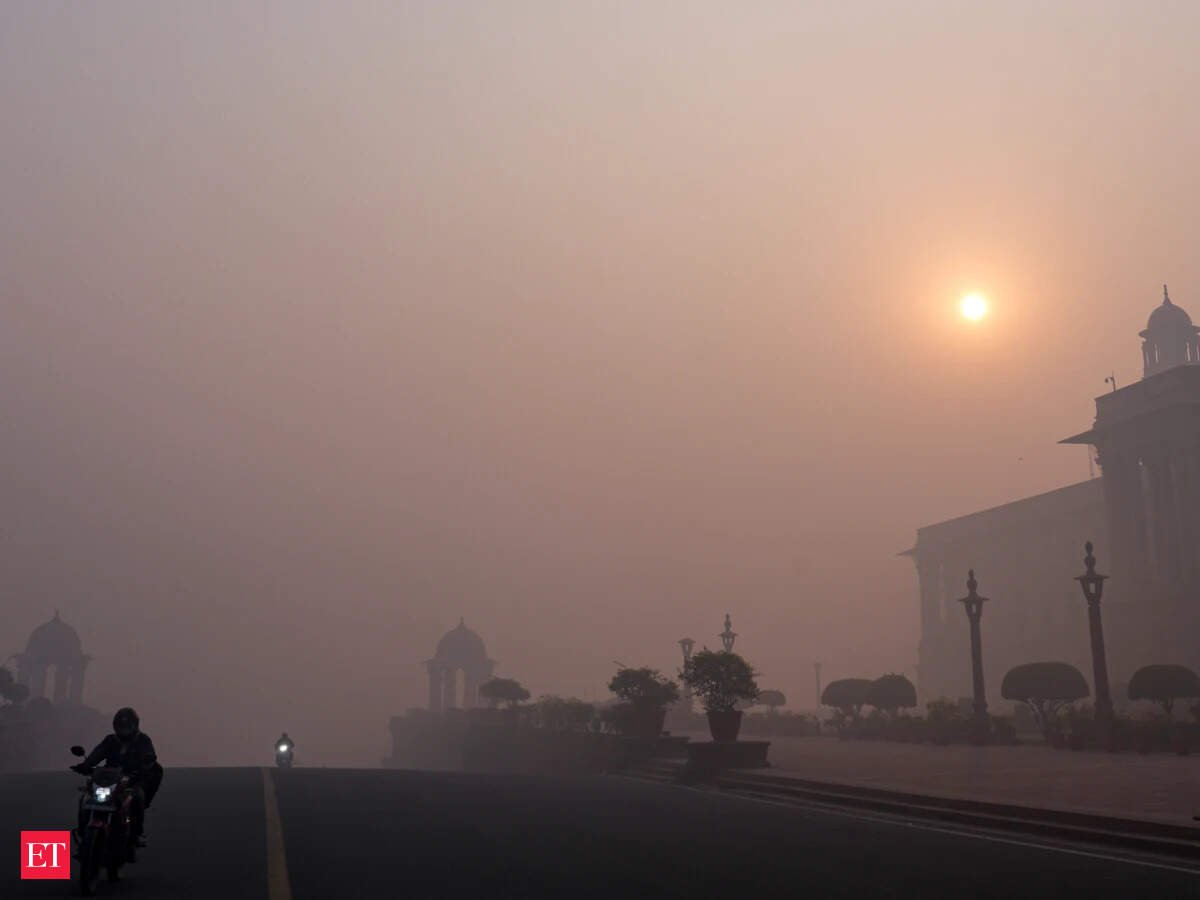
Meanwhile, the Delhi government’s AQI portal recorded an AQI of 307 at 7:15 am.
Read more: Bengaluru-Goa Vande Bharat Express to pass through the Western Ghats and coastal tourist destinations such as Gokarna and Udupi; check route details and scenic spots along the 13-hour journey
With Stage III measures in force following the CAQM’s decision, existing restrictions will continue alongside additional pollution-control measures, increased enforcement and directions to concerned agencies to prevent further deterioration in air quality.
The emergency action plan applies across Delhi and adjoining districts of Haryana, Uttar Pradesh and Rajasthan. It is invoked as a precautionary measure based on meteorological and pollution forecasts provided by the India Meteorological Department (IMD) and the Indian Institute of Tropical Meteorology (IITM), allowing restrictions to be implemented before citywide AQI levels reach the ‘severe’ category.
GRAP is a four-stage emergency framework managed by the CAQM in coordination with the CPCB and regional state governments. Restrictions become progressively stricter as air quality deteriorates.
| S.No. | Monitoring Station | AQI | Prominent Pollutant |
| 1 | Pusa, Delhi – IITM | 395 | PM2.5 |
| 2 | Chandni Chowk, Delhi – IITM | 395 | PM2.5 |
| 3 | NSUT Jaffarpur, Delhi – DPCC | 382 | PM2.5 |
| 4 | Commonwealth Sports Complex, Delhi – DPCC | 380 | PM2.5 |
| 5 | Talkatora Garden, Delhi – DPCC | 372 | PM2.5 |
| 6 | North Campus, DU, Delhi – IITM | 372 | PM2.5 |
| 7 | Sirifort, Delhi – CPCB | 371 | PM2.5 |
| 8 | CRRI Mathura Road, Delhi – IITM | 369 | PM2.5 |
| 9 | JNU, Delhi – DPCC | 369 | PM2.5 |
| 10 | IIT Delhi, Delhi – IITM | 364 | PM10 |
A dense blanket of smog enveloped several parts of north India on Monday, a day after Diwali celebrations, as firecracker bursting continued beyond the permitted hours in several areas, contributing to a sharp deterioration in air quality.Delhi, Haryana, Punjab and western Uttar Pradesh recorded AQI levels above 350, placing air quality across these regions in the ‘very poor’ category.
On Sunday, Delhi recorded its most polluted Diwali in five years, with the average AQI at 376. The next morning, the AQI dropped marginally to 371, according to the CPCB.
The overall AQI stood at 371 on Monday till 10 am, the highest for a post-Diwali day since 2021. Of the 51 monitoring stations that recorded data, 14 were in the ‘severe’ category, four in the ‘poor’ category and the remaining 33 in the ‘very poor’ category. Delhi Technological University (DTU) recorded the worst reading of 439. Earlier in the morning, the overall AQI was 370 at 8 am.
According to CPCB data, Delhi’s AQI was 376 on Diwali, the highest recorded on the festival day since 2021, when it was 382.
Also Read: Mumbai bans sky rockets, aerial fireworks till November 25 after fire incidents
However, according to real-time readings on AQI.in, Delhi’s air quality climbed to 2,283 after Diwali. Six other Indian cities also recorded AQI levels above 1,000 at 9 pm on Sunday, according to the platform.
Delhi is likely to experience moderate fog during the morning hours over the next six days, from November 10 to 15. According to the India Meteorological Department (IMD), maximum temperatures are expected to range between 28°C and 29°C, while minimum temperatures will remain between 15°C and 16°C. No weather warnings have been issued for the period.
Day-wise forecast: