


 rahulNovember 11, 20262 Mins read0
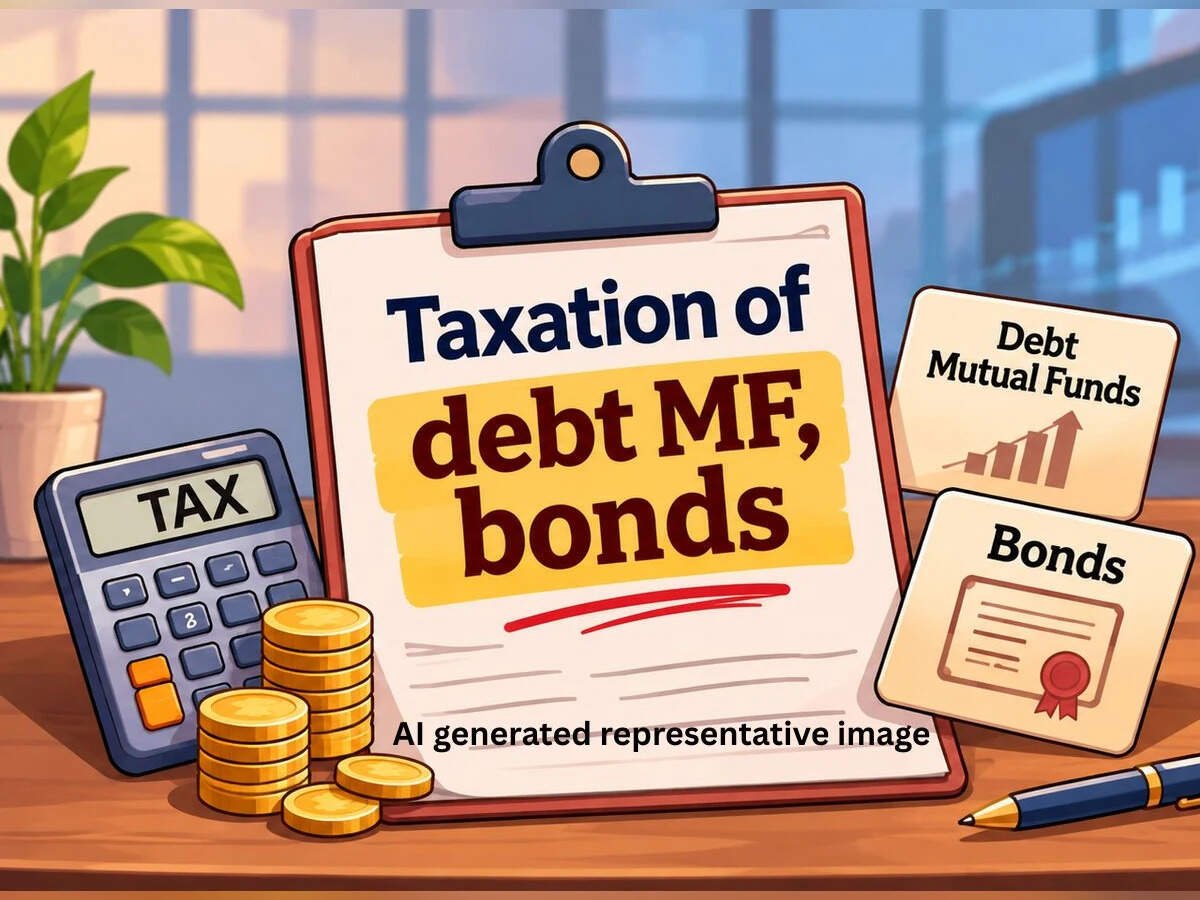
The government also understands this and that’s why over the past few years, they have tweaked the tax framework of various debt products, with the most recent being the market-linked debentures. Generally, the capital gains taxation rules apply to the debt products and the tax rate varies depending on the specific product and how long you hold it. The holding period is basically the time from when you buy to when you sell the product.
As you may know, when it comes to capital gains tax, there is no advantage of the Section 87A tax rebate either for short term or long term capital gains. So even if your total income is below Rs 12 lakh under the new tax regime, capital gains will be taxable at the applicable rate with no benefit of Section 87A tax rebate. Capital gains tax framework is one of the few heads of income which applies irrespective of the chosen tax regime and total income.
Also, keep in mind that these rates and holding period are applicable for tax year 2026 which has already started from April 1, 2026. For tax year 2026, you will file your Income Tax Return on or before July 31, 2027.
Here’s a table highlighting the latest capital gains tax rate and holding period for debt products:
| Particulars | Long term capital asset | Short term capital asset |
| Redemption prior to July 23, 2024 | Held for more than 36 months: 10% tax without indexation | Held for up to 36 months |
| Redemption on or after July 23, 2024 | Held for more than 24 months: 12.5% tax without indexation | Held for up to 24 months |
Source: CA Suresh Surana
| Particulars | Holding Period | Tax Rates | ||
| Long-Term Capital Asset | Short – Term Capital Asset | Long – Term Capital Gains | Short – Term Capital Gains | |
| Market linked Debentures* and ^Specified mutual funds (purchased on or after April 1, 2023) | Always short term, irrespective of the holding period | Taxed at applicable slab rate | ||
| Listed Bonds / Debentures | Held for more than 12 months | Held for up to 12 months |
|
Applicable slab rate |
| Unlisted Bonds and Debentures | Always short term, irrespective of the holding period | Applicable slab rate | ||
Source: CA Suresh Surana
Note:
* Market linked debenture is a security which has an underlying principal component in the form of a debt security and where the returns are linked to market returns on other underlying securities or indices and include any securities classified or regulated as a market linked debenture by SEBI.
^Specified mutual funds are such funds which invests more than 65% of its total proceeds in debt and money market instruments or a fund which invests 65% or more of its total proceeds in units of such Mutual Fund.
Budget 2026 has maintained the status quo on the taxation of debt products, retaining the earlier shift towards a simplified regime where indexation benefits have been withdrawn and debt mutual funds are taxed at slab rates regardless of how long they are held.
Chartered Accountant Suresh Surana says that capital loss set-off rules continue to apply to short-term capital losses and can be adjusted against both short-term and long-term gains, while long-term capital losses can be set off only against long-term gains. Unabsorbed losses can be carried forward for up to 8 tax years, subject to timely filing of returns.