



 rahulNovember 23, 20264 Mins read0
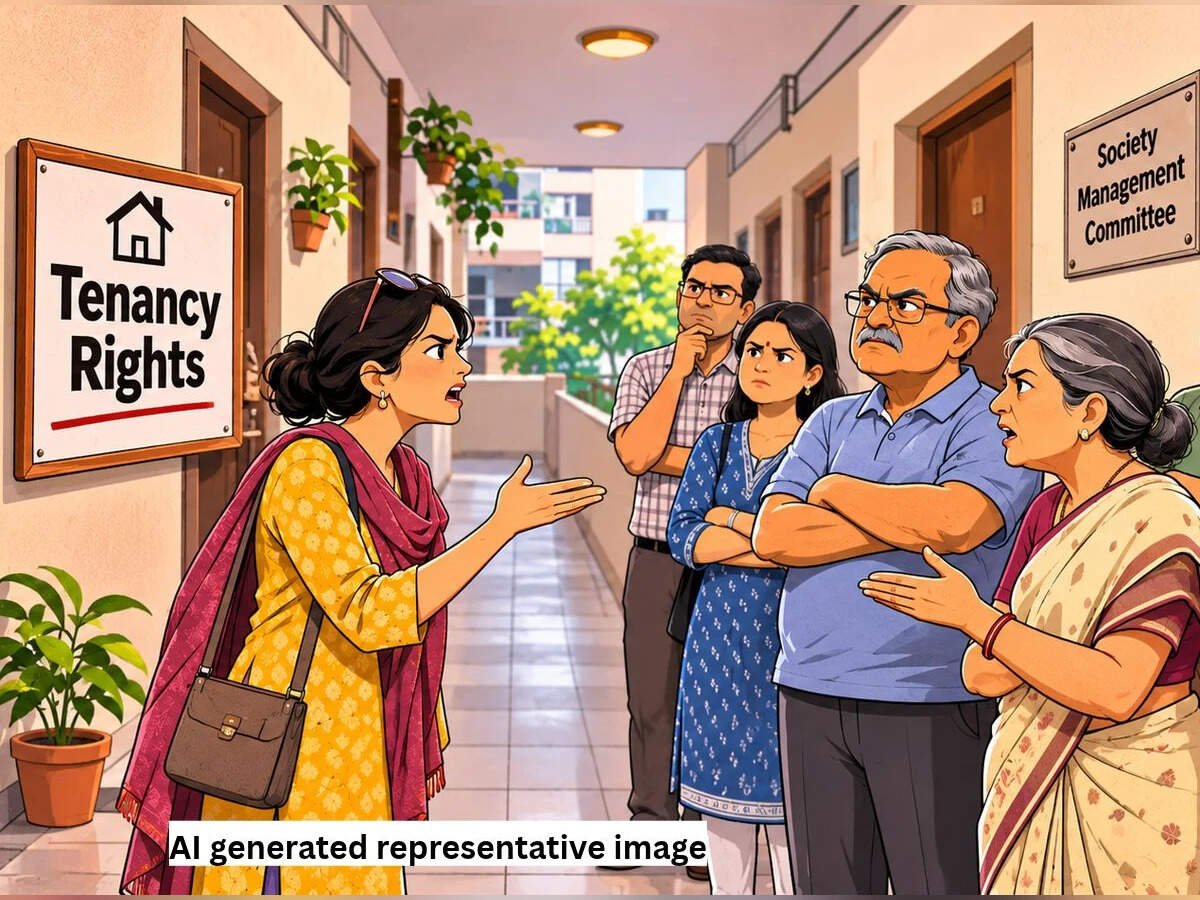
Ms Narayan also owns a commercial premises (a studio) on the ground floor of the building and her father had a tenant of the passage (short-term renter) in front of this studio and his tenancy rights were acknowledged by the Small Causes Court, Mumbai. The society has appealed to the Small Causes Appellate bench and this appeal is pending.
While the tenancy dispute was still pending, the housing society signed a redevelopment agreement with a builder and in this redevelopment plan, Ms Narayan’s tenant’s rights were not mentioned. So, she filed a case in the Maharashtra Co-Operative Appellate Court to secure her tenancy rights in the redevelopment plan.
According to Ms Narayan, the structural auditor who gave the go-ahead for the redevelopment plan of the building society, had erased her studio and the sub judice case of the tenanted passage leading to her studio. She also says that in the map of the proposed building of the society after redevelopment given by the structural auditor of the society, her studio and the tenanted passage was not shown.
This tenanted passage, which is 10 feet wide, is in front of her Studio and is sub judice before the Small Causes Appellate Court (since a case is going on), and the High Court has granted stay orders protecting her rights over the tenanted passage in Writ Petition No.2562/1997 and 4351/2005.
Ms Narayan also told the court that the society has recently undertaken two major structural repairs that enhanced the life span of the building with guarantee of good structural health till 2029. As per the structural audit report of April 2023 submitted by structural auditor Nanak Shah, the building only requires tenantable external maintenance repairs to remove unwanted vegetation growth and plug the seepages and leakages. There is no need for demolition of the building to do the tenantable repairs. The building is not in dilapidated condition and there is no need to demolish the building for redevelopment.
Ms Narayan alleged that the managing committee has approved redevelopment of the society with mala fide intention and ulterior motive to evict her and her family from the flat, studio premises and tenanted passage. She also alleged that many members of the society have encroached upon the common passage of the society and only to regularise that , the managing committee members are seeking redevelopment.
On October 23, 2026, she partly lost the case on the limited issue of stopping the redevelopment plan but the court ordered the society to honor the outcome of the pending tenant dispute case in the court of small causes.
Bhargav KS, Managing Partner at K.S & B.K.S Law Associates, a Bengaluru based law firm said to ET Wealth Online: Ms Narayan though lost her appeal but managed to secure a limited protection of her tenancy rights since the proposed redevelopment plan did not take into account her family’s tenancy rights over the passage and her studio.
Bhargav says that the court recognised this but ruled that stopping the entire redevelopment process for this reason would harm the interest of the other memebers since a majority of them voted yes for the redevelopment. Thus the Maharashtra court ordered the society to make sure that in the redeveloment process, Ms Narayan’s tenancy rights over the passage is secured and also to give effect to whatever is the outcome of the tenancy appeal case. Thus the court preserved Ms Narayan’s right but left the decision to the pending tenancy appeal case.
Bhargav says that flat owners should keep the records of their ownership and tenancy in a safe custody and also keep a watch on the society’s redevelopment plans and consult legal experts to check if the housing society’s redevelopment plan is hampering their rights or not.
The Maharashtra court dismissed her appeal and held that prima-facie she has not presented a case which shows that the redevelopment plan was against her convenience especially when a majority of the housing society members have given thier consent for the redevelopment of the society. The Maharashtra Court has also cited a Bombay High Court judgement (Writ Petition No.13527/2022) where it was held that single member of the housing society cannot stall the society’s redevelopment plan which is approved by a majority of the society members unless and until there is a breach of the law and/or bye-laws of the housing society.
The Maharashtra court did acknowledge that Ms Narayan’s had concerns about the dispute tenanted passage and that the housing society’s proposed redevelopment plan did not include this passage. The court also observed that this tenanted passage is subject to an ongoing dispute case and the judgement is pending., however, solely for this reason the court found no reason to stop the society’s redevelopment work since a majority of the members have voted yes for the redevelopment.
So the Maharashtra Court ordered the society to secure Ms Narayan’s right over this passage and give effect to whatever order is passed by the small causes appellate court where the pending dispute case is going on.
Accordingly, the appeal was dismissed and the lower court’s order was confirmed. The society can proceed with redevelopment, but the disputed passage must be protected pending the outcome of the separate tenancy rights dispute case.