Buying a Kanchipuram sari for your wedding? Experts share how to choose an authentic one
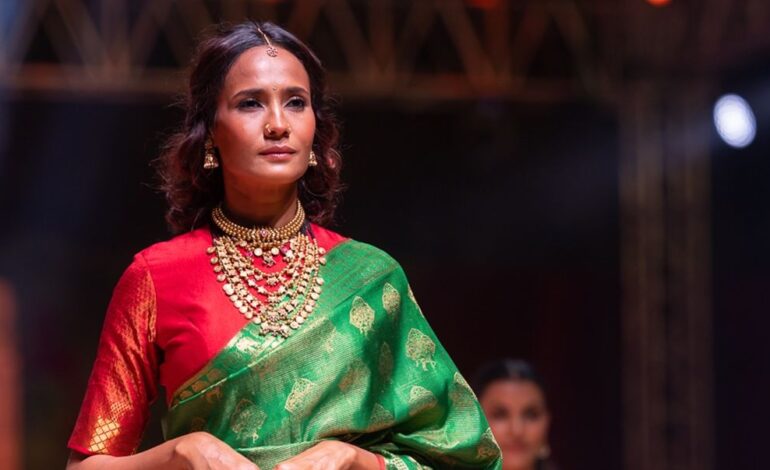

For many brides, a Kanchipuram sari, also known as a kanjivaram, is the piece that resurfaces for anniversaries, family weddings and festivals before eventually being passed to the next generation. Choosing one, then, is as much about investing in craftsmanship as it is about finding a colour or motif you love.
Handwoven saris now share the market with powerloom and machine-assisted versions, while weight and metallic shine are still commonly treated as signs of quality. Ahalya S, founder and CEO of Kanakavalli, and designer Shravan Kummar explain what buyers should examine before making the purchase.
A heavier sari is not necessarily a better one
Weight remains one of the most common ways buyers judge a Kanchipuram sari, but Ahalya warns that it is not a reliable test. Starch can make a sari feel heavier, while a large quantity of zari says little about the quality of the silk or the weave. “These factors alone cannot define the authenticity of a sari,” she says.
.jpg)
Kummar makes a similar argument about bridal saris with bright colours and extensive zari. Some valuable vintage examples use muted colours and relatively little metallic thread.
“A fine Kanchipuram silk does not need excessive zari or loud colours to reflect its value,” he says. “The real measure lies in the purity of the silk yarn, the quality of the zari, the intricacy of the weave, the strength of the construction and the skill of the weaver.”
Know what a traditional Kanchipuram sari looks like
Ahalya advises first-time buyers to familiarise themselves with traditional Kanchipuram design before they begin shopping. “Do some research to familiarise yourself with Kanchipuram’s design language, because this is one of the most defining characteristics of an authentic sari,” she says.
The body is generally plain or woven with buttas, checks or stripes. Its motifs tend to follow a geometric structure. Even floral patterns usually have defined lines rather than a loose, free-flowing form.
Ahalya also examines the size of the designs on the border and pallu. In a traditional Kanchipuram sari, these should correspond in scale. A body woven with several colours or dense all-over ornamentation is worth looking at more closely, as these sit outside the traditional design language of Kanchipuram weaving and are more commonly associated with machine production.
Kummar recommends checking the joins. In korvai weaving, a contrasting border is woven separately and interlocked with the body by hand, while petni refers to the joining of the body and pallu. “Traditional motifs such as the rudraksha, mayil, annapakshi, yaali, gopuram and temple borders require exceptional control on the loom,” he says. “Their symmetry and sharpness reflect the experience of the weaver.”