


 rahulNovember 25, 20265 Mins read0
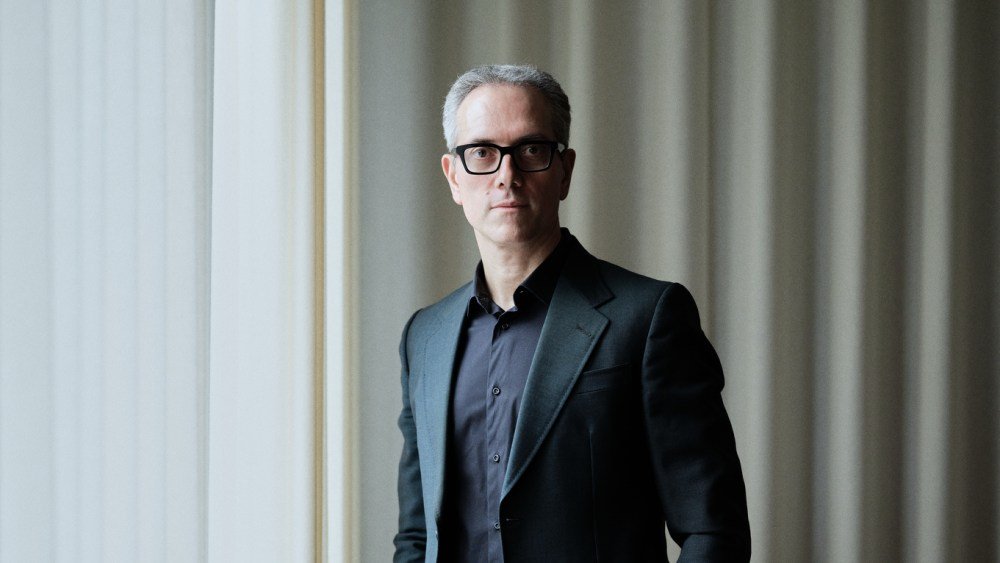
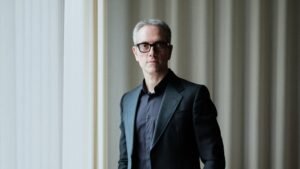
Gianfilippo Testa, the new chief executive officer of Bang & Olufsen, is on a quest to deliver “goosebumps” galore.
That word recurred frequently while discussing how the fashion veteran — most recently president and CEO at Alexander McQueen in London — plans to burnish cultural connections and cultivate new, younger customers for the 101-year-old Danish luxury audio company.
“I want to use those skills to make people dream and feel an emotion with something that, by definition, is more emotional than fashion,” he said in an exclusive interview, his first since taking on the role last August. “When you listen to music you love, you feel goosebumps — and music is a common language.”
Testa was interviewed over Teams from New York City, where Bang & Olufsen recently opened a new flagship in the city’s Meatpacking District, as larger, more immersive company-operated stores represent a key strategy.
“To give you goosebumps, you need to have time and space to really play with and enjoy our beautiful products and our beautiful design,” he said. “If you are in a tiny store, it becomes very hard to express the full vision and the full power of Bang & Olufsen.”
The Manhattan store at 821 Washington Street unfurls as a series of residential-like vignettes appointed with B&B Italia furnishings, contemporary art, books and vases — with sculptural speakers, television sets and home audio systems incorporated throughout.

Inside the Bang & Olufsen Meatpacking flagship in New York City.
Courtesy of Bang & Olufsen
The brand boasts 305 monobrand stores across 70 countries, including some airport locations which specialize in headphones, portable speakers and other “on-the-go” products.
“But at the end of the day, our dream, our core is the home,” Testa said. “We want to make people dream about having a beautiful home with a beautiful design, sound and cinema as well. Combined together, that’s what is going to give you the goosebumps.”
Bang & Olufsen flagships are also earmarked for activations with designers and artists as Testa builds out the brand’s cultural connections and programming.
“We need to start to curate better local communities in New York, in L.A., in Berlin, in London, because again, music is really something micro as well and macro at the same time, and we need to play with both to be relevant locally,” he said.
The ultimate goal is “speaking a more modern language to new generations of people.”
Publicly traded since 1977, Bang & Olufsen reported organic revenues grew 2.2 percent in its most recent quarter ended Aug. 30, an improvement on the 1.6 percent decline in fiscal 2025/2026, dented by poor sales of its Beosound Premiere soundbar.
Testa acknowledged several areas of the business earmarked for improvement.
“The distribution model is OK, but we need to execute the client experience in every market in the right way,” he said. “These are the details that make a brand being considered as a luxury brand.”

The Beovision Harmony television.
Courtesy of Bang & Olufsen
The executive also spies room for improvement and expansion in the wearables segment, which includes headphones and earbuds.
“We need to be careful not to become too niche as a brand,” he said. “We have a really compelling product at the top end of the offer. So my vision is really to make sure that we can make fresh products that speak the same compelling language, but in a more accessible way.”
The quest is somewhat analogous to fashion.
“Of course, you do 30 percent of the business with the top 0.1 percent of the clients. This is going to remain and potentially is going to be even more polarized, in my opinion,” he said. “But we need to be smart in making sure that there are new clients entering into the brand, building trust.”
That means widening its access-price offering. “I think we have a big opportunity to reinforce this kind of ladder system in the product portfolio,” Testa said.
The executive is not banking on huge organic growth in the luxury audio segment, which is already quite competitive. “It’s up to us to gain market share,” he said, and building desirability is key.
“The tone of voice, the image, the coherence, the territories of expression, the cultural relevance — all these are meant to build the desirability of the brand,” he said. “We are in a lucky position in a way because the brand is already desirable. We develop beautiful products. What has been missing is how we sell this beautiful product to new people, new clients that don’t know yet the brand very well.”
In recent years, Bang & Olufsen has used some of the same levers fashion employs, including brand ambassadors — music star John Legend was signed on last July — and collaborations, including with such diverse fashion brands as Ader Error, Balenciaga, Clot and Saint Laurent.
“I don’t want to do collaboration for the sake of doing collaboration because we need to be authentic, especially with the new generations,” Testa said. “We want to do the right ones… I’m working with the team to clearly define the DNA and territories of the brand, which for me are design, music and cinema… Yes, fashion can be part of it, but only if there is an organic and an authentic share of content.”
Testa noted fashion brands — Miu Miu and Louis Vuitton are two examples — have done a bang-up job over the last decade building their cultural relevance in an organic way.

The Beosound 2 wireless speaker.
Courtesy of Bang & Olufsen
“But at the end of the day, they cannot claim in reality anything like we can claim with music. In music, there is a real cultural relevance,” he said. “And design is another thing. Imagine everything we can do with design. Our objects are not objects that are beautiful only when they are playing; they are beautiful and they are engaging also when they are switched off.”
Founded in 1925, Bang & Olufsen’s journey began in a farmhouse in Struer, Denmark, where Peter Bang and Svend Olufsen developed the first mass-produced radio that could be plugged into a wall socket, eliminating the need for batteries.
Its devotion to innovation in acoustics and design remains a foundation of the brand.
“The DNA of Bang & Olufsen has always been to look forward, to come up with crazy ideas, innovations, breakthrough inventions… and I want to bring back a bit of this in the company,” Testa said.
But he plans to reach beyond the strong product focus and turn up the volume when it comes to the brand persona and client experience. “For me, tech is something that should be behind the scenes.
“My vision is to bring communities around followers of the brand, and we can do that with music and design,” he said, envisioning events and activations where “you’re immersed with your six senses into the universe of the brand.”
An Italian national, Testa trained as an aerospace engineer, indulging a childhood dream to become an astronaut. He landed on planet fashion instead, starting his career at Tag Heuer in 2002. He went on to hold a range of senior management roles at LVMH Moët Hennessy Louis Vuitton, specifically at Fendi in Italy, Japan and Hong Kong.
He joined Kering in 2016 as Gucci president in Greater China and was promoted three years later to president of Europe, Middle East and Africa and vice president of global retail at Gucci. He logged four years at McQueen, stepping down last June to follow a new professional path.
For the record, he gets his goosebumps from listening to Queen, “Innuendo” being one of his favorite songs.