
Global Market: Mexico’s ‘Super Peso’ rally puts exporters under pressure
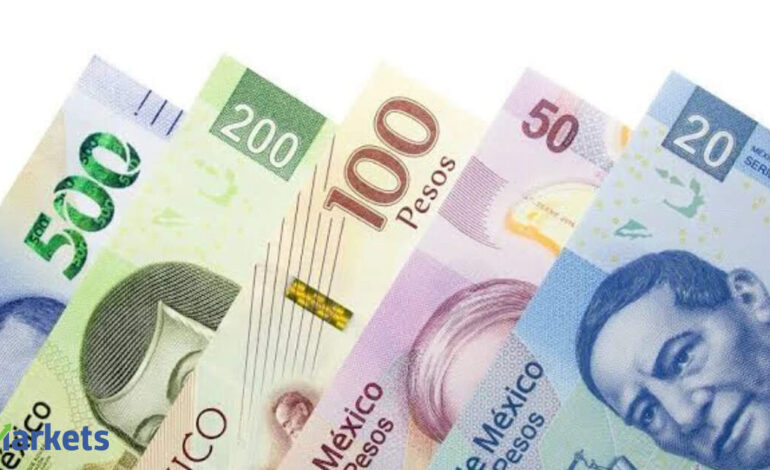

At the beginning of 2025, Mexico’s central bank and Wall Street analysts had expected the peso to weaken toward 21 per dollar. Instead, the currency has strengthened beyond 17 per dollar, reviving the idea of a “super peso.”
The rally, however, is proving to be a mixed blessing for Mexico. A stronger currency reduces import costs and helps contain inflation, but it also squeezes exporters, particularly companies that generate much of their revenue in the United States.
Peso Strengthens Nearly 20%
The peso was trading below 17 per dollar on Tuesday, marking an almost 20% gain against the U.S. currency since January 2025, according to LSEG data cited by Reuters.

The peso is among the most actively traded emerging-market currencies, making it an important vehicle for international investors seeking exposure to Mexico and higher-yielding assets.
One of the main factors supporting the currency has been weakness in the U.S. dollar. The dollar lost more than 10% against a basket of major currencies in 2025 before stabilizing this year.Reuters reported that analysts also point to Mexico’s relatively high interest rates as a key attraction. The Bank of Mexico’s benchmark rate is around 7%, compared with roughly 3.75% for the U.S. Federal Reserve, creating an incentive for investors to hold peso-denominated assets.
Carry Trades Add Support
The peso has benefited from carry-trade strategies, in which investors borrow in lower-yielding currencies and invest in assets offering higher returns.
Mexico’s deep financial markets, relatively high interest rates and easy access to local stocks and bonds have made the peso attractive to such investors.
However, carry trades can reverse quickly. A narrowing interest-rate differential or a deterioration in global risk appetite could encourage investors to unwind positions, potentially putting renewed pressure on the currency.
Domestic Factors Also Matter
The peso’s gains cannot be explained entirely by dollar weakness. The currency has also appreciated against other major currencies, suggesting that Mexico-specific factors are contributing to its strength.
Reuters cited analysts who pointed to lower perceptions of trade risk, political stability and relatively solid macroeconomic conditions as additional factors supporting the peso.
Mexico is also increasingly benefiting from the expansion of advanced manufacturing and the global artificial-intelligence investment boom. S&P Global estimates that computer server exports reached nearly $83 billion in the first half of 2026, underscoring Mexico’s growing role in higher-value manufacturing.
The trend could strengthen the country’s position as a manufacturing hub as companies seek to diversify supply chains and locate production closer to the U.S. market.
Exporters Face Growing Pressure
The stronger peso is creating challenges for companies that earn substantial revenues in dollars. When those earnings are converted into pesos, a stronger domestic currency reduces their value.
Reuters reported that several major Mexican companies have already identified currency strength as a factor weighing on recent results. They include tequila producer Becle, Grupo Bimbo, Grupo Carso, Grupo Industrial Saltillo and Bolsa Mexicana de Valores.
The pressure is particularly significant for exporters whose businesses are heavily concentrated in the United States. Mexico sends more than 80% of its exports to the U.S., leaving many companies highly exposed to changes in the peso-dollar exchange rate and the broader bilateral trade relationship.
Despite those concerns, the overall export data remains resilient. Reuters reported that economists continue to see strong export growth, suggesting that the currency’s appreciation has not yet produced a broad-based deterioration in Mexico’s external trade performance.
Short-Term Investors Drive the Rally
Another question surrounding the peso rally is the nature of the investors behind it.
Reuters reported that many long-term institutional investors, including pension funds and insurers, reduced their exposure to the peso following Mexico’s 2024 election and have not returned in significant numbers.
Instead, recent gains appear to have been driven increasingly by short-term investors such as hedge funds and other speculative traders.
U.S. Commodity Futures Trading Commission data on leveraged-fund positioning shows that the four-week average of net long peso positions has moved close to its highest level since early 2023.
That positioning could amplify the currency’s gains if momentum continues, but it also increases the risk of a sharp reversal if investors begin closing their positions simultaneously.
Trade Policy Remains the Biggest Risk
Despite the peso’s strong performance, uncertainty over Mexico’s trade relationship with the United States remains a major threat to the rally.
The future of the United States-Mexico-Canada Agreement is particularly important. Reuters reported that the administration of U.S. President Donald Trump declined to renew the trilateral agreement for a new 16-year term, instead opting for annual reviews.
While the agreement remains in force, the new approach prolongs uncertainty for companies that depend heavily on North American supply chains.
Any deterioration in trade relations, new tariffs or weaker-than-expected negotiations could hurt Mexico’s export sector and undermine investor confidence in the peso.
Rally Faces a Delicate Test
For now, Mexico’s currency continues to benefit from a combination of dollar weakness, high domestic interest rates, strong investor demand and improving perceptions of the country’s manufacturing potential.
But the rally is becoming increasingly complicated for the Mexican economy. Consumers and importers benefit from cheaper foreign goods, while exporters face tighter margins. At the same time, elevated speculative positioning could make the currency vulnerable to a rapid correction.
Reuters reported that analysts broadly see trade-policy uncertainty as the biggest risk to the peso’s gains. If global risk appetite weakens or investors begin unwinding crowded peso positions, the currency could quickly give back some of its recent appreciation.
The “super peso” has therefore become both a symbol of Mexico’s growing financial appeal and a potential source of pressure for an export-dependent economy. For now, its strength remains a positive for investors and importers, but increasingly a challenge for companies competing in the U.S. market.