With Houthi blockade on Saudi Arabia, Bab el-Mandeb returns to centre stage | Explained

The Bab el-Mandeb Strait has returned to the geopolitical spotlight after Yemen’s Iran-backed Houthi movement announced on July 20 a maritime blockade against Saudi Arabia, warning that Saudi-linked vessels transiting the strategic waterway would be targeted. Shortly afterwards, the group reinforced the warning by emailing shipping companies, directing them not to load or unload cargo at Saudi ports or risk being attacked “in any location” within its operational reach. This is a major escalation of the latest simmering regional conflict to be reignited by the war launched by the United States and Israel against Iran.
The warning has revived concerns over the security of one of the world’s busiest maritime corridors. Even without a complete closure, the threat of attacks was enough to influence commercial decisions, because disruption in this narrow waterway can have consequences that extend far beyond West Asia.
The announcement came days after an attack on Sanaa International Airport on July 13. The Yemeni government claimed it carried out the strike to prevent an Iranian plane from landing; the Houthis blamed Saudi Arabia and responded with retaliatory missile attacks. In a statement, the group said the maritime embargo was an “eye for an eye” response both to that recent incident and to what they describe as a nearly 12-year Saudi-led blockade of Yemen’s ports and airports during the country’s civil war.
The timing of the latest escalation is significant. For months, the Houthis largely confined their operations to attacks on commercial shipping in the Red Sea, even as the United States and Israel carried out military operations against Iran. They avoided opening a direct front against Saudi Arabia, which had spent recent years trying to reduce tensions with the group after years of war in Yemen.
What is the Bab el-Mandeb and why is it so important?
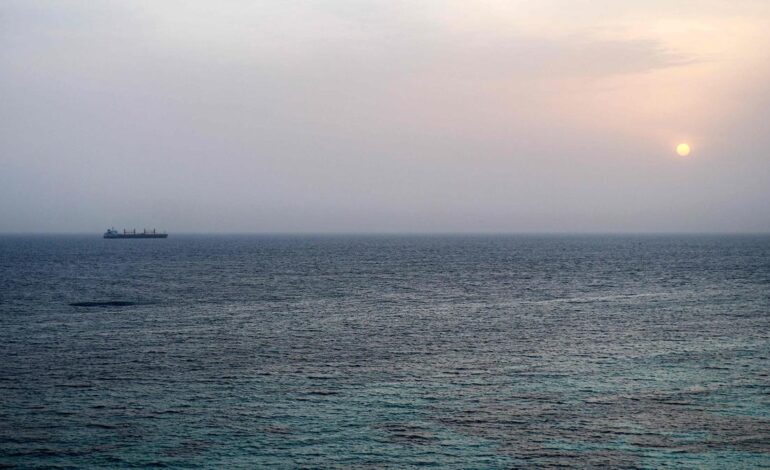
The Bab el-Mandeb Strait, whose Arabic name means “Gate of Tears”, separates Yemen on the Arabian Peninsula from Djibouti and Eritrea in the Horn of Africa. At its narrowest point, it is only about 30 km wide. Yet this relatively small stretch of water forms the southern gateway to the Suez Canal, linking the Red Sea with the Gulf of Aden and, ultimately, the Indian Ocean. Every vessel travelling between Europe and Asia through the Suez Canal must first pass through the Bab el-Mandeb, making it one of the world’s most strategically important maritime chokepoints.

According to the U.S. Energy Information Administration (EIA), around 9.3 million barrels of crude oil and petroleum products transited the Bab el-Mandeb each day in 2023. The volumes eventually dropped, following the start of Houthi attacks, by more than half, averaging roughly 4.1 million barrels per day in 2024 and remaining near 4.2 million barrels per day by 2025.
The Strait’s importance stems from geography rather than size. Commercial ships transporting crude oil, liquefied natural gas, manufactured goods, food products, automobiles, and industrial equipment use the route because it offers the shortest maritime connection between Europe and Asia. Instead of sailing around the Cape of Good Hope at the southern tip of Africa, vessels can transit the Bab el-Mandeb and the Suez Canal, saving both time and fuel.
The difference is substantial. A diversion around the Cape of Good Hope typically adds 10 to 15 days to a voyage, depending on the destination. For shipping companies operating on tight schedules, longer voyages reduce the availability of vessels, disrupt logistics networks, and raise freight charges. Industries dependent on just-in-time deliveries can quickly feel the impact of delayed shipments.
This is why the Bab el-Mandeb is often grouped with other strategic maritime chokepoints such as the Strait of Hormuz, the Strait of Malacca, and the Panama Canal. Each serve as a narrow passage through which a disproportionate share of global commerce flows. Hence, any disruption, whether caused by conflict or natural disasters, can ripple across international markets.

How are the Houthis using the Strait as a weapon?
For the Houthis, the Bab el-Mandeb represents more than a commercial shipping lane. It is a strategic lever. Unlike conventional military powers, the Houthis do not possess a large navy capable of controlling regional waters. Instead, they have relied on asymmetric tactics, including drones, ballistic missiles and attacks on commercial shipping, to project influence beyond Yemen. By threatening vessels transiting one of the world’s busiest maritime corridors, the group can impose economic costs on regional rivals while ensuring that the conflict remains an international concern.
The strategy has evolved. Following the outbreak of the Gaza war, the Houthis repeatedly targeted vessels they claimed were linked to Israel and its allies, arguing that the attacks were intended to pressure Israel over its military operations in Gaza. Several international shipping companies responded by diverting vessels around southern Africa, while naval coalitions led by the United States and its partners increased patrols in the Red Sea to protect commercial traffic.
The latest warning directed at Saudi-linked shipping suggests that the Houthis are expanding the use of maritime pressure as a geopolitical tool. Rather than confronting larger military powers directly, the group is seeking to take advantage of geography by threatening a route that the global economy depends upon.
The consequences of prolonged disruption would extend well beyond the immediate conflict zone. Delayed shipments can disrupt supply chains, affecting manufacturers, retailers and ultimately consumers through higher costs.
Why does this matter for India?
This is huge for India. India has significant economic and strategic interests in maintaining stability around the Bab el-Mandeb. A substantial share of India’s trade with Europe passes through the Red Sea corridor, making the route important for exporters of pharmaceuticals, engineering goods, textiles, chemicals, and machinery. India imports more than 85% of the crude oil it consumes. Longer voyages increase freight costs and delivery times, reducing the competitiveness of Indian products in overseas markets.

The country is also one of the world’s largest importers of crude oil. Although India’s energy supplies arrive through multiple routes, higher global oil prices resulting from instability in major maritime corridors increase the country’s import bill and can eventually feed into domestic fuel prices and inflation.
The Bab el-Mandeb may be only 30 km wide at its narrowest point, but it has become one of the world’s most consequential waterways. As long as global trade continues to rely on the Red Sea-Suez Canal corridor, instability in the strait will remain a concern not only for countries in West Asia but also for governments and consumers across the world.
Published – July 28, 2026 06:05 am IST