


The story so far:
On July 26, 2026, the External Affairs Ministry issued an advisory for Indian seafarers joining commercial vessels in the Black Sea region. The Ministry said the security situation in the area “remains highly volatile due to the ongoing conflict”. It was referring to the four-year-old Russian war on Ukraine.
The Ministry said merchant ships in these waters are “facing significant security risks, including missile and drone attacks” and since April 2026, the number of such attacks has gone up leading to “the tragic loss of five Indian lives.” It advised Indian seafarers “to carefully assess” the security risks before accepting assignments.


Urging sailors to “exercise the utmost caution”, the Ministry said they must procure “comprehensive information” from employers, recruitment agencies and ship operators regarding the vessel’s route, ports of call, security arrangements, insurance coverage, and emergency response procedures.
Hinting at the operation of so-called ‘shadow’ fleets, or sanctioned ships, the Ministry said that seafarers must ensure that the terms of employment “comply with applicable international maritime standards and provide adequate provisions for medical care, evacuation, repatriation, and compensation in the event of an emergency.”
Why the advisory?
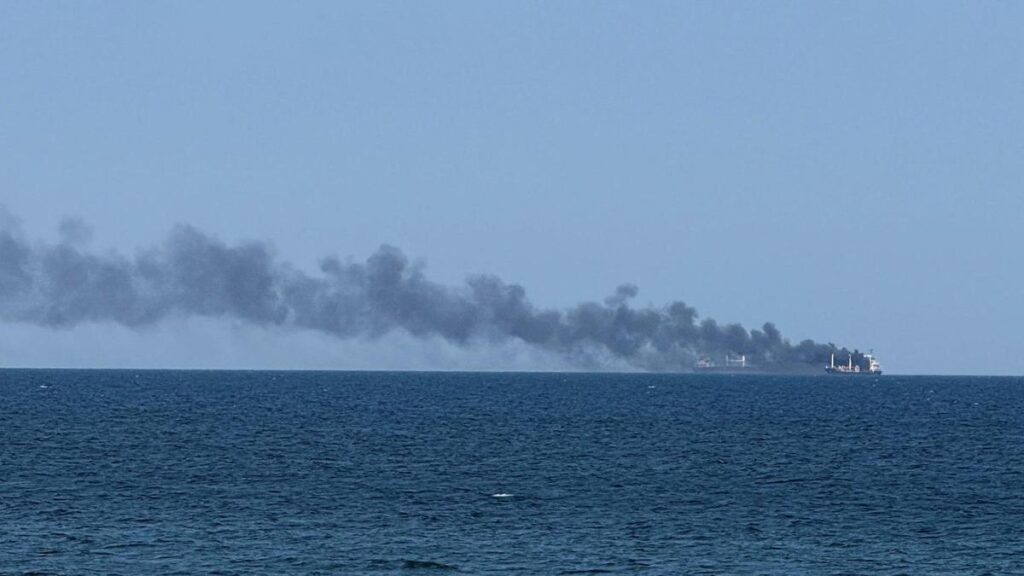
The advisory comes amid attacks on international commercial vessels reportedly by both Ukraine and Russia. On July 18, an Indian was killed when a ship, MV Omorfi, was hit while it was “transiting Russian territorial waters” in the Black Sea. The ship had three Indian nationals in a crew of 10. On July 19, MV Golden Leo was attacked off the coast of Ukraine, in which 10 sailors, including four Indians, were killed. New Delhi summoned the Russian Charge d’affaires following the attack. On Saturday (July 25) night, two Indian sailors went missing after a merchant vessel was struck in the Ukrainian port of Odessa, the Indian Embassy in Kyiv said.
Why is Russia attacking Odessa?
Russia has been pounding the Odessa region with missiles and drones as part of its renewed war efforts. According to Ukrainian media outlet RBC-Ukraine, Moscow has “intensified its attacks on the Odessa region, using missiles and new types of drones.”
With its seven ports, Odessa is key to Ukraine’s maritime logistics as it has a long coastline along the Black Sea and borders Romania and Moldova.
According to Maritime Executive, a trade magazine, Ukraine shipped more than 197 million tonnes of cargo in the past three years despite the war through a safe corridor. This includes 117 million tonnes of grain.
RBC-Ukraine quoted Yurii Ihnat, head of communications for the Ukrainian Air Force, as saying: “The unique feature of Odessa’s location is its long coastline, where many infrastructure facilities are concentrated. It is also home to significant economic assets of Ukraine, particularly maritime logistics.”
The report said that Russia is sending aircraft and firing missiles from occupied Crimea to “damage port infrastructure, civilian vessels, and shipping-related facilities.”
The Russian attacks are aimed at crippling the Ukrainian economy, hit imports and enforce a maritime blockade. According to Ukrainian Navy spokesperson Dmytro Pletenchuk, Russia’s “desire to damage our export and import capabilities has not changed.”
“Nor has its goal of preventing Ukraine from maintaining civilian maritime traffic. The ambitions of the Russian dictator remain the same, including the maritime blockade of Ukraine that he publicly reiterated at the end of last year,” The Odessa Journal reported him as saying.
Another RBC-Ukraine report said that following Russian attacks on port infrastructure and foreign ships, Ukraine’s “maritime exports have effectively come to a halt”.
The report cited a statement from Oleh Kiper, head of the Odessa Regional Military Administration, in which he said that Russia has pounded the Odessa region for the third consecutive week and that every day, there are “at least 10 air raid alerts” during which Russia hits the ports and the city with missiles and drones.

“People remain in a constant state of anxiety because the attacks have not stopped for three weeks. The enemy is very actively attacking Odessa and the ports,” Mr. Kiper was quoted as saying. He also referred to the July 19 strike in which Indian seafarers were killed and said the Russian attack was “deliberate”.
Ukraine’s counteroffensive
For its part, Ukraine has increased drone production and has pummelled Russian energy infrastructure, disrupting production. Oil is Russia’s major revenue source and keeps its war engine, though enervated, running.
Reports said that on Saturday (July 25), Ukraine drones hit 21 Russian oil tankers in the Sea of Azov. Besides, it has stepped up drone attacks on the Crimean Peninsula, which Russia had annexed in 2014 and uses as a launchpad for attacks on Ukraine.
The Sheskharis terminal, Russia’s biggest oil-exporting facility on the Black Sea, at the Novorossiysk port, has suspended tanker loadings after Ukraine drones rained down. The port accounts for almost 20% of Russia’s crude oil exports. The Ukrainian attacks have disrupted fuel supply within more than 10 Russian regions, one report said. Fuel stations have rationed or halted sales. It said that there is a “logistical lockdown” in Crimea.
Are Indians being targeted?
Targeting international shipping has become a “new tactic” to build pressure, Manoj Yadav, general secretary of the Forward Seamen’s Union of India, told The Hindu. “In conflict zones, the softest international target is the mariner. The forces that attack merchant ships have all the information. They deliberately target these ships to grab more attention,” he said. Mr. Yadav said the Indian government must step in and file a petition with the United Nations. “India must seek the support of all nations to stop these killings,” he said. He said that the International Maritime Organisation, being a UN regulatory body, should take up these attacks with the countries and ensure that the shipping lines are secured.
Published – July 27, 2026 11:56 am IST