What is behind the communal clashes in Nepal?

After days of silence and mounting criticism over his delayed response, Nepal Prime Minister Balendra Shah on Thursday (July 30, 2026) addressed the nation, urging calm and restraint as authorities reported another death following clashes that triggered unrest across the country’s southern plains.
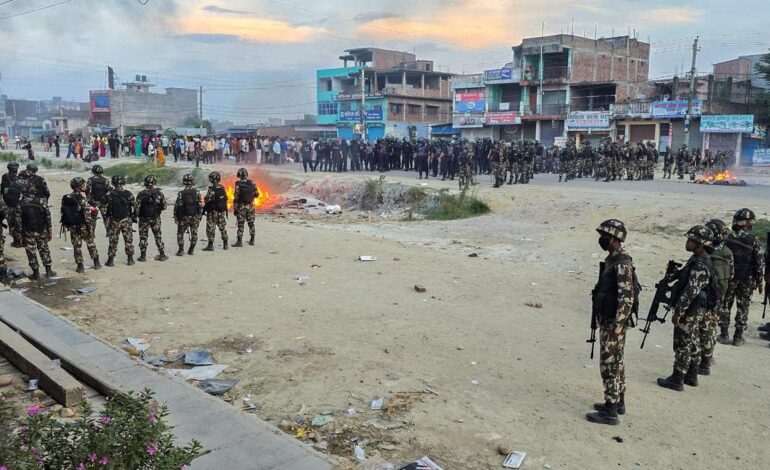
A curfew, initially imposed in Dewangunj Rural Municipality of Sunsari district, where the violence first erupted on Sunday, has since been extended to several districts, including Sarlahi, Dhanusha, Siraha and Saptari. The death toll since has risen to three.

In his address, Mr. Shah said the government is treating the violence in Sunsari and other districts with the utmost seriousness. “I appeal to all citizens, political parties, civil society, religious leaders, and the media to exercise restraint and help preserve peace, social harmony, and national unity,” Mr. Shah said. “I urge everyone not to spread rumours, misinformation, or hate speech, and to rely only on official information.”
Stating that the government would take strict action against anyone attempting to disrupt peace, security and social harmony, Mr. Shah said the Constitution guarantees every citizen the right to practise their religion and that the government remains fully committed to protecting that right.

The violence began on Sunday (July 26, 2026) night after a dispute between Hindu and Muslim groups over religious celebrations in Kaptangunj of Dewangunj, Sunsari district, in Koshi Province. The confrontation soon turned violent, prompting police intervention. The unrest has been concentrated in Nepal’s southeastern plains, where Madheshi communities form the majority and Muslims account for a significantly larger share of the population than the national average. Muslims make up around 5% of Nepal’s population but are concentrated across Madhesh Province and parts of Koshi Province, Nepal’s southern provinces bordering India. The affected districts have long been home to Hindu and Muslim communities that have largely coexisted peacefully.

The death of Omprakash Mehta, 31, in police firing triggered protests that spread to neighbouring districts in Madhesh Province over the following days. Police said Jayaprakash Mehta, 21, who had been injured during Sunday’s (July 26, 2026) violence, also died on Thursday (July 30, 2026). Later in the afternoon, Ganesh Yadav, 15, died during protests in Siraha.
While security officials were criticised for failing to respond effectively, Prime Minister Shah initially relied on social media — his preferred mode of communication — to react to the unfolding crisis even as protests intensified. Protesters defied curfew orders in several places. At the recommendation of the National Security Council, which convened on Thursday (July 30, 2026)morning to review the deteriorating security situation, Mr. Shah addressed the nation later in the day.

Increasing polarisation
Nepal Army personnel have been deployed in the affected districts as curfews remain in force.
Although Nepal has largely maintained peaceful relations between religious communities, sporadic communal tensions have become more frequent in recent years. Incidents triggered by religious processions, social media posts or local disputes have occasionally escalated into violence, prompting curfews and heightened security.
Observers expressed concern that the unrest could spread further and criticised Mr. Shah for delaying his first public address on the crisis — something he has generally avoided since taking office.
He has addressed Parliament only once since being sworn in four months ago after his Rastriya Swatantra Party’s victory in the March elections, which were triggered by last September’s Gen Z protests in which 76 people, mostly young people, were killed.
Observers say the latest violence should not be viewed as an isolated incident, arguing that multiple underlying social, political and institutional factors are at play. While the government’s current efforts to restore calm are welcome, they say a broader and more sustained approach is needed to address growing mistrust between communities.
Chandrakishore, a political commentator and columnist, says the spirit of coexistence that had defined Nepal for decades appears to have weakened in recent years. “There is suspicion among Hindus and safety fears among Muslims,” he said. “Unless this is addressed, tensions could flare up time and again. What’s concerning is that the country as a whole lacks leadership — not just political but civic as well — that can reinstate confidence.” According to him, rebuilding trust between communities would require a broader social and political effort rather than only short-term security measures.
Rakesh Mishra, executive director of North-South Collectives, a Janakpur-based think tank, cautioned against describing the recent violence solely as a Hindu-Muslim conflict. Mr. Mishra said the growing assertion of Hindutva politics — influenced partly by the mistrust highlighted by Chandrakishore and partly by the increasing influence of political developments in India — has contributed to rising tensions.
“The recent violence can be attributed more to clashes between pro-Hindu groups and police than to direct Hindu-Muslim conflict,” Mr. Mishra said. “As often happens during volatile situations, confrontations between religious communities then follow.”
Both analysts agree that while the immediate trigger was local, deeper structural issues — including growing social mistrust, weak institutional response and increasing religious polarisation — have made such confrontations more likely.
Rakesh Shah, a 24-year-old engineering graduate from Janakpur who currently lives in Kathmandu, says he is worried about the recent tensions in his home region. Mr. Rakesh, who is planning to go abroad for employment, identified unemployment and poor economic conditions among young people as some of the factors contributing to social frustration.
Rather than viewing the unrest purely through the lens of religious differences, he believes some vested interest groups may be exploiting existing frustrations. “I am, however, surprised by the intense religious feelings among people, including the youth, in recent times,” he said. “Lack of employment also has to do with this, I think.”
Amid criticism of Mr. Shah, Home Minister Sudhan Gurung has also come under scrutiny. As the Minister responsible for the country’s internal security apparatus, his response, too, was widely seen as delayed. Only five days after the violence began in Sunsari did Mr. Gurung travel to the district, arriving on Thursday (July 30, 2026).
Late on Thursday night (July 30, 2026), Mr. Gurung, on behalf of the government, signed an agreement with the families of Omprakash Mehta and Jayaprakash Mehta. Under the agreement, the government committed to immediately initiating the process of declaring both victims martyrs and providing compensation of 1 million (Nepalese rupees) each to their bereaved families.
Meanwhile, Mr. Shah has continued consultations, while leaders of various political parties have separately held discussions to prevent further escalation and help restore trust between communities.