The View From India Newsletter An expanding regional war


(This article is part of the View From India newsletter curated by The Hindu’s foreign affairs experts. To get the newsletter in your inbox every Monday, subscribe here.)
The latest round of fighting between the U.S. and Iran, which broke out over the status of the Strait of Hormuz, has spread across the region, from Oman to Jordan. The U.S. forces carried out ninth straight night attack on Iran on Sunday, targeting mainly the military infrastructure in Iran’s southern coastal region. Iran has struck U.S. bases and other infrastructure in Oman, Qatar, Bahrain, Kuwait, the UAE and Iraq’s Kurdish territory. But unlike the phase one of the war, Jordan, which hosts several American bases, has become the main target of Iranian response.
The U.S. military has two major bases in Jordan — the Muwaffaq al Salti Air Base (Azraq Air Base), the largest and most important U.S. military facility in Jordan, and Tower 22 – a small U.S. outpost near Jordan’s northeastern border with Syria and Iraq. The U.S. military also has access to several Jordanian military installations under the 2021 U.S.-Jordan Defence Cooperation Agreement. Last week, U.S. military announced that two of its service members were killed and several others injured in an Iranian missile strike at the Salti Air Base. A third American servicemen was killed in Iraq. On Friday, the Iranian military central headquarters said it launched a drone attack at fuel tanks at the Jordanian base. They also claimed to have hit several American helicopters.

After most U.S. bases in the Persian Gulf were damaged by Iranian missile attack, Jordan has emerged as a key location for basing U.S. troops and weapons. Iran is now expanding the scope of the regional war by repeatedly targeting Jordan, which shares border with Israel, Saudi Arabia, Iraq and the occupied West Bank. As the U.S. seeks to degrade Iran’s military capability and ability to close traffic through the Strait of Hormuz, Tehran, through its repeated attacks across the region, seeks to downsize the U.S. military presence in its neighbourhood.
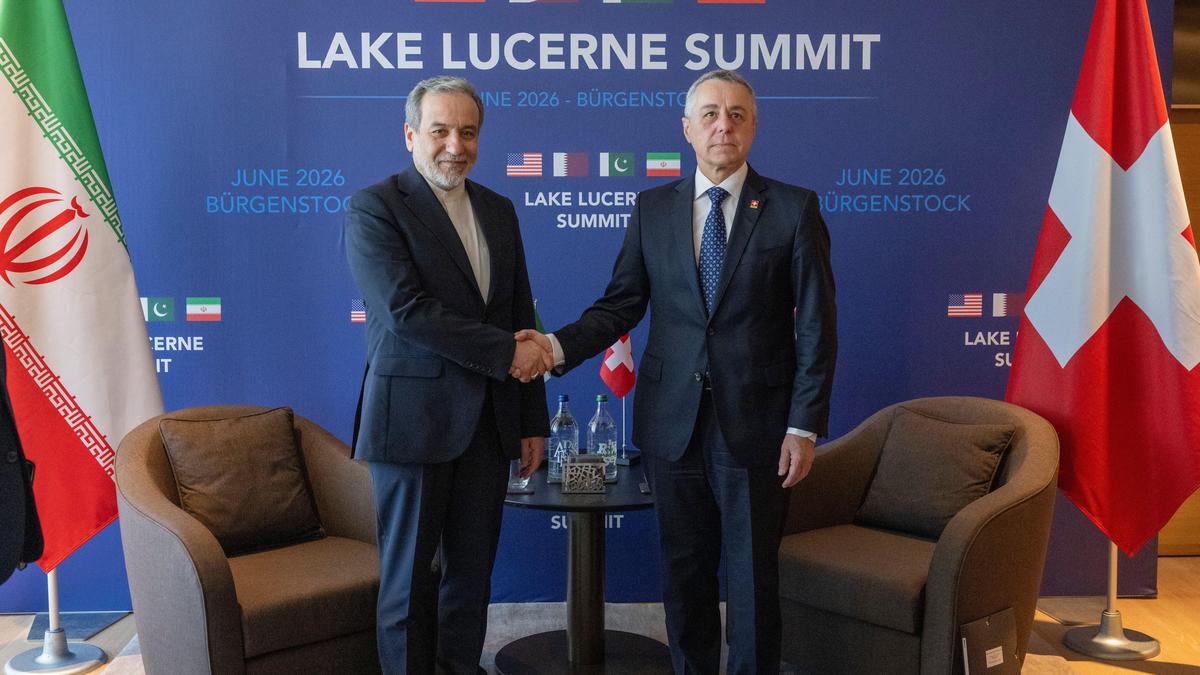
While attacks and counterattacks continue, both the U.S. and Iran have signalled that they were open for diplomacy. Regional Gulf countries have already proposed a 10-day ceasefire. Both the UAE and Qatar have called for deescalation. U.S. Secretary of State Marco Rubio told reporters on Sunday that “if that door opens, we’ll be happy to see it open.” But he added that Iran’s “behavior has to change in order for ours to change.” Iran’s Foreign Minister Abbas Araghchi said the country had “emerged as a significant interactional actor” from the war. “The right time to negotiate is exactly when you have achieved reliable battlefield and strategic gains,” Mr. Araghchi added. But Iran’s leadership has made one thing clear. They would not compromise on their control over the Strait of Hormuz. The U.S. military has repeatedly claimed that the strait of open. But tankers taking the U.S.-cleared route along the Oman coast come under fire. Only four commercial vessels passed through the strait on July 19, down from around 130 before the war broke out.
The institution that is driving Iran’s war effort is the Islamic Revolutionary Guard Corps. And the commander who is leading the IRGC from the shadows is Gen. Ahmad Vahidi. We have carried a profile of Gen. Vahidi on Sunday. You may read it here: Ahmad Vahidi | The commander of asymmetric warfare.
A new PM in the UK

Andy Burnham, newly elected leader of the Labour Party, on Monday took charge as the U.K.’s new Prime Minister. King Charles III invited the 56-year-old former Mayor of Greater Manchester to form a new government following the resignation of Keir Starmer moments earlier to mark the formal handover of power.
Read this profile of Burnham: The King in the North
The Top Five
Political parties and groups representing Sri Lanka’s Tamil-speaking ethnic minority communities seek to voice their shared concerns, writes Meera Srinivasan.
2. China pitches AI governance model for Global South
Broader context is China’s push to both develop its alternatives to Western AI models and to offer them to developing countries; President Xi Jinping announced that Beijing would provide “5,000 opportunities in AI training and seminar programmes” in the next five years, writes Ananth Krishnan.
3. Indians worst hit as Canada cuts down on student intake
The steady climb of Indian students going to Canada since 2015, is now witnessing a quick reversal that is likely to worsen further by the end of 2026, writes Sambavi Parthasarathy.
4. How the second phase of the Iran-U.S. war started and why it is raging
The MoU, signed on June 14, stipulated Iran would allow ships to pass “with no charge for 60 days only,” and that Iran would work with Oman to “define the future administration and maritime services” in the Strait of Hormuz, writes M. Kalyanaraman.
5. Nepal’s new government, old concerns: Governance, dissent, shrinking civic space
After completing 100 days in office, the Balendra Shah administration now finds itself confronting many of the same questions that dogged its predecessor before last year’s Gen Z protests, which ultimately swept Mr. Shah to power, writes Sanjeev Satgainya.
Published – July 20, 2026 07:57 pm IST