



 rahulNovember 12, 20267 Mins read0
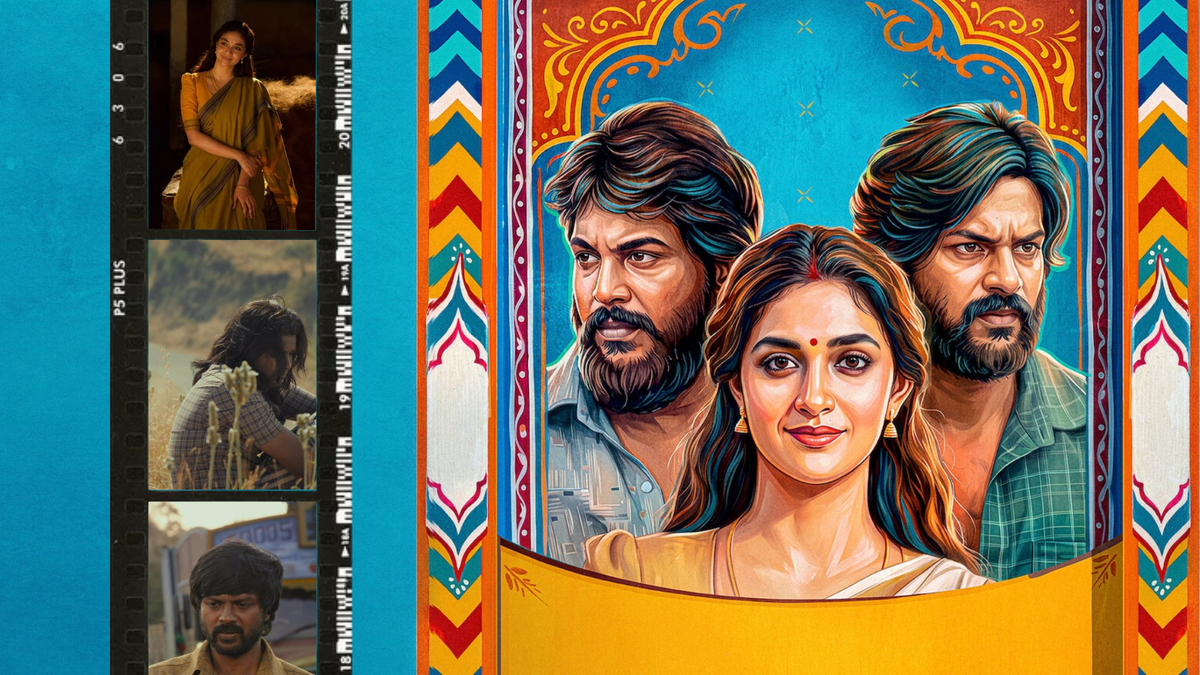
There are films you watch, films you enjoy, and then there are films that leave you so overwhelmed that you struggle to find the words for what you’ve just experienced. Dorothy (now streaming on Netflix) belongs firmly in the third category. If you’ve spent any time on Letterboxd, Film Twitter or Instagram lately, chances are you’ve seen someone talking about Karthik Subbaraj’s latest film. The film bros are talking about it, the film girls are talking about it, the gays are talking about it, and for once, the internet seems to have found something worth agreeing on. Everyone is watching Dorothy, and everyone has a reason to be obsessed. And honestly, for all the right reasons.
Written and directed by Subbaraj, Dorothy is the kind of cinematic experience that reminds you why you fell in love with movies in the first place. It is audacious without being self-indulgent, political without feeling like a lecture, and heartbreaking without ever losing sight of the tenderness that makes us human. It is also one of those rare films that makes you want to immediately call someone, tell them to watch it, and then spend the next two hours discussing every little detail about it.

Set in 1995, in a village near Madurai, Dorothy introduces us to childhood best friends Karthi (Rishikanth) and Subbu (Sananth). They grow up in a world governed by caste hierarchies, patriarchal expectations, family honour and an almost suffocating idea of masculinity. Their friendship is shaped by an environment where violence is normalised, dominance is celebrated, and vulnerability is mistaken for weakness. Subbu’s father, Veeraiya (Muthukumar), is a particularly imposing presence in this world, embodying the social power, and toxic masculinity that the boys grow up learning to navigate.
There is a recurring insistence that men must not cry, that anger is the only acceptable expression of emotion. It is a world where men are allowed to be violent but not vulnerable, where women are often reduced to their relationships with men, and where anyone who dares to exist outside the accepted social order risks becoming an outsider. Subbaraj takes his time establishing this world, almost suffocating us with its rigidity, so that when its carefully constructed walls eventually begin to crack, we feel every fracture.

Enter Dorothy (played by Keerthy Suresh), whose arrival changes the trajectory of the two men’s lives. Without giving too much away, what initially appears to be a story about friendship, masculinity, and an unexpected disruption gradually reveals itself to be something much more layered. Dorothy becomes the emotional centre of a story that interrogates gender identity, caste, repression, and the extraordinary courage it takes to live as yourself when the world has already decided who you are supposed to be.
What makes Subbaraj’s writing particularly fascinating is how he uses the conventions of mainstream Tamil cinema to challenge the very ideas that have traditionally informed it. Dorothy is not interested in making its politics palatable by removing them from their social context. Its queerness exists alongside caste discrimination, class anxiety, violence and the everyday realities of a deeply conservative society. These are not separate conversations. They are intertwined, shaping who gets to experience freedom, who is allowed dignity, and who has to fight for the most basic recognition of their identity.

And this is where the film feels particularly significant. Tamil cinema has been slowly, sometimes hesitantly, making room for queer storytelling. From Narthagi and Peranbu to Super Deluxe and Natchathiram Nagargiradhu, filmmakers have brought transgender lives, queer relationships and identities beyond the heteronormative imagination into the cinematic conversation. More recently, films such as Neela Nira Sooriyan, Kaadhal Enbadhu Podhu Udamai and En Magan Magizhvan have continued to push these conversations forward, each in its own way. Yet, these narratives have often had to fight for space, existing on the margins of mainstream Tamil cinema rather than being allowed to occupy its centre. They carry the additional burden of negotiating two things simultaneously: an audience still learning to make room for queer lives, and the responsibility of portraying those lives with honesty, dignity and authenticity.
What makes Dorothy particularly audacious is the way Subbaraj brings queerness into the very fabric of a mainstream cinematic experience, refusing to treat it as an isolated conversation or one that belongs exclusively to urban, supposedly progressive spaces. Instead, he situates it within the social realities of rural Tamil Nadu, where caste, class, gender, family and social standing are deeply intertwined. Queer lives do not exist outside these structures, and neither does the freedom to be oneself arrive equally for everyone. By placing these realities alongside one another, Subbaraj makes a case for a more intersectional understanding of identity, one that recognises that the fight for dignity is rarely just about one thing. It is this refusal to separate queerness from the world in which people actually live in that makes Dorothy such an important film.

But for all its political ambition, Dorothy never loses sight of its emotional core. And much of that comes down to its performances. Sananth and Rishikanth are absolutely extraordinary. Watching the two actors share the screen is almost an exercise in trying to decide where to look. Their performances are so instinctive, so carefully calibrated, and so emotionally charged that even their silences feel like entire conversations. The shifts in their characters’ relationship are handled with remarkable sensitivity, and the chemistry between them gives the film much of its emotional weight. There is an incredible amount happening behind their eyes, in the pauses between their words, and in the things they struggle to say. I genuinely cannot remember the last time I was this completely absorbed by two performances in a film.

Keerthy Suresh, meanwhile, brings warmth and a quiet conviction to Dorothy. Although her screen time is relatively limited, her character leaves an impression that extends far beyond her scenes. She becomes a source of emotional possibility in a world that has very little room for it. The supporting cast, particularly Muthukumar, Soundararaj and Shanmugaraja, further ground the film in its distinctly textured social landscape.
Every frame feels considered, almost as though the film has a language of its own. S Thirunavukarasu’s cinematography captures the physical and emotional claustrophobia of the village with extraordinary precision, using light, shadows, mirrors, and compositions to communicate what the characters cannot always articulate. There is a deliberate visual language at play, and once you begin noticing it, you realise just how much thought has gone into the construction of this film. The screenplay is equally meticulous, with seemingly ordinary exchanges and visual details often carrying a much larger emotional significance. Nothing feels incidental. Even the silences seem to know exactly when they need to arrive.
And Ilaiyaraaja. The GOAT. What do you even say about a composer who seems to understand precisely what a scene needs before you have even figured out what you’re feeling? His score is haunting, tender, and occasionally overwhelming. There is something almost otherworldly about the Dorothy theme, a femininity and longing that seem to exist somewhere between a wail and a prayer. The use of ‘Muthumani’ towards the end is particularly affecting. By the time the final scene arrives, with its beautiful framing, and extraordinary performances, I was an absolute mess. The music, the silences, the expressions and the sheer tenderness of it all come together in a way that is difficult to explain without giving away the experience.
That said, Dorothy isn’t without its shortcomings. Some stretches could have benefited from tighter editing, and there are moments where the film’s portrayal of trans identity feels mediated through the perspectives, and emotional journeys of its cisgender male characters. The question of representation is worth examining, particularly when the central trans character is played by a cisgender actor, despite the presence of trans actors elsewhere in the film. Queer cinema must continue to make room for queer performers to tell their own stories, particularly when it comes to trans representation. Appreciating a film’s ambition shouldn’t mean overlooking the conversations it still needs to have.
But what stays with me is the audacity of it all. Subbaraj takes a world built on rigid ideas of masculinity, caste and social conformity and gently, then spectacularly, begins pulling it apart. He makes you sit with its discomfort, its contradictions and its people. More importantly, he reminds you that queer stories are not merely stories about coming out, acceptance or finding a place in the world. They are stories about friendship, tenderness, childhood, longing, ordinary dreams and the simple, universal desire to be loved without having to become someone else first.
Perhaps that is what makes Dorothy so heartwarming despite everything that happens within it. It understands that there is so much more to a person than the labels society assigns them. That femininity is not a weakness. That vulnerability is not the opposite of strength. That love and friendship can become unexpected forms of resistance. And that sometimes, the people who change our lives are the ones who allow us to see ourselves differently.
I am still struggling to articulate what I felt watching this film. There were moments when I wanted to pause just to take in a frame, rewind a dialogue, or sit with an expression a little longer. I wish I were more fluent in Tamil because I am convinced I missed so much of what was being said, and I desperately want to catch every little nuance. If Dorothy were a bathtub, I would happily soak myself in it.

This is what cinema is for. It opens up your horizons, introduces you to lives and experiences you may not have known how to understand, and leaves you with a little more empathy than you had when you walked in. It makes the world feel bigger, but somehow also a little kinder. For queer audiences, there is something particularly beautiful about seeing a story that insists on the dignity of existing. For everyone else, perhaps it is an invitation to look beyond what they have always been taught to accept.
Dorothy is one of the finest films I have watched this year, and quite possibly one of the most emotionally affecting cinematic experiences I have had in a long time. It is imperfect, ambitious, deeply political and achingly human. If you’ve been wondering what everyone on your Letterboxd feed is losing their minds over, consider this your sign. Watch Dorothy. Let it wash over you. And then come back and tell me you weren’t moved.
Inside Lali: Sarmad Sultan Khoosat On Love, Loss And The Absurdity Of Marriage