


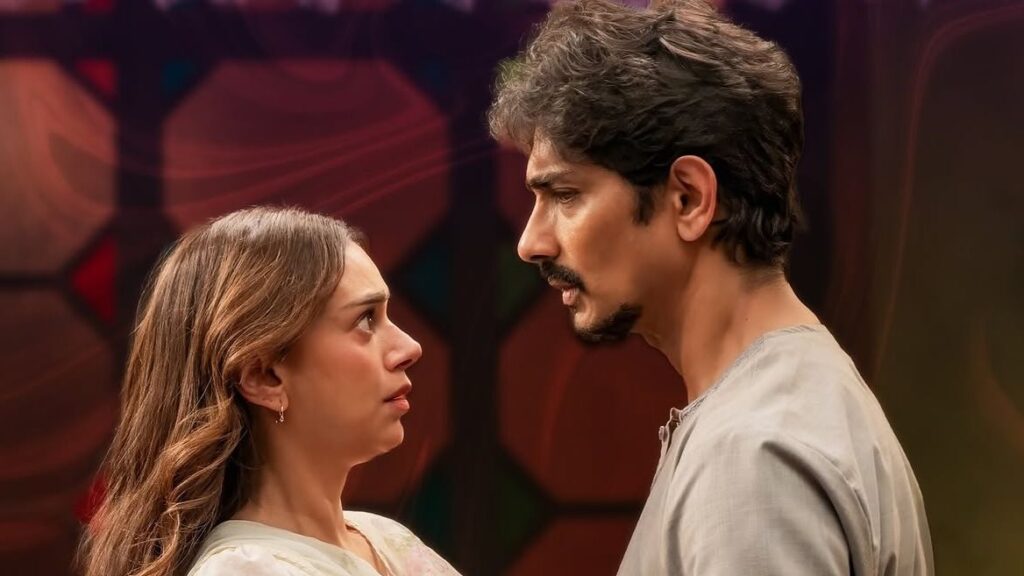
Vishal Bhardwaj’s story about a wife writing fanfiction about her unwitting husband also elicits laughter, but that laughter echoes in the hollowness of the female protagonist’s emptiness. Bhardwaj takes us to ’80s Hyderabad with Saira (Aditi Rao Hydari) and Badru (Siddharth). Their problem is not a dry marriage but the patriarchal mindset that joins them in their marital bed. For Badru, sex is a route on the map. Start here, go there, turn here, and you arrive at the destination. He follows the direction with great confidence but forgets to check whether Saira is even in the car.


Badru’s ignorance drives Saira to pulp erotica, and eventually, she starts writing her own. At the end, this story sparks conversations about desire, galvanised by the very erotica Saira wrote.
For me, Lust Stories 3 acts more as a mirror than just a weekend Netflix watch. If couples who have shared beds for years cannot talk to each other, what hope do the rest of us have? Most of us are swiping on Hinge at 1am, somewhere between unanswered piles of Monday emails and a bottomless pit of existential dread. Stumbling upon real interaction would perhaps be more shocking than seeing Harry Potter in the Dadar Local.
We have more modes of communication than ever. In fact, we are overflowing with it. Yet somehow, conversations feel like a rare commodity. Men are outsourcing even this intimate act to ChatGPT. Women on dating apps get surprisingly polished texts, with nary a split sentence in sight. Then you meet him, and the guy who said, “Murakami makes my soul sing Bohemian Rhapsody,” cannot hold eye contact.
At least, Franz Kafka wrote his own letters. Today Kafka is AI, and men aren’t even bothering to read, let alone learn, the lines before pressing send. The intimacy gap in Lust Stories 3 and on our phones is the same. It does not get fixed by Victoria’s Secret lingerie or better generative models. It gets fixed by conversation—preferably the awkward and unscripted kind.