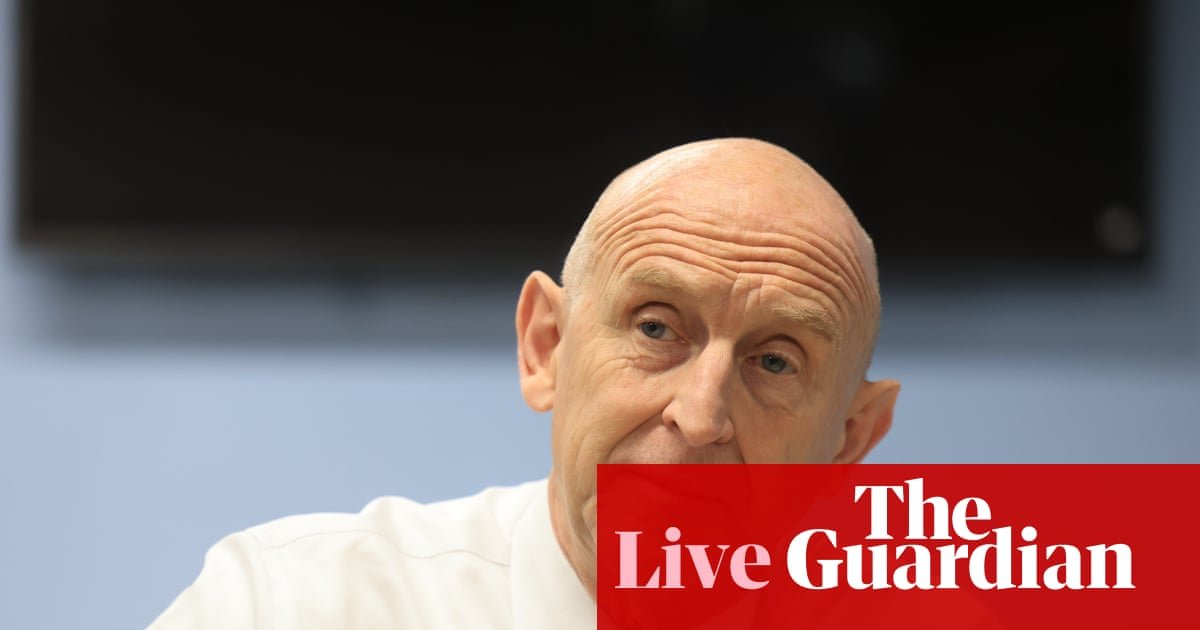
Greens accuse Labour of breaking manifesto pledge, after minister signals minimum wage age equalisation being paused
Jonathan Reynolds, the business secretary, has not contested reports saying that, in the budget tomorrow, John Healey, the chancellor, will pause the process of equalising the lower national minimum wage paid to people under the age of 21 with the more generous national living wage that applies to older workers.
In an interview on the BBC this morning, Reynolds was asked to respond to a story suggesting the equalisation process has been put on hold because of concerns about youth unemployment.
John Healey will announce plans to increase the minimum wage by nearly 4% but slow the rise for young people after warnings that they are being priced out of jobs.
The Times has been told that the national living wage, which applies to those aged 21 and over, is expected to rise from £12.71 to around £13.20 – an increase of 3.9%.
However, Healey has decided not to repeat the big rises of the past two budgets in the national minimum wage, which applies to those aged 18 to 21. It will rise broadly in line with the rate for older workers – from £10.85 to around £11.27, an increase of 3.9%.
In its manifesto, Labour said it would raise the level of the national minimum wage to the level of the national living wage to “so all adults are entitled to the same minimum wage, delivering a pay rise to hundreds of thousands of workers across the UK”. The manifesto implied this would happen during this parliament, but in May Torsten Bell, the pensions minister, said implementation of this commitment could be delayed until after the general election – implying the government is worried equalisation now could increase youth unemployment.
Asked about the Times story on the Today programme, Reynolds insisted the new national living wage and national minimum wage rates would be announced tomorrow.
But he went on:
The manifesto pledge on equalisation still applies, but it was always clear it would happen over time and we would take into account, as the minimum wage uprating each year always does, the relative strength of the labour market and other pressures …
Of course, you want not just good wages, but good work. And the way this has always been done – it is a balance of making sure the pressures on the labour market are taken into account. That is the approach you will see confirmed [in the budget].
The Green party has accused Labour of breaking a manifesto promise. Responding to the Times’ story, and Reynolds’ comments in effect confirming it, Mothin Ali, the Greens’ co-deputy leader, said:
Anyone doing a day’s work, needs to be paid the same rate for the same job. A young person’s rent and food bill is no less because they are young, so they need to receive the same wage.
Healey and Burnham are now breaking a manifesto pledge to young people that even Starmer managed to keep. Labour have no respect for young people, who appear to just be there for cheap labour for the wealthy and their corporate donors.
Ali said the Greens would introduce a £15 minimum wage for workers of all ages.
UK rejoining EU’s Erasmus student exchange scheme in January, with applications open next month, minister tells MPs
The government has confirmed that the UK will rejoin the Erasmus+ student exchange scheme from the start of January, the Press Association reports. PA says:
Foreign Office minister Hamish Falconer said applications would open next month for young people who will be able to study, train or get work experience in the European Union.
Speaking during Foreign Office questions, Falconer emphasised to MPs that the opportunities would be open to “educational institutions of all kinds”.
Work on the UK joining the Erasmus programme was announced as part of Keir Starmer’s post-Brexit reset deal with Brussels in 2025.
The UK left the scheme under Boris Johnson’s Brexit deal in 2020, with the then-prime minister arguing it did not offer value for money.
It was replaced by the Turing Scheme, which was ended when the government announced the new deal over Erasmus plus.
The government has previously said it expects more than 100,000 people to be able to benefit, and that disadvantaged students tend to benefit highly from taking part in the scheme.
Lib Dems call for business rates to be scrapped as they highlight their budget proposals
Ed Davey, the Lib Dem leader, and Daisy Cooper, his deputy, visited an MOT garage today – for the sole purpose, it seems, of providing a picture to illustrate his pre-budget soundbite.
In a statement, he said:
Labour has put the handbrake on the economy. Growth is in the slow lane and hardworking business owners like Bob are facing higher costs, a jobs tax, and a broken business rates system.
The economy desperately needs a tune-up. The Liberal Democrats would scrap business rates, replace them with a fairer system, and negotiate a proper growth and defence deal with Europe, so we can turbocharge our economy by joining the EU single market and customs union.
In a briefing on their own budget proposals, the Liberal Democrats said they would:
• Turbocharge economic growth and spur investment and job creation across the UK, through a new growth and defence partnership with Europe, including joining the EU Single Market and a customs union.
• Scrap business rates and replace them with a fairer system. The Liberal Democrats would replace business rates with a commercial landowner levy. Firms would no longer be taxed on the value of the building or machinery they use, which penalises investment and hits independent businesses hardest.
• Boost skills and tackle the Neet crisis. The party would guarantee every young person 100 hours of work experience and professional enrichment before they turn 18 to tackle the Neets pipeline before young people fall out of education and work. This would also help tackle the growing number of young people not in education, employment or training (Neets), by making it cheaper for small employers to offer first jobs. According to latest ONS figures, there were an estimated 981,000 young people aged 16 to 24 years in the UK who were Neet in April to June 2026.
Ed Davey and Daisy Cooper on a visit to Hester’s Garage in Fleet, Hampshire, this morning. Photograph: Andrew Matthews/PA
Streeting signs defence agreement with Poland, describing it as ‘one of UK’s closest allies’
Britain and Poland have agreed to work together to build a new generation of air defence missiles, as the west gears up its defence efforts against Russia, the Press Association reports. PA says:
A new agreement, the Warsaw Defence Plan, will also see the two nations work together to build new drones and anti-drone measures, as well as collaborate closely on more traditional land, sea and air defence.
Defence secretary Wes Streeting signed the pact in Warsaw today, where he met his Polish counterpart Władysław Kosiniak-Kamysz.
Streeting said: “Poland is one of the UK’s closest allies – from flying together in the Battle of Britain, to breaking the Enigma code, they have been a vital partner for our defence for nearly a century.
“The new Warsaw Defence Plan honours this cooperation and sets out how we will continue to work together today, building a stronger Europe in a stronger Nato.
“From collaborating on Nato exercises that deter our adversaries to working together to support Ukraine in its fight for freedom, we are committed to standing together for European security whilst boosting our economies with stronger defence industries.”
Under the pact, the two nations will share their experiences of developing new warships. Britain’s Type 31 frigate and Poland’s Miecznik are based on a common design.
The allies have also agreed to increase shared patrols in the Baltic Sea, to protect vital communications cables on the seabed.
The agreement comes ahead of a major coalition of the willing exercise next month, which will see British, French and German forces join Warsaw’s soldiers in Poland for training to prepare for a peacekeeping mission in Ukraine once the war is over.
Polish defence minister Władysław Kosiniak-Kamysz (right) with Wes Streeting signing the Warsaw Defence Pact. Photograph: Albert Zawada/EPA
No 10 says Burnham to set out ‘next steps’ for long-term relations with EU around time of 20 November summit
Jonathan Reynolds, the business secretary, said this morning that British government officials would be talking to their EU counterparts about possible changes to the UK-EU relationship. Possible options include the UK joining the single market, and so free movement would be part of that discussion.
The government seems to be nervous about suggestions it is already in talks about the UK signing up for free movement rules and, at the Downing Street lobby briefing this morning, a No 10 spokesperson insisted free movement was not part of the current talks with the EU.
Those talks are “focused solely on next month’s summit, and the practical agreements that we hope to make there that will add billions to the economy and cut the red tape that holds back British business,” the spokesperson said.
She added:
Any future relationship depends on practical arrangements, on what is realistic for both sides, and, crucially, on what the British public supports. And the prime minister will set out the next steps when it comes to our longer term relationship around the time of the summit.
The summit will take place in Brussels on Friday 20 November.
Greens accuse Labour of breaking manifesto pledge, after minister signals minimum wage age equalisation being paused
Jonathan Reynolds, the business secretary, has not contested reports saying that, in the budget tomorrow, John Healey, the chancellor, will pause the process of equalising the lower national minimum wage paid to people under the age of 21 with the more generous national living wage that applies to older workers.
In an interview on the BBC this morning, Reynolds was asked to respond to a story suggesting the equalisation process has been put on hold because of concerns about youth unemployment.
John Healey will announce plans to increase the minimum wage by nearly 4% but slow the rise for young people after warnings that they are being priced out of jobs.
The Times has been told that the national living wage, which applies to those aged 21 and over, is expected to rise from £12.71 to around £13.20 – an increase of 3.9%.
However, Healey has decided not to repeat the big rises of the past two budgets in the national minimum wage, which applies to those aged 18 to 21. It will rise broadly in line with the rate for older workers – from £10.85 to around £11.27, an increase of 3.9%.
In its manifesto, Labour said it would raise the level of the national minimum wage to the level of the national living wage to “so all adults are entitled to the same minimum wage, delivering a pay rise to hundreds of thousands of workers across the UK”. The manifesto implied this would happen during this parliament, but in May Torsten Bell, the pensions minister, said implementation of this commitment could be delayed until after the general election – implying the government is worried equalisation now could increase youth unemployment.
Asked about the Times story on the Today programme, Reynolds insisted the new national living wage and national minimum wage rates would be announced tomorrow.
But he went on:
The manifesto pledge on equalisation still applies, but it was always clear it would happen over time and we would take into account, as the minimum wage uprating each year always does, the relative strength of the labour market and other pressures …
Of course, you want not just good wages, but good work. And the way this has always been done – it is a balance of making sure the pressures on the labour market are taken into account. That is the approach you will see confirmed [in the budget].
The Green party has accused Labour of breaking a manifesto promise. Responding to the Times’ story, and Reynolds’ comments in effect confirming it, Mothin Ali, the Greens’ co-deputy leader, said:
Anyone doing a day’s work, needs to be paid the same rate for the same job. A young person’s rent and food bill is no less because they are young, so they need to receive the same wage.
Healey and Burnham are now breaking a manifesto pledge to young people that even Starmer managed to keep. Labour have no respect for young people, who appear to just be there for cheap labour for the wealthy and their corporate donors.
Ali said the Greens would introduce a £15 minimum wage for workers of all ages.
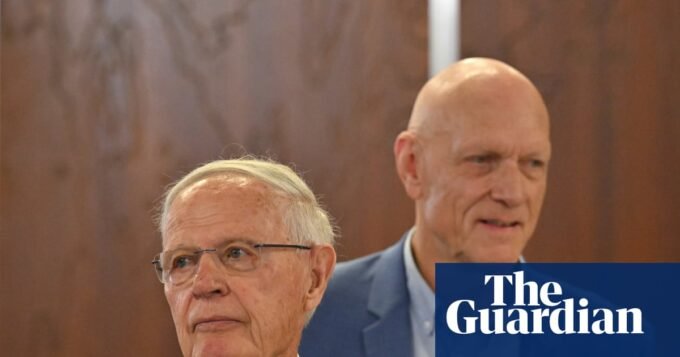
Wladyslaw Kosiniak-Kamysz, the Politish defence minister (left), and Wes Streeting, the UK defence secretary, attending a welcome ceremony before a meeting at the Ministry of National Defense in Warsaw, Poland, today. Photograph: Albert Zawada/EPA
Farage says Reform UK candidates would not be banned for liking Tommy Robinson
Nigel Farage, the Reform UK leader, has suggested that someone would not be banned from standing as a candidate for his party just for liking a social media post from the far-right activist and provocateur Tommy Robinson.
In his Today programme interview, Nick Robinson, the presenter, asked about the recent ITV News undercover exposé of Reform UK, which included footage of a potential candidate who flagged up pro-Robinson social media posts as a potential problem being told he should just delete his social media account.
Robinson, whose real name is Stephen Yaxley-Lennon, is currently on trial for harassment charges.
Asked if the ITV report showed that Reform UK’s vetting procedures were too lax, Farage said he “wouldn’t ban anybody for liking someone like Tommy Robinson”.
He went on:
[It] wouldn’t be my cup of tea, but I wouldn’t ban anybody from doing so … I don’t want us to get into a world of cancel culture.
When Nick Robinson asked if Farage was saying it would be OK for a Reform UK candidate to approve any post by Tommy Robinson, Farage said that would depend what the post said. But he went on:
I’m not going to have run a party where we say you can’t talk about that person or that person. We have to be sensible about vetting. And we are.
Farage also claimed that the BBC’s own experience with staff subsequently accused of paedophilia showed that all big organisations ran the risk of having rogue members or employees. And he claimed that Reform UK candidates were subject to a “much higher level” of scrutiny than candidates from other parties.
Referring to another person filmed in the exposé, a councillor with extreme racist views, Farage said that he was a former Conservative. When Nick Robinson put it to him that the ITV film suggested he had joined Reform UK because he realised he would be “among friends” there because other Reform UK members shared his views, Farage said that was “absolute cobblers”.
Back to “everyday fixes” (see 9.07am), and groups representing men have welcomed the news that self-employed men will be able to qualify for parental pay.
The Labour MP Amanda Martin, who co-chairs the Labour Men and Boys group, said:
I’ve long believed that self-employed dads deserve the same chance as everyone else to be there for their families when a new baby arrives, so I’m delighted that this is becoming a reality. It’s about time self-employed fathers got the support they deserve.
Self-employed tradies build our homes, fix our heating and keep our lights on, so ensuring they can access paternity leave is a proper mark of respect for the people who keep our country going. This will make a real difference to tens of thousands of dads each year, giving them the chance to welcome their children into the world and be present fathers without facing financial ruin. I’m especially pleased that self-employed dads in my home city of Portsmouth will benefit.
And George Gabriel, co-founder of the Dad Shift, which campaigns for better paternity leave rights, said:
Paternity leave is a cost of living lifeline for new families. This decision gives self-employed dads breathing space and a chance to show up for their loved ones when they’re needed the most.
The Women’s Budget Group, a feminist economic thinktank, has also welcomed the announcement. Eva Neitzert, its head of research and policy, said:
We’re pleased to see the chancellor recognise cost of living pressures on families and carers in his package of pre-announced measures. The lack of statutory paternity pay for self-employed fathers was a massive gap in parental leave …
We hope the chancellor will go further in his cost of living budget and increase statutory maternity pay as well. State support for new mum’s still sits at less than half of minimum wage beyond the first six weeks. Our cost benefit analysis of extending this to 12 weeks and raising pay to the national living wage found it was a net positive to the exchequer and would make the world of difference to families in the first nine months of their children’s lives.
Streeting says on visit to Poland that UK and Nato need to be ready for war with Russia
Jakub Krupa
Jakub Krupa writes the Guardian’s Europe live blog.
Wes Streeting, the defence secretary, has warned that Russia’s Vladimir Putin is “testing us and testing Nato’s resolve” as he condemned hybrid threats and “state-sponsored terrorism” from Russia.
Streeting repeated his recent warnings that “we have to be ready for a scenario in which the United Kingdom and the Nato alliance finds itself at war with Russia”. He went on:
Not because we want war – we have no quarrel with the Russian people, and we have no desire for war with Russia; Nato is a defensive alliance – but when Putin gives assurances that he has no intentions to provoke a war with Nato, we are reminded of what he said about Ukraine only days before the invasion.
Speaking in Warsaw alongside Poland’s defence minister Władysław Kosiniak-Kamysz, Streeting stressed Nato is ready “to defend every inch of Nato territory” and will continue its support for Ukraine.
The defence secretary added:
The more ready we are to face against Russia, to defend every inch of Nato territory, the less likely we are to find ourselves in that scenario.
Poland is one of our greatest and certainly our most reliable friend in Europe, and we value and treasure this friendship very much.
The partnership is “not simply about our shared history,” but also “our shared determination that in that contest between freedom and tyranny, the United Kingdom and Poland will not be bystanders.”
He said that UK forces will next month take part in major exercises as part of the multinational force for Ukraine.
Farage rejects research saying 80% of donations to Reform UK have come from people recently based abroad
Nigel Farage has rejected research showing that most of Reform UK’s donations have come from people or firms recently based overseas.
An astonishing 80% of donations to Reform UK in the past 12 months have come from donors or companies recently based overseas, The Independent can reveal.
An analysis of data from the Electoral Commission shows the amount received from donors who were based abroad in the past two years by Nigel Farage’s party dwarfs that of other parties amid growing concern about overseas influence in British politics.
In comparison, Labour and the Conservatives received just 0.15% and 3.57% of their donations from people or companies based abroad respectively during the same period.
Asked about the Independent’s analysis in his Today programme interview, Farage said the conclusions were “completely wrong”.
He told the programme:
Whoever’s done this research doesn’t understand where people domicile, how they operate, where they live, and where they vote …
I can assure you, these people vote here, live here, some of them are international businessmen who travelled the world constantly. In the old days, we used to be proud of British pioneers that went out there and made a great success of their lives.
Asked why Reform UK was so reliant on donors who spent a lot of time abroad, Farage said it would be a lot easier for him if he could just “sell some peerages” like other parties.
(Of course, parties aren’t allowed to sell peerages. But Farage is right to say that donating large sums to a mainstream political party does seem to have a remarkably positive effect on one’s chance of getting a seat in the House of Lords.)
Treasury claims its food tariff cuts, combined with Rachel Reeves’ tariff cuts, will cut consumer costs by up to £595m
It is not just gherkins where the Treasury is cutting import tariffs. (See 9.07am.) Here is the lists from the Treasury of mostly food imports where tariffs are being cut.
Garlic (8% + £100 per 100 kg)
Gherkins (12%)
Citrus jams, marmalades and pastes (20% + £19 per 100 kg)
Throat pastilles and cough drops (8%)
Boiled sweets, filled or unfilled (8%)
Toffees, caramels and similar sweets (8%)
Plant-based beverages (soya, nut, cereal or seed) (8%)
Chocolate-coated waffles/wafers (8%)
Kerosene (4%)
Fertilisers (between 2-6.5%)
The Treasury also cut tariffs on some food imports in the summer. It says “together, the two packages are expected to reduce consumer costs by approximately £245m to £595m a year”.
When Andy Burnham opened a debate on revising the Brexit settlement in his Labour conference speech, he did so on the basis of a simple proposition. He declared: “I cannot say to you truthfully that where we are is good enough. Brexit has done more harm than good.”
The Conservatives have strongly attacked Burnham’s move – but mostly on the basis that the 2016 referendum decision should be honoured, that a new debate would be divisive and that Burnham’s initiative went against assurances he made during the Makerfield byelection. Very few Tories have challenged the proposition that “Brexit has done more harm than good”, and Kemi Badenoch has not seriously tried to take on this argument.
Reform UK has also been keen to attack Burnham more on the basis of problems that rejoining the EU would throw up than on the basis of the supposed Brexit benefits the UK might be sacrificing. But, in an interview this morning on the Today programme, Nigel Farage, the Reform UK leader, did argue that Brexit had worked.
Asked if he regarded Brexit as a success, he replied:
Yes, I do. We certainly stand taller in the world. The terrible projections of doom as to what would happen to our financial sector etc haven’t happened. Our growth rates are higher than our European competitors. Our exports, particularly of services to the European Union, have actually rocketed. And we’ve now got more trade deals and more options around the rest of the world.
But Farage also accepted that Brexit had failed to cut immigration numbers in the way that people who voted for leave were expecting. “So yes, in the eyes of many, the delivery of Brexit has been a failure.”
Farage also claimed Burnham had no mandate to reopen the Brexit debate. He said:
Five months ago, Andy Burnham says … I’m not going to reopen these arguments.
Two-and-a-half years ago, a Labour government got a massive majority in parliament saying we will not be re-entering the single market, the customs union, or opening up a debate on the free movement of people.
What I am saying is this: this prime minister has no mandate, and to hear that his officials are negotiating in Brussels already is really very, very poor indeed.
Unison says focus on cost of living, including tax-free mileage, ‘commendable’, but ‘bolder’ policies needed
Unison has particularly welcomed the announcement today about higher tax-free mileage rates being made permanent. (See 9.07am.) The union has been campaigning for this, and some of its members will benefit.
But, in her response, Andrea Egan, Unison’s general secretary illustrated how there is a limit to how much goodwill a government can generate from small “everyday fixes”. She said:
These are welcome measures, especially making the uplift to mileage rates permanent, something Unison has campaigned hard for. The government’s relentless focus on the cost of living is commendable.
But the cost of essentials, including food and fuel, is going to keep soaring, meaning breathing space will quickly be closed down. That’s why we need to see a bolder approach, based on making the wealthy pay their fair share and improving the lives of working-class communities in a more enduring way.
The Treasury says three million people are expected to benefit from the mileage changes. It says:
These changes will provide £120 a year in additional tax savings for a worker doing 6,000 business miles, with someone driving 15,000 business miles receiving up to £300 in additional tax savings.
Tories dismiss PM’s budget ‘everyday fixes’ as little more than ‘cheaper gherkins’, and ‘an insult to families
Good morning. Prime ministers tend to get judged by posterity by the decisions they take on the big issues of the day. But little things matter too in the here and now, often disproportionately, and Andy Burnham, more than his predecessors, has decided that what he calls “everyday fixes” are worth focusing on too. Alexandra Topping wrote a good analysis about the pluses and minuses of this approach last week. But she filed too soon, because this morning Burnham has announced another five.
These are all changes contained in tomorrow’s budget but being announced today – presumably because John Healey will have bigger surprises for MPs tomorrow, and the Treasury wants these measures to get some media attention today because tomorrow they will be overshadowed by another story.
One of the measures is of particular interest to the Guardian because we have highlighted the scandal that led to hundreds of thousands of people getting the carer’s allowance being ordered to pay back huge sums of money because inadvertently their weekly earnings went slightly above the threshold allowed. In other parts of the welfare system, people just have to return the overpayment, but the rules for carer’s allowance were draconian, and a tiny breach of the weekly earnings allowance could lead to people being ordered to pay back thousands of pounds.
As Patrick Butler and Pippa Crerar report in our splash, this rule is being scrapped.
But this is one of just five “everyday fixes” announced this morning. Here is what the Treasury says about them.
• Making higher tax-free mileage rates permanent and increasing support for nurses, care workers, self employed builders and others who drive for work. The chancellor is locking in the 55p per mile rate for the first 10,000 business miles and increasing the rate above 10,000 miles from 25p to 35p per mile, supporting around 3 million employees and self-employed people who use their own vehicle for work.
• Extending parental pay to more than 150,000 additional parents per year, including self-employed dads and partners who have previously missed out, giving eligible parents two weeks of support currently worth up to £194 a week so they can spend more time with their child.
• Ending the Carer’s Allowance cliff edge, so unpaid carers no longer lose their entire allowance simply for earning a penny over the Weekly Earnings Limit, equivalent to 16 hours of the National Living Wage. Instead, only £1 of support will taper away for every additional £1 earned.
• Removing import tariffs on more than 100 products, helping lower import costs on family favourites including baked beans, chocolate and gherkins, while also supporting farmers facing higher fertiliser bills and households that rely on kerosene heating oil. Together with tariff suspensions already introduced, households could save up to £21 on their food shop each year.
• Rolling out hundreds more Post Office drop boxes, bringing the total to 1,000, making it easier and more convenient for people to send and return parcels without having to queue at a Post Office counter, helping take some of the hassle out of everyday errands in the run-up to Christmas. This comes alongside upgrades to 600 Post Office branches by the end of the financial year, improving services for customers across the country.
There is more detail in the Treasury news release here.
It is always easy to mock, and the Conservatives could not resist. Here is their response, from Andrew Griffith, the shadow chancellor.
Rampant borrowing, soaring taxes and an utter inability to cut spending mean inflation has already wiped out the benefits of Burnham’s ‘everyday fixes’.
Shoppers face rising costs at the till and families are struggling to make ends meet, but Burnham’s plan is cheaper gherkins. This is an insult to families hammered by Labour’s tax rises.
The mention of gherkins in the Treasury press release did come as a surprise, given that they are not a key feature of the national diet, but maybe someone in Whitehall read the reports earlier this year about their importance for Pret a Manger sandwiches.
The problem with the Tory response is that, even though “everyday fixes” might not make a big difference, people tend to welcome them anyway. This is from Novara Media’s Aaron Bastani.
Part of the genius with this stuff is the negative polarisation, when people start attacking perfectly sensible and helpful – albeit small – changes.
Actually I want longer Post Office queues please!
Here is the agenda for the day.
10.30am: Sarah Sackman, the courts minister, gives evidence to the Lords justice committee on support for jurors.
Morning:Andy Burnham hosts a meeting with Muslim leaders in No 10.
11.30am: Ed Miliband, the foreign secretary, takes questions in the Commons.
Noon: Downing Street holds a lobby briefing.
After 12.30pm: Dan Jarvis, the security minister, is expected to give a statement to MPs about the government’s ‘Be Ready’ resilience advice about stockpiling essentials.
I’m afraid we are no longer able to have comments open below the line every day on this blog. If you want to contact me, please email politics.live@theguardian.com. You can use this email to flag up corrections, comments for publication, questions or complaints.