


 rahulNovember 16, 20262 Mins read3
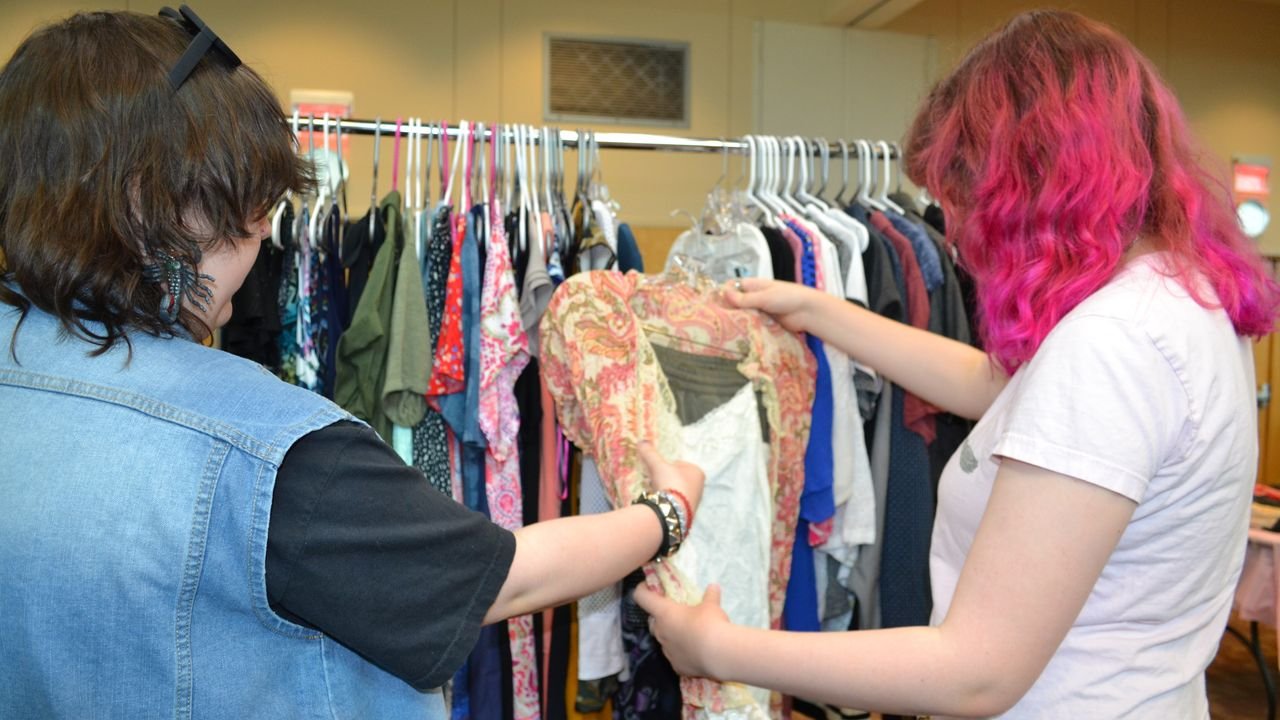
“I primarily work with people who have body dysmorphia or dysphoria,” says AJ Mix, who runs community outreach at the Uncommon Closet. Many of their clients are trans or queer people who have faced discrimination for expressing a different gender identity than their sex assigned at birth. “A lot of people have trauma going to stores,” Mix says. Their job is often to function as a sort of therapeutic personal stylist, accompanying clients—some of whom are trans women early in their transition—on trips to gendered shopping aisles they might be afraid to navigate alone.
According to Mix, the Uncommon Closet’s clothing swap was meant to be a one-time event in 2024, during the queer sewing and alteration business’s grand reopening. But then they noticed the huge demand for this free service. Mix now hosts three swaps a year—in spring, summer, and winter—to help people prepare for the seasonal shifts in Chicago’s weather. “We have a lot of new people coming in from the South to Chicago due to the political climate,” Mix says. “A lot of people use their entire savings to haul their entire lives up here, and so they just don’t have any money.”
Elsewhere, on the East Coast, Alex Carroll, the 20-year-old founder of NYC Youth for Trans Rights, organizes clothing swaps for young people who struggle to afford gender-affirming accessories. A binder, which flattens the chest to give wearers a more masculine silhouette, can run upwards of $50 and be difficult to source in person. Carroll loves to see people walk away from their clothing swaps, visibly thrilled to have scored a binder for free.
But even more than that, Carroll loves seeing people make new friends and find their community at these meetups. “There’s constantly stuff being thrown at trans people,” Carroll says. “You have to find people who are similar to you to help support each other.”
In Austin, Christabell Nunez wanted to create a safe space for marginalized people of all different body sizes to explore fashion. “It is still so hard to shop for plus-sized people. You really have to scavenge,” Nunez says. “A lot of our trans people, they are getting stared at. They’re getting looked at in retail spaces.”
In 2024, Nunez hosted a plus-sized clothing swap in her backyard that was attended by 20 friends. Now that work has expanded into the nonprofit I Slay, which hosts swaps for well over 150 people every month. Everyone is welcome to take as much as they want, Nunez says; the only limitation is that people are asked not to resell the clothes for profit.