


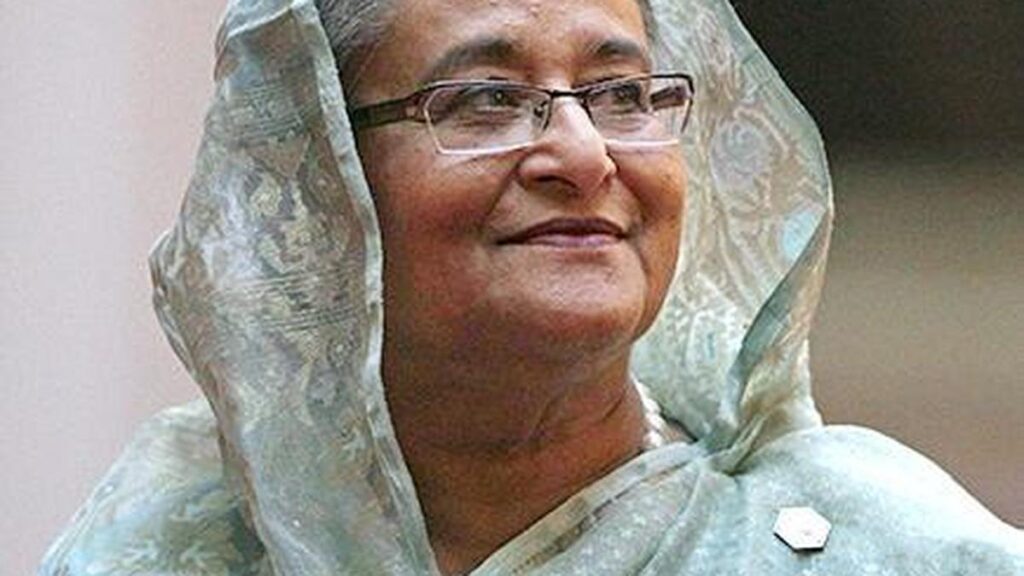
The story so far: Bangladesh on Sunday (August 16, 2026) urged India to create a “propitious environment” for enabling Prime Minister Tarique Rahman’s visit to India by extraditing deposed Prime Minister Sheikh Hasina. Ms. Hasina, who has been based in India since fleeing Dhaka on August 5, 2024, addressed a press conference at the Foreign Correspondents’ Club in Delhi on August 5, 2026, where, describing the condition of Bangladesh, she said, “Fear has entered homes, workplaces and campuses.” The press conference drew a quick response from Bangladesh’s Ministry of Foreign Affairs, which described Ms. Hasina as a “convicted genocider” and accused her of the “gruesome killing of innocent civilians, including minor children” during the July-August 2024 uprising in Bangladesh.
On Sunday, A.K.M. Shahidul Karim, official spokesperson of Bangladesh’s Ministry of Foreign Affairs, also demanded that India extradite the suspected killers of Osman Hadi, who died in Singapore last December after being shot in Dhaka by unidentified assassins who are reported to have escaped to India.


Is it possible for India to extradite Sheikh Hasina by following the extradition treaty of 2013?
In principle, India can extradite a person who is wanted by Bangladesh for committing offences, as the extradition treaty mentions that people wanted by both sides can be extradited through this “reciprocal” agreement. However, under Article 6 of the treaty, titled “Political Offence Exception”, individuals involved in offences of a political nature can be an exception in the extradition process. This provision says: “Extradition may be refused if the offence of which it is requested is an offence of a political character.”
Article 6 further says that offences such as “murder”, “kidnapping”, and “manslaughter” will not be considered offences of a political kind. The problem, however, is that the definition of “political offence” is not clear in the extradition treaty that may provide space for political interpretation of the offence to India under the current circumstances, as many cases were filed against Ms. Hasina in 2024 without sufficient evidence, and that the International Crimes Tribunal (ICT) had question marks over the way it conducted the hearings and gave the verdict in November 2025 as doubts were raised about the integrity of the members of the ICT.

What kind of crimes was Ms. Hasina accused of by Bangladesh?
The interim government of Bangladesh that came to power in August 2024 accused Ms. Hasina of being responsible for the police crackdown that led to the killing of at least 800 individuals.
According to a U.N. report, the number of people killed in the crackdown by the police and the security forces is around 1,400. The International Crimes Tribunal, in a fast trial, held Ms. Hasina guilty of crimes against humanity and sentenced her to death on November 17, 2025. The Home Minister of the Awami League government, Asaduzzaman Khan Kamal, was also sentenced to death.
Subsequently, Bangladesh sent a diplomatic note to India seeking the extradition of Ms. Hasina. India, however, refrained from conveying anything definitive, with the Ministry of External Affairs saying, “India has noted the verdict announced by the ‘International Crimes Tribunal of Bangladesh’ concerning former Prime Minister Sheikh Hasina. As a close neighbour, India remains committed to the best interests of the people of Bangladesh, including in peace, democracy, inclusion and stability in that country. We will always engage constructively with all stakeholders to that end.”
The United Nations, while stressing the need for justice in Bangladesh, has opposed the death penalty under all circumstances.

Is the ICT verdict an acceptable ground for extradition?
Article 8 of the treaty clearly states that either country can reject an extradition request in cases in which the accusations have not been made in “good faith” or “in the interest of justice”. This point draws attention to the verdict of the ICT, which has been described by the Awami League, Sheikh Hasina’s political party, as “predetermined”.
There were allegations that the ICT was reconstituted during the interim government’s tenure and that its members were sympathetic to Jamaat-e-Islami. Tajul Islam, the barrister who fought many legal cases for Jamaat-e-Islami, was appointed the chief prosecutor of the ICT by the interim government led by Mohammed Yunus.
Ms. Hasina, in a statement, rejected the verdict, blaming the interim government for the prosecution. She sought a trial before an international court.
Commentators have pointed out that Bangladesh’s International Crimes (Tribunal) Act, 1973 requires amendments in order to ensure a fair trial in such cases.

Do India and Bangladesh use extradition treaty to hand over offenders?
India and Bangladesh signed the extradition treaty in Dhaka on January 28, 2013, and it came into effect on October 23 that year. The treaty was signed as it was felt that there was a need to structure the criminal and judicial matters between the two countries, given the large number of offenders that both sides encounter. Bangladesh shares its longest land boundary with India (4,096 km).
Several high-profile criminals and suspects have been apprehended and handed over under the treaty.
One such case was that of Noor Nabi Maxon in 2022. He was accused of 11 murder cases and was apprehended in West Bengal, where he had been staying with an assumed identity. According to diplomatic sources, Dhaka and New Delhi have been using the extradition treaty to facilitate the handover of smaller offenders and criminals. The treaty is the “only functioning instrument” through which extradition of wanted individuals is possible bilaterally between the two countries.
That apart, the two countries are also members of the BIMSTEC Convention on Mutual Legal Assistance in Criminal Matters: (BIMSTEC MLAT), under which India and Bangladesh can collaborate with five other member countries of the BIMSTEC grouping, which has been active since March 2022. However, the 2013 bilateral extradition treaty is the only instrument that allows India and Bangladesh to exchange fugitives and terror suspects.
Can politically sensitive extradition cases go ahead as per the treaty?
While the extradition of fugitives can, in principle, take place between India and Bangladesh, in reality, however, warmth in ties has a role to play while handling politically sensitive cases.
Officials, speaking off the record, have been indicating that the handover of Ms. Hasina may not be as easy as it appears, as there are serious possibilities of law and order disruption if she is returned suddenly. That apart, the extradition treaty that was sealed at a time when bilateral relations were at a highpoint with the Land Boundary Agreement and the Maritime Boundary Dispute — both nearing settlement — shows that political sentiment in India-Bangladesh relations has a role to play in creating an enabling environment.

Why has Bangladesh added the suspected killers of Osman Hadi to the latest extradition request?
Bangladesh has been demanding the extradition of the suspected killers of Osman Hadi, who Dhaka claims were apprehended by the security forces in West Bengal after they fled Bangladesh following the shooting.
While this was mentioned earlier, the case has now been mentioned alongside Bangladesh’s demand for Ms. Hasina’s extradition and its call for an “enabling environment” for Prime Minister Tarique Rahman’s proposed visit to India.
A radical student leader, Hadi was shot in Dhaka in December 2025 and died in Singapore on December 18. His death led to major law-and-order problems in Bangladesh. The case is being closely followed by Islamists who have considerable street power in Bangladesh at present. The Jamaat-e-Islami, which has 67 seats in Bangladesh Parliament, has also been pushing for justice for Hadi. So, there is a domestic political angle to the case as well that makes it important for the BNP government.
Published – August 18, 2026 12:29 pm IST