



If you grew up watching coming-of-age films and television, chances are your idea of teenage life was shaped by a distinctly Western lens. Think perfectly choreographed high-school dances, elaborate promposals, American college campuses, summer romances and the seemingly endless drama of navigating friendships in the hallways of a high school. Whether it was 10 Things I Hate About You, The Princess Diaries, Gossip Girl or The Summer I Turned Pretty, there was something universally appealing about watching young people fall in love, make mistakes and figure themselves out. For the longest time, these stories also offered a version of growing up that Indian audiences could only experience vicariously.

But the coming-of-age story has been finding a new home closer to ours. Today’s young Indian protagonists are no longer confined to the familiar love triangle or the pursuit of a happily-ever-after. They are navigating complicated friendships, parental expectations, career ambitions, financial independence, identity and the rather uncomfortable business of becoming an adult. Their worlds might look different from ours, but their dilemmas are increasingly recognisable. And perhaps that’s what makes this new wave of Indian youth-focused storytelling particularly exciting: we no longer have to look elsewhere to find characters who feel like us.
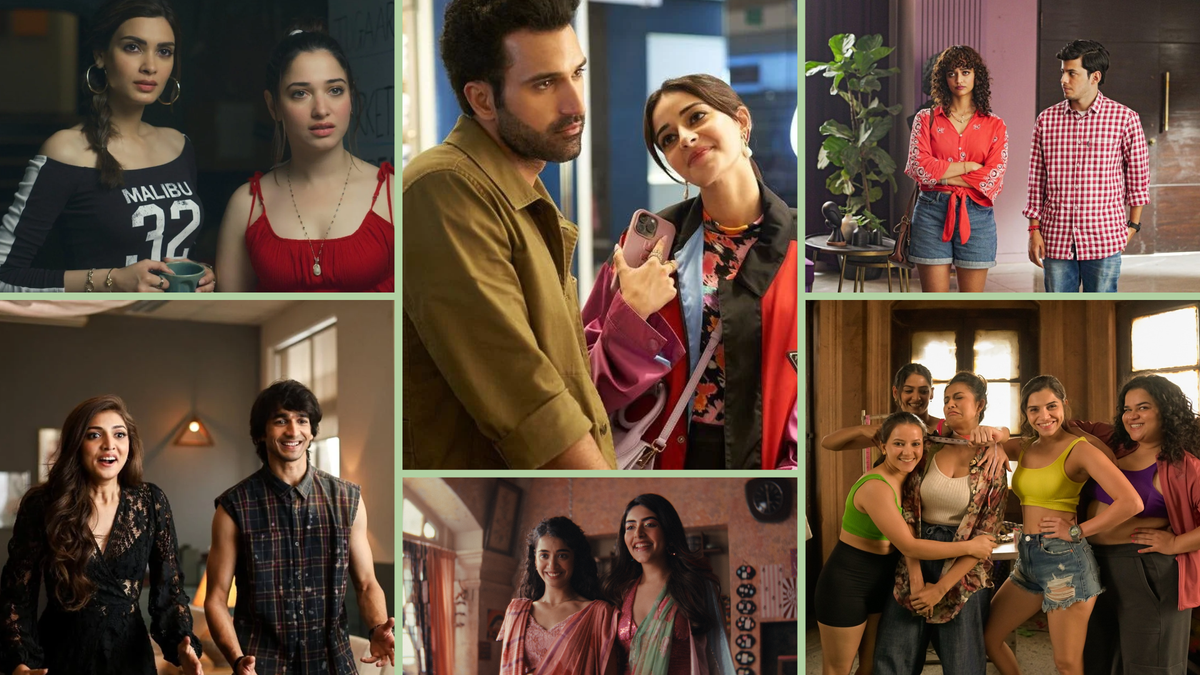
Over the past decade, Prime Video has built a varied collection of stories that tap into this appetite, spanning everything from campus dramas and teenage romances to female-led comedies and stories about young women carving out independent identities. As the platform marks 10 years in India, titles such as Call Me Bae, Ziddi Girls, Big Girls Don’t Cry, Dil Dosti Dilemma and Don’t Be Shy reflect the many ways in which young Indians are experiencing growing up. Meanwhile, films such as Girls Will Be Girls and series such as Waack Girls explore the more complicated intersections of adolescence, gender, ambition and societal expectations. Together, they reflect how the genre is becoming less about following a prescribed path and more about discovering what that path might look like in the first place.

For Sahira Nair, Head of Hindi Scripted Series at Prime Video, this shift is closely connected to the changing aspirations of young audiences. “Young audiences today are looking for stories that reflect the realities of navigating a rapidly changing world. Their aspirations are more expansive, but so are the questions they grapple with around identity, ambition, financial independence, relationships and the lives they want to build for themselves,” she says. She also points out that Gen Z no longer consumes stories within traditional boundaries, moving fluidly across languages, genres and geographies in search of characters and experiences that feel authentic to their world.

One of the most interesting changes is the way romance itself is being rewritten. Love stories aren’t disappearing from the coming-of-age conversation; they are simply no longer expected to be the entire conversation. The protagonist can want love and a fulfilling career, experience heartbreak and still prioritise herself, or be entirely unsure about what she wants from a relationship. In Call Me Bae, Bella Chowdhary’s journey from heiress to hustler is as much about discovering her own resourcefulness as it is about navigating her romantic life. With her career taking shape in Mumbai’s newsrooms, Bae’s transformation is rooted in the friendships she builds, the choices she makes and the person she becomes along the way. And with Season 2 bringing fresh complications to her love life, the series continues to play with the idea that a woman can have several things happening at once.

As Nair puts it, “I wouldn’t say audiences are moving away from romance; rather, the idea of romance itself is evolving.” She adds that love and relationships are no longer the ultimate destination or defining measure of a woman’s life. “Women today have greater agency in deciding whom they love, how they want to be loved, whether they want to marry, and what kind of relationships they seek.” It is a welcome departure from the familiar idea that a female protagonist’s story must eventually culminate in finding the right person. Instead, romance becomes one part of a much larger journey of self-discovery.
This also explains why female friendships have become such an important part of the genre. From the sisterhood at the centre of Big Girls Don’t Cry to the college friendships in Ziddi Girls, there is an increasing interest in the relationships that shape young women outside their romantic lives. In Don’t Be Shy, Shyamili Das finds her carefully planned world spiralling into chaos as she navigates complicated feelings, old friendships and unexpected new connections. Meanwhile, Dil Dosti Dilemma follows Asmara through an unexpectedly transformative summer in her grandparents’ neighbourhood, where a little white lie about being in Canada leads to genuine friendships, family bonds and first love. These stories understand that growing up is rarely a solitary experience. Sometimes, the people who know us best are the ones growing up alongside us.

Of course, coming of age does not always have to happen within the familiar confines of a college campus or a romantic comedy. Waack Girls, set in Kolkata, follows six young women who come together to form a waacking dance group, challenging family expectations and social conventions as they pursue an unconventional passion. Do You Wanna Partner takes female ambition into the male-dominated world of craft beer, following two best friends as they attempt to build their own business. Both stories expand the definition of what a young female protagonist can be: ambitious, entrepreneurial, unconventional and occasionally willing to take a rather ridiculous leap of faith.
For Nair, the key to making these worlds feel authentic lies in the emotions that connect them. “What we realized early on is that, in India, bridging themes with genres is often more important than genre alone,” she explains. Pointing to titles such as Four More Shots Please!, Dahaad and Khauf, she highlights how female agency can be explored through vastly different storytelling formats, from friendship dramas to cop thrillers and horror. “The genre may transport audiences to another world, but the emotions, conflicts, and aspirations at the heart of the story remain deeply relatable.”

There is also room for stories that aren’t necessarily about having everything figured out. In fact, some of the most compelling coming-of-age narratives emerge from the messiness of getting things wrong. Jee Karda follows seven school friends who reach 30 only to realise that adulthood looks nothing like the neatly imagined version they had once planned. Crash Course explores the pressures of academic competition through eight students caught in the rivalry between two coaching institutes, while Gutar Gu returns to the awkwardness and intensity of first love in a small North Indian town. Across these stories, growing up is less of a milestone and more of an ongoing negotiation between who we thought we would become and who we are actually turning into.
Looking ahead, Nair believes that the next phase of youth-centric storytelling will make even more room for complexity, individuality and perspectives that have traditionally remained underrepresented. “I think the next wave of youth-centric storytelling will be defined by a greater willingness to explore the complexity of human relationships, identity, and individual choice, and to reflect how these are evolving for younger generations,” she says. She also sees an opportunity to explore women’s desire, independence and agency within relationships, particularly in the Indian context, where these experiences have historically had limited representation on screen.

As Prime Video completes a decade in India, its evolving catalogue offers a glimpse into how far our appetite for these stories has come. For Gen Z, as Nair observes, entertainment is increasingly “content as culture, not just programming”. Young audiences want characters they can discuss, question, champion and see parts of themselves in. The success of a story is no longer limited to whether it delivers a satisfying ending; it is also about the conversations and connections it creates along the way.
Maybe growing up has always been a little chaotic, a little romantic and considerably more complicated than we were led to believe. The difference now is that Indian stories are finally giving that experience a language, a setting and a cast of characters of their own. And for a generation that wants to see more of itself on screen, that is a coming-of-age story worth watching.
Why India’s Queer Community Is Rewriting The Rules of Sex Education
Fashion Hauls Are Officially Embarrassing. Someone Forgot To Tell The Algorithm