



Hours after Bangladesh’s minimum wage board raised the monthly pay threshold for garment workers by 36 percent to 17,000 Bangladeshi taka ($136)—the sector’s smallest percentage hike in four decades—the mood in the world’s second-largest apparel exporter after China would best be described as mixed.
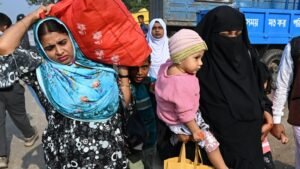
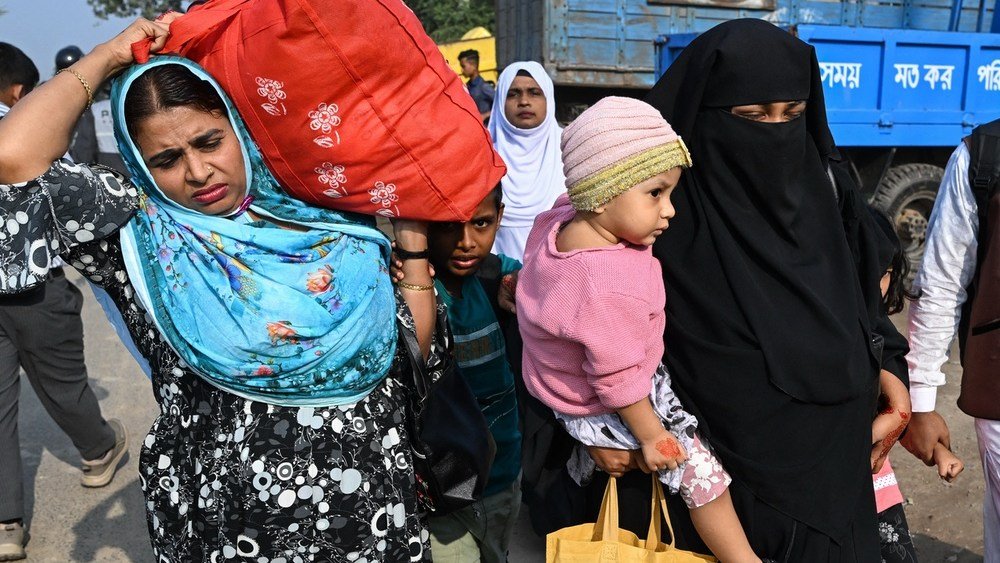
It’s difficult to predict how the workers who have poured into the streets en masse over the past month will react once the news has had a chance to sink in; as of Wednesday, 87 garment factories in Ashulia, Savar and Gazipur remained shuttered as protesters continued their demands for a 30,000-32,000 taka ($239-$255) wage that can keep pace with the increasing cost of rent, food and transportation in the face of stubborn inflation.
The six-member board, which includes a chairman, a neutral member and two representatives each for employers and workers, made its decision in a 4-2 vote less than a month after it formed in response to the brewing unrest. Factory owners had originally proposed 15,000 taka ($120), according to local media reports, which workers’ representatives rejected on Monday for being too low. The employers then offered 15,700 taka ($126), and the labor side later lowered its demand to 22,000 taka ($176). The deadlock broke only after workers’ representatives dropped their ask again to 18,000 taka ($144) and the employers settled on 17,000 taka.
Speaking to reporters after 12 hours of deliberation, Babul Akhter, a labor representative on the board, urged workers to return to their factories, adding, “Although we are not completely satisfied, the outcome is not entirely bad either. Previously, workers used to get a wage revision every five years, but this time they are getting a revised wage after three years.”
Others were less conciliatory. Nazma Akter, founder and president of the Sommilito Garments Sramik Federation, a union with more than 70,000 members, summed up her feelings as dissatisfaction. Workers are becoming “poorer and poorer” under the current pay structure, she said, adding that the continuation of a “not respectful” wage only shows that the broader system under which Bangladesh’s garment industry operates needs to change. The government, she said, needs to step up to help stabilize the prices of goods and services and provide better social protections.
But workers aren’t the only ones feeling the squeeze of rising costs, said Faisal Samad, a director of the Bangladesh Garment Manufacturers and Exporters Association, or BGMEA, the country’s apex trade group. Higher energy and raw material costs and tariff pressures have also eroded suppliers’ already-thin margins. Citing industry calculations that put direct labor in Bangladesh at roughly 42 cents per garment, compared with roughly 31 cents in Vietnam, 36 cents in Pakistan and 38 cents in India, he said that employers will be hard-pressed to shoulder the higher minimum wage unless buyers share the burden by “paying the right prices.”
“There’s got to be a complete shift, otherwise it’ll be very challenging for the industry as a whole to survive out of this,” Samad said. “Maybe a handful of factories will survive who are financially strong, but the small-and-medium-enterprise factories, which are exporting less than $5 million, will be under tremendous pressure to absorb this. I think brands need to look at Bangladesh as more than a cheap sourcing destination.”
Samad’s appeal to brands was echoed by Mohiuddin Rubel, founder and CEO of Bangladesh Apparel Voice and additional managing director at Denim Expert in Chittagong, who said buyers, as “our partners and the biggest stakeholders,” have a responsibility for the higher wage, too.
“Unfortunately, not all buyers do their part, as we saw after the last wage hike in 2023,” he said.
Anne Bienias, living wage coordinator at the Clean Clothes Campaign, the garment industry’s largest consortium of trade unions and civil society organizations, has also criticized brands, but for a slightly different reason: They haven’t done enough to push for a higher wage.
“It’s disappointing to see, time and time again, how brands fail to act during critical moments like minimum wage negotiations,” she said. “Though they can increase their purchasing prices at any given moment to increase wages of garment workers, speaking out in support of workers’ demands during minimum wage negotiations is nevertheless important, because a meaningful minimum wage increase positively affects 4.4 million workers at once.”
For Muhammad Azizul Islam, director of the Centre for Sustainability, Accountability, and Governance at the University of Aberdeen, one concern is that when the minimum wage increases, factory managers could force workers to do more unpaid work and meet unrealistic production targets, creating conditions akin to forced labor. Not only is that immoral, he said, but it also runs afoul of brands’ codes of conduct and a growing number of jurisdictions that have explicitly banned forced labor in supply chains, such as the United States and the European Union.
“Although 17,000 taka is far below what workers and trade unions are protesting for, it is a big jump from the current 12,500 taka minimum,” Islam said. “The main challenge is implementing it more effectively so workers don’t lose their jobs, as factory owners tend to save costs while brands and retailers continue to squeeze prices. The Bangladesh government needs to enforce this strictly.”
Rubel, meanwhile, had another worry: the industry’s competitiveness. Low cost, he said, was the country’s “main edge”; now it has to find another to “stay in the market,” especially since the reputational damage he thinks the unrest has dealt the industry will be harder to shake off than the financial blow. That isn’t to say the economic fallout hasn’t been significant: The BGMEA’s preliminary survey of 317 factories that halted production for one to 16 days this month put losses at $428 million in free-on-board value, though the actual figure, it said, could be higher.
“Buyers pay for speed, quality and low risk, and on those we lag,” Rubel said. “The capability gap, not the wage gap, now decides orders. So the government must help us build capability, through cheap long-term credit for man-made fibers, automation and skills, and faster port and customs clearance, so we can compete with our rivals.”
Md. Rafiqul Islam Rana, an assistant professor of retailing at the University of South Carolina, sees building that capability as what will determine whether the wage increase becomes a challenge or an opportunity. There’s also a difference, he said, between raising the statutory minimum wage and meaningfully improving workers’ purchasing power and living standards.
“Bangladesh cannot indefinitely rely on low labor costs as a primary source of competitive advantage,” Rana said. “The industry needs to accelerate its transition toward higher-value, higher-efficiency manufacturing through technological investment, workforce development, product diversification and operational excellence.”
Yet to Towfiqul Islam Khan, additional research director at the Centre for Policy Dialogue, the latest round of wage-setting follows what he said was a “familiar, historical” pattern of wage increases merely playing catch-up with the cost of living.
By the Dhaka-based think tank’s estimates, a 17,000-taka wage is unlikely to do more than offset the average inflation that urban areas have experienced over the past three years. Workers, the CPD said, need 18,578 taka ($149) to keep a four-member family above the upper poverty line. A living wage that covers food, housing, healthcare, education and a modest amount of savings, it said, would require 24,204 taka ($194). Khan, for his part, had expected the bargaining process to stay within the range of 18,500-24,000 taka ($148-$193).
Khan pointed to what he described as a “significant deficit of trust” between employers and workers in the wage-setting process, one that stemmed from a dearth of reliable and objective data on employers’ factory capacity, workers’ productivity and the local prices of goods and services. What he thinks the country needs is a stronger and more permanent institutional framework for wage determination so workers “would not need to resort to protests or disruptive actions in order to have their concerns addressed.”
He also noted that until the Ministry of Labour and Employment publishes the minimum wage board’s recommendation in the official gazette, which gives it final approval, policymakers still have an opportunity to review the decision. If all proceeds as expected, the new minimum wage will take effect on December 1, with workers receiving the revised figure starting in January.
“Ultimately, the success of Bangladesh’s garment industry should not be measured solely by export growth,” Khan said. “If workers are unable to move towards a better standard of living, then rising export statistics alone cannot be regarded as meaningful evidence of the sector’s development.”