


 rahulNovember 26, 20263 Mins read1
Executives across Burlington Stores, Abercrombie & Fitch, Kohl’s, Urban Outfitters and Gap, Inc. and Dollar Tree all lamented a common concern in recent earnings calls—ongoing diesel and freight costs that have eaten into their margins.
In investor calls over the past week, the retailers described being able to maneuver the cost burden at varying degrees.
Burlington Stores cut its full-year earnings outlook on Tuesday amid the higher costs, with the company expecting a $17 million impact to margins in the fourth quarter. The off-price retailer’s full-year adjusted earnings outlook is now a range of $11.70 to $11.80 per share, down from last month’s expectation of $11.77 to $11.97.
Although total third-quarter sales at Burlington increased 8 percent to $2.9 billion on net income of $106 million, gross margin fell to 43.7 percent, down 50 basis points (0.5 percentage points) from the year prior. The decline was driven entirely by higher freight expenses resulting from the diesel fuel rates.
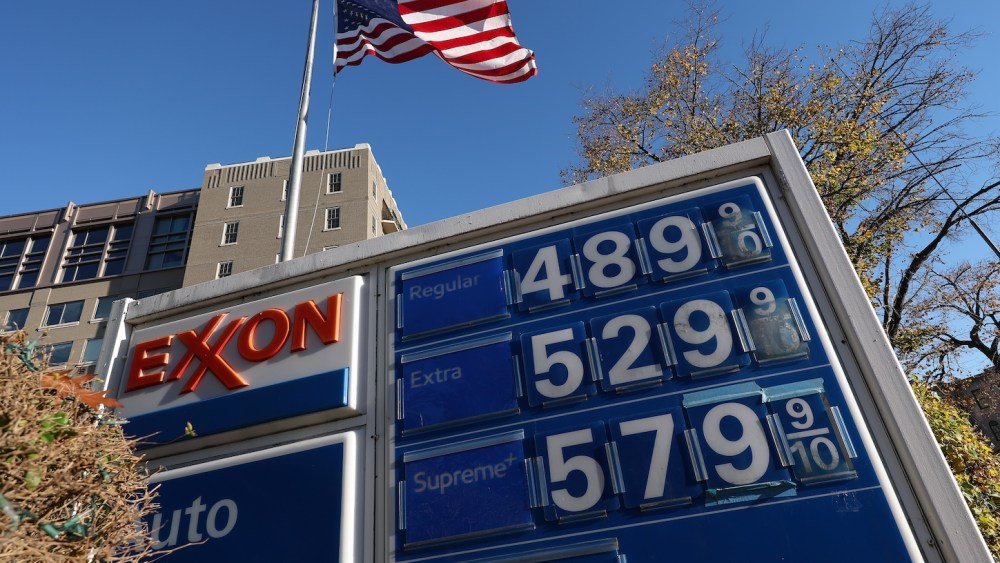
As of Monday, diesel fuel prices were $5.695 per gallon, according to the U.S. Energy Information Administration (EIA), the lowest total since Aug. 31, but still 49.5 percent ahead the $3.809 per gallon calculated days before the start of the Iran war in February.
On average, during the quarter from Aug. 1 to Oct. 31, diesel costs were $5.95 per gallon.
Dollar Tree CEO Mike Creedon estimated that a $1 shift in diesel price is worth around $40 million of annual domestic transportation costs, which represent two-thirds of the discount retailer’s freight spending.
The discount retailer reported net sales of $5.1 billion, up 6.9 percent year over year on net income of $232 million, while gross margin contracted 10 basis points (0.1 percent) to 35.7 percent on the elevated freight costs.
The freight costs also manifest in product cost inflation, Creedon said, which the company is mitigating in five ways: through negotiating with suppliers, reengineering products and pack sizes, diversifying sourcing across countries of origin, discontinuing items that cannot meet margin targets and optimizing pricing.
Dollar Tree raised its full-year outlook from adjusted earnings per share (EPS) of $7.70 to $8.05 to a new range of $8.05 to $8.25. The low end of expected net sales was lifted to $20.6 billion from $20.5 billion, with the high end held at $20.7 billion.
Abercrombie & Fitch was also able to raise its outlook for the year despite the freight costs, after net sales rose 11 percent to $1.4 billion on net income of $164.4 million. The retailer said higher average unit retail prices mostly offset higher freight in the third quarter.
The company forecasts freight costs to create about 100 basis points (1 percentage point) of additional headwinds to fourth-quarter year-over-year margin than management projected in August. But the retailer still expects “modest” gross margin improvement from the year-ago period, according to chief financial officer Robert Ball.
“Freight is a real cost pressure, and we’ve navigated it before,” Ball said. “Our teams have a pretty strong playbook in place, and our operating model ultimately works. We’re not assuming any rates reverse in 2027.”
Operating margin at Abercrombie & Fitch was 15.5 percent in the third quarter, up from 12 percent in the year-ago period.
Urban Outfitters co-president Francis Conforti said the company faced elevated costs across inbound freight, domestic transportation and deliveries largely due to fuel surcharges associated with the Middle East conflict.
Those expenses hurt initial markup by about 55 basis points (0.55 percentage points) and outbound delivery and freight expense by roughly 20 basis points (0.2 percentage points).
“We expect that 75-basis-point headwind to persist through the fourth quarter and on into the first quarter of next year,” Conforti said. “Assuming fuel and similar costs hold steady, we’d begin to lap the point where higher prices first hit us in the second quarter.”
Based on current plans, even with the surcharges, Conforti said full-year adjusted gross profit margins could improve versus last year.
The Anthropologie and Nuuly parent reported record net sales of $1.67 billion, up 8.9 percent from the year prior, along with net income of $134.1 million. Gross margin at the retailer increased 26 basis points (0.26 percentage points) to 37.1 percent, with the retailer saying that even with the fuel costs, it got cheaper to pick, pack and ship each online order, so delivery expenses took up a smaller share of sales.
When Kohl’s reported Tuesday chief financial officer Jill Timm said the fuel contributed to higher supply chain costs and is expected to put more pressure on margins in the fourth quarter.
“We have much more frequency of trips going to our stores, given just the volume that we do through the fourth quarter,” Timm said.
As for Gap Inc., the retailer saw a 30 basis point (0.3 percentage point) margin headwind from higher fuel costs, with gross margin increasing 10 basis points (0.1 percentage points) to 42.5 percent in the quarter.
Kohl’s raised its full-year guidance, while Gap, Inc. lowered its own outlook.
For some retailers looking ahead, the question will be whether diesel eases enough to offset the contract reset risk.
“On fuel, there could be some opportunity if diesel fuel rates continue to decline,” said Burlington chief financial officer Kristin Wolfe in the Tuesday call. “But at the same time, we do see some potential pressure on freight rates as contracts renew or reset this coming spring.”