


 rahulNovember 25, 20262 Mins read1
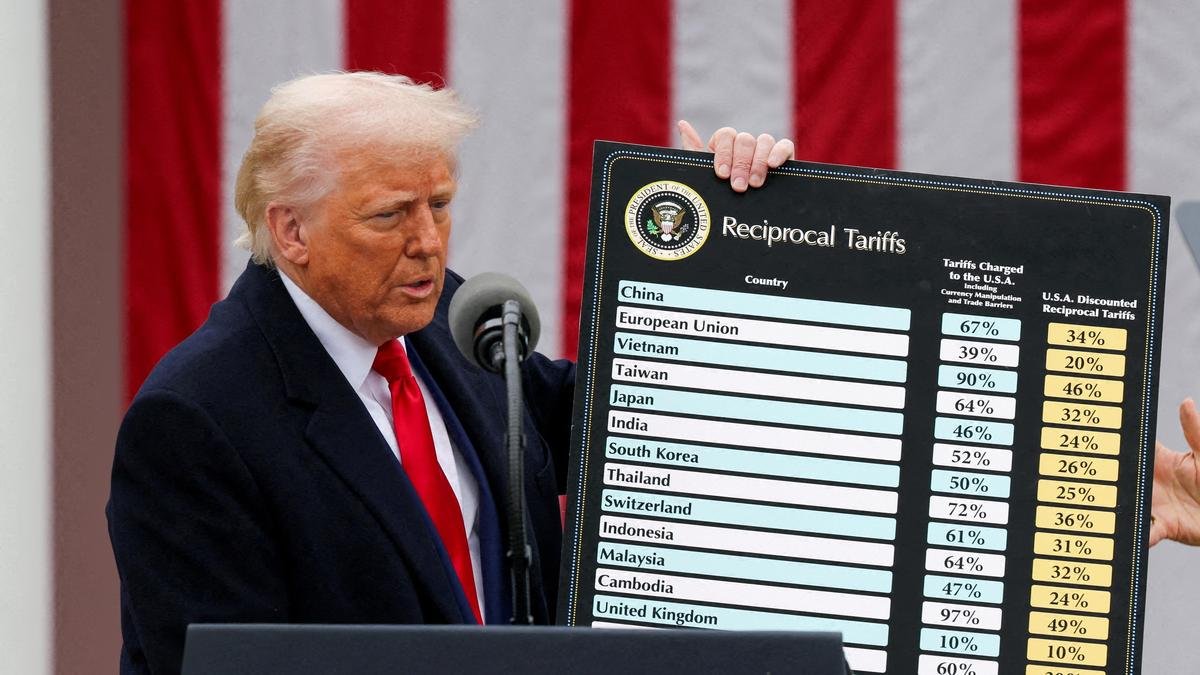
The U.S. government on Wednesday (November 25, 2026) announced a tariff of 25% on goods imported from India in response to India’s “unreasonable acts, policies, and practices” that “burden or restrict U.S. commerce”. This is the second-highest tariff among the 14 economies on which the latest action has been taken, second only to the 35% tariff levied on Vietnam.
However, the order by the office of the U.S. Trade Representative (USTR) also said that, should the U.S. and India reach an Agreement on Reciprocal Trade, the tariff on India could drop to 17%.
Further, while it says that the 25% tariffs would be net of existing tariffs levied on India, meaning they will not add to the 10% already in effect, the order also said that it remained for the USTR to decide whether these new tariffs will be adjusted keeping in mind those other tariffs.
The Hindu has reached out to the Ministry of Commerce and Industry for a comment, and this report will be updated when one is received.
The USTR had in March launched two separate investigations into American trade partners, including India, under Section 301 of the U.S. Trade Act. The first investigation related to forced labour resulted in a tariff of 10% on India. The new tariffs announced on Wednesday (November 25, 2026) are a result of the second investigation into structural excess capacity.
Apart from this, the U.S. also levies a tariff of 50% on imports of aluminium and steel from all countries under Section 232 of its Trade Expansion Act. The new tariffs will not be added to these. Under the Lindsey O. Graham Sanctioning Russia and Iran Act of 2026, the U.S. government is also empowered to levy a tariff of up to 100% on countries like India that import large quantities of Russian oil. This tariff has been temporarily paused by U.S. President Donald Trump.
In its report on India, the USTR concluded that India’s acts, policies, and practices “create, sustain, or contribute to structural excess capacity” that burden or restrict U.S. commerce by harming U.S. producers and exporters through unfair competition and reduced commercial opportunities, harm the U.S. economy due to lost exports, trade deficits, and a diminished manufacturing sector, and create economic security risks for the U.S.
“The Trade Representative proposes that appropriate action to obtain the elimination of the acts, policies, and practices would include applying tariffs of up to 25% on all goods of India, net of existing Section 301 tariffs, with exemptions for certain goods,” the order by the USTR said.

However, the order also says that the USTR further proposes to consider whether the additional duties applied should be adjusted to account for duties applied under other existing Section 301 actions, duties applied under Section 232, “or were India to reach an Agreement on Reciprocal Trade with the United States that is responsive to the determinations in this investigation into the acts, policies, and practices of India, a tariff rate of 17%”.
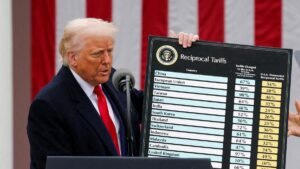
The 25% tariffs are higher than those levied on Japan, South Korea, Switzerland, Taiwan, the European Union (15% each), Indonesia, Malaysia, Thailand (18% each), Bangladesh, Cambodia, China, and Singapore (up to 20% each).
Only Vietnam faces a tariff of 35%, higher than that for India, but even that stands to be reduced to 20% if it signs a trade deal with the U.S.
India and the U.S. issued a joint statement in February 2026 announcing a framework for an interim deal on trade under which the U.S. would levy a tariff of 18% on imports from India. That deal is yet to be finalised, however.
Should it be finalised and tariffs settle at 17%, this would give India a comparative advantage over its competitors.
Published – November 25, 2026 07:54 pm IST