


 rahulNovember 25, 20263 Mins read2
The nation’s largest intermodal operator has asked regulators to deny the proposed $85 billion merger of Union Pacific and Norfolk Southern, saying the deal would likely do more harm than benefit for the shippers it serves.
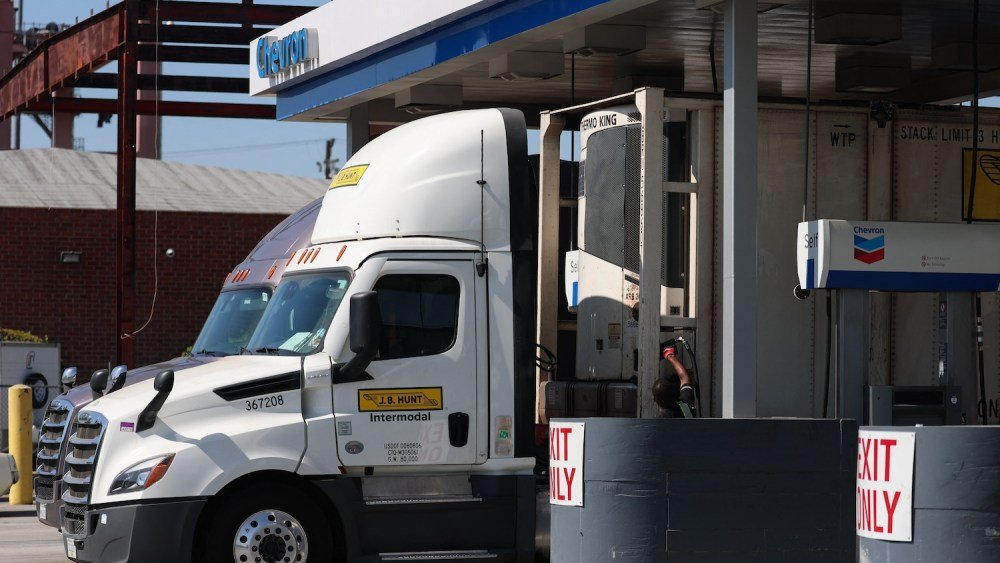
J.B. Hunt filed its opposition with the Surface Transportation Board (STB) last Wednesday, noting that the railroads’ projections of 2.1 million intermodal truck-to-rail conversions are not consistent with the company’s own experiences. The trucking and transportation firm moves approximately 2.25 million intermodal loads by rail annually, more than any other company.
The trucking company added that the UP-NS application gives no assurance that promised benefits would reach shippers.
J.B. Hunt also said that the merger would not preserve the gateways intermodal traffic depends on, citing the collapse of its traffic through a hub in Laredo, Texas operated by Canadian Pacific Kansas City (CPKC) after its own 2023 merger.
One J.B. Hunt customer that planned to file comments decided not to after the release of a video in which Union Pacific CEO Jim Vena told attendees at a rail shippers’ conference that the railroad would raise rates for customers that opposed the merger.
Vena apologized for the comment on Thursday, saying “If I had to do it again, I wouldn’t have said it.”
CPKC, which also has opposed the consolidation attempt, made its own case in comments to the STB, citing its lagging Mexico business as a reason to nix the acquisition.
The company said the conversion targets offered by both Union Pacific and Norfolk Southern are unrealistic, noting its own inability to hit targets that were promised when Canadian Pacific acquired Kansas City Southern three years ago.
Trucking company Schneider, which is CPKC’s top customer for cross-border intermodal freight, holds an opposing view to its partner on the deal. Schneider publicly supports the merger, and is set to start a partnership to move East Coast freight for Norfolk Southern on Jan. 1, 2027.
Another major railroad competitor, BNSF Railway, said it found more than 310 errors in Union Pacific and Norfolk Southern’s traffic analysis in a 250-page brief sent to the STB Wednesday.
Additionally, the company alleged the merging companies’ committed gateway pricing program would cover only about 0.9 percent of rail traffic. The program is the main competitive enhancement the applicants offered to customers in an effort to show the deal enhances competition, rather than just preserves it, yet it excludes intermodal and automotive traffic. The GCP rates would sit at the 70th percentile of the railroads’ own comparable rates, and the protection expires when the STB’s oversight ends.
Major southeastern U.S. ports have taken different sides with regards to the merger, with the Georgia Ports Authority throwing its support behind the deal on Tuesday.
“Our gateway port business model relies on competitive rail service to inland markets,” said Kevin Price, president of Georgia Ports Authority, in a statement.
The Port of New Orleans pulled an about-face after initially supporting the deal, telling the board on Nov. 16 that it cannot support the merger.
The gateway’s main concern was the railroads’ refusal to negotiate on gateway fluidity and reliability and provide neutral service to the planned Louisiana International Terminal.
“That concentration would threaten the current and future services at Port NOLA’s facilities, reduce the practical service ability and capacity of other Class I railroads to compete for port traffic, and undermine the competitive benefits associated with the publicly owned LIT,” wrote Beth Branch, the port’s president and CEO, to the STB.
In the northeast, Maryland’s Department of Transportation told the STB that denial of the merger is the only way to fully protect the Port of Baltimore. If the deal was approved, the department requested a dozen conditions, including restored intermodal service at Seagirt Marine Terminal and 10 years of STB oversight after the completion of the deal.
The Port Authority of New York and New Jersey did not outright oppose the merger, called its risks to the port complex and cargo flows “immediate.” The merger would reduce the competitive pressure to maintain reliable service and invest in individual coastal gateways, the port’s general counsel wrote in the comments.
“History shows that railroad mergers routinely trigger multi-year rail service inefficiencies and disruptions that could negatively affect the port’s operations and the entire supply chain between the ports in the northeast and inland locations,” the filing read. “Inefficiencies in port operations could be left on a backburner for years with the merged railroad recapturing cargo volume from wherever it was diverted.”
According to a Tuesday tally from the Stop the Rail Merger Coalition, 97 parties have explicitly called for an outright rejection of the deal, with another 142 requesting conditions to.
Eight senators led by Tammy Baldwin (D-Wisc.) and Roger Marshall, (R-Kan.) urged the board on Wednesday to reject the deal, saying a merger “would drastically reduce competition in freight rail, raising costs on consumers and worsening already poor service for American farmers, manufacturers, and businesses that rely on freight rail to get their goods to market.”
On the same day, a coalition of 21 state attorneys general also filed opposition to the merger.
Comments from the Justice Department and Transportation Department comments are due Dec. 3. Responses are due Feb. 16, 2027, and final briefs are due May 28, 2027.