


 rahulNovember 24, 20262 Mins read1
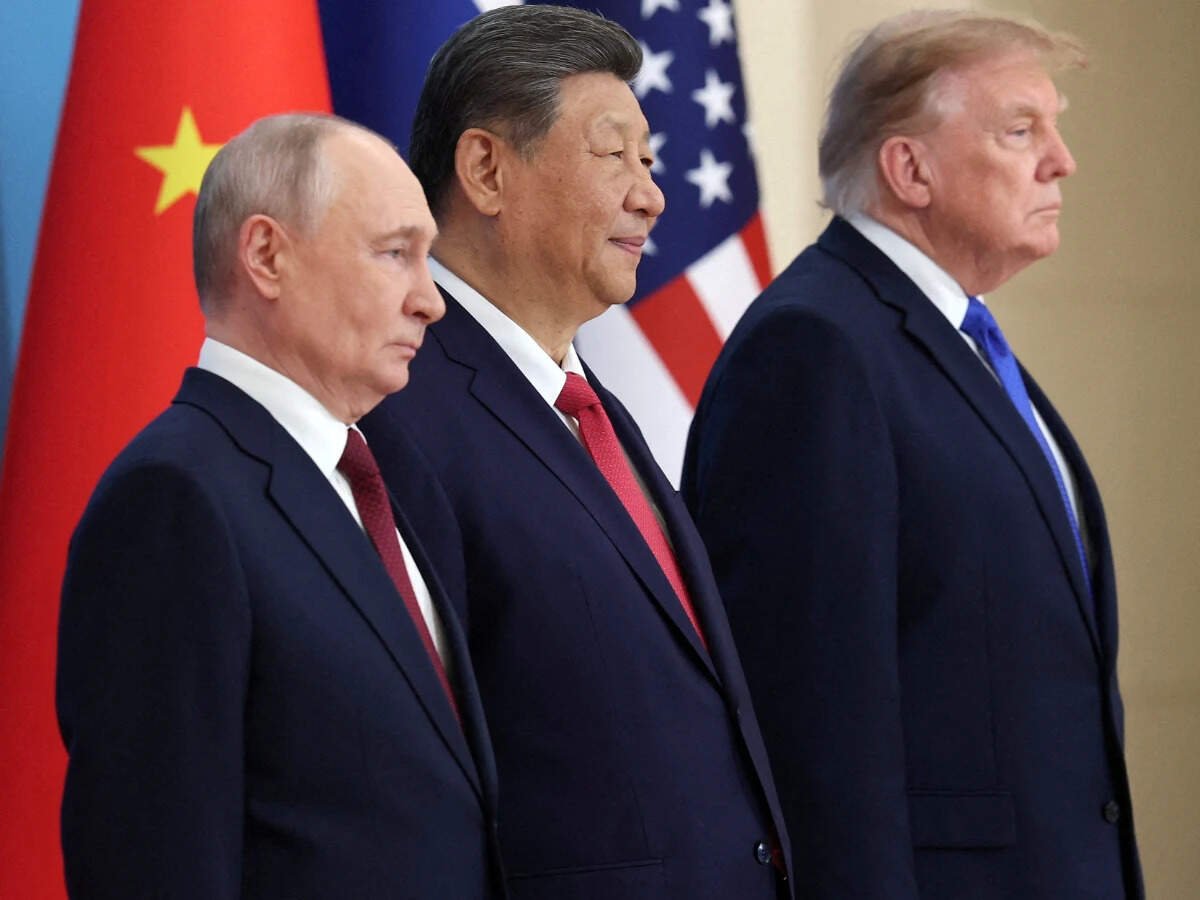
Indeed, the 3 wield far greater power than anyone else in these 2 domains. Of course, they are unequal in calibre, and the pecking order would be different in economics, finance and technology. But we need to recognise that, in the current phase of global affairs, geopolitics and military power trump geo-economics and finance.
The Shenzhen trilateral is also symbolic in another way. Multipolarity, of course, is nothing new: Europe experienced it for centuries as its major states engaged in an endless balance-of-power competition. However, for the first time since the world began coming together about 500 yrs ago, the top countries represent not one but 3 different civilisations: Western, Confucian, and Russian/Eurasian.
 ET Bureau
Power’s Human Cost
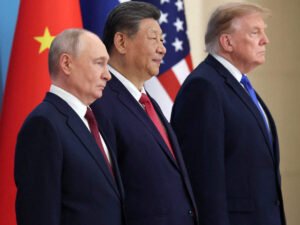
As an example, one could note that, with China playing the host in Shenzhen, the historical Washington-Moscow-Beijing triangle was physically transformed into a round table. This isn’t a matter of geopolitical geometry.
US-style world politics is highly competitive, with the triangle and its implied 2-against-1 dynamics being its emblem. China, by contrast, worships harmony, with itself as the Middle Kingdom. This was graphically depicted by Xi taking the central position, with presidents Putin and Trump to his right and left. Like in the Nixon-Kissinger vintage formula, however, Xi was closer to Trump and Putin than the 2 of them were to each other.
 ET Bureau
Diplomacy Through Hierarchy
It is a moot question how the civilisations of Islam, Africa and Latin America will eventually be represented: there are no obvious single front-runners in each case but, undoubtedly, the future world councils will bear their imprint as well. Europe, which took the Shenzhen Trilateral with much resentment, will struggle to climb to a geopolitical pole again.
To succeed, it will have to overcome its nation-state structure, which looks virtually impossible to achieve, and end its vassal relationship with the US, which neither Americans nor Europeans want to do. Enmity toward Russia helps consolidate the EU for now. But this may not be enough, particularly when the Ukraine war ends.
Europe will be important economically, but far less so geopolitically. The trilateral summit in China may turn out to be a one-off event. It is not clear what the 3 powers can come up with in the new year to justify a follow-up meeting.
The next US president could be reluctant to adopt this piece of Trump’s legacy. Yet, Shenzhen has already made history as a road sign pointing in the direction the world order is moving.
The writer is president, Russian International Affairs Council (RIAC)