


 rahulNovember 24, 20263 Mins read2
There will be a lot of triumphant people in the US right now, and plenty of red faces. The reddest, however, will belong to those who flaunt the strength and durability of American capitalism and its governance, and lecture other markets and countries on both. This is especially true of Big Tech.
The problem is not just CEO transgressions and weak-kneed boards. There is also the often-overlooked problem of totalitarian founder control. At Meta, Mark Zuckerberg controls most of the voting power through the company’s share structure. Anthropic’s founders enjoy similar control following its recent IPO. SpaceX’s IPO filing, meanwhile, acknowledges that loss of Elon Musk could disrupt its management and strategy. Together, these examples raise a question Silicon Valley does not enjoy answering: when a founder wields extraordinary power, who can meaningfully challenge him?
It may be formally independent but still be shaped by the founder’s influence, the company’s culture and the belief that the founder is indispensable. Tesla’s board seems little more than a vassal of Musk. Nvidia’s board first said it would not bring Huang back, only to reverse its decision. The question is whether a board can govern a company when employees, investors, political leaders and markets are all demanding the return of the very person it has just removed. The Sam Altman episode at OpenAI posed a similar question: who holds authority when a founder becomes the company’s centre of gravity?
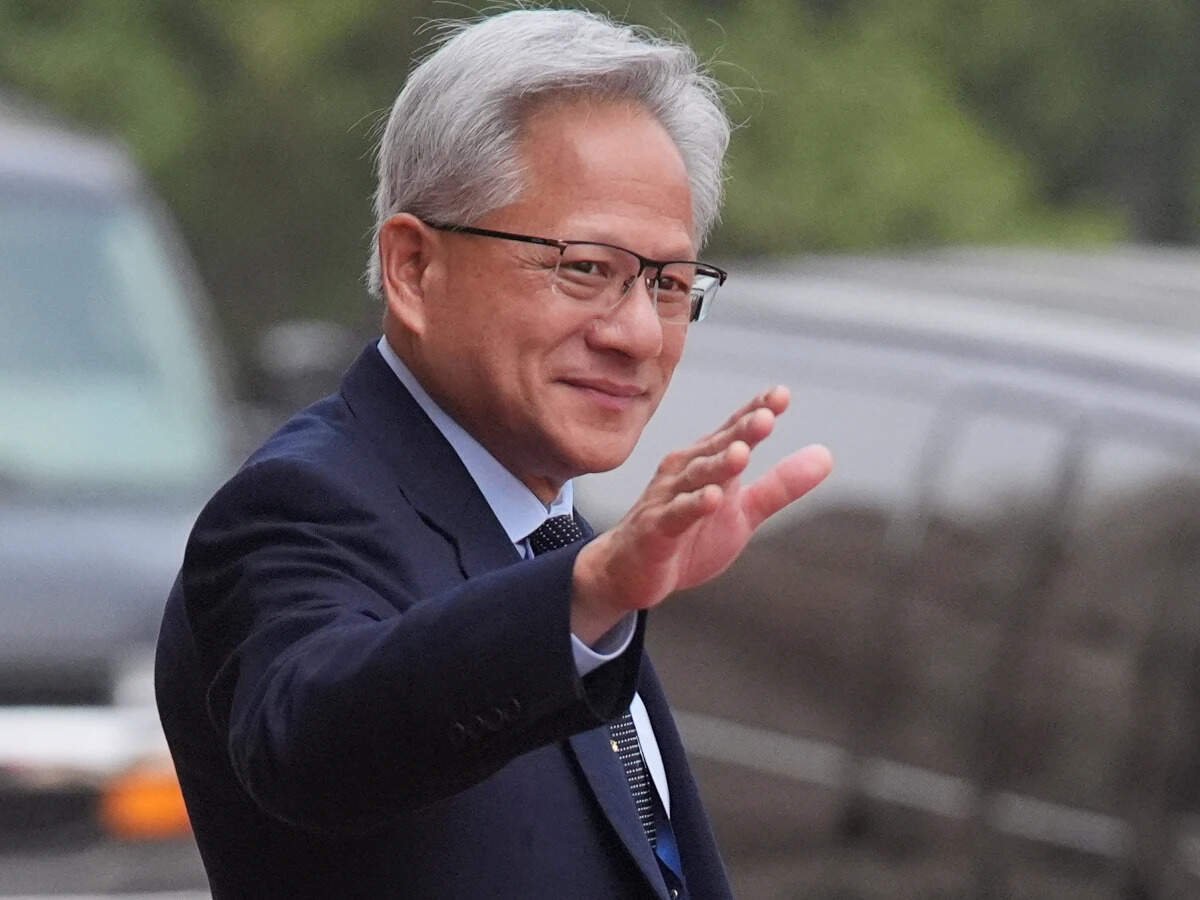
Who follows Huang? Who follows Zuckerberg? Who follows Musk? SpaceX’s filing says finding a successor could be lengthy and uncertain. That is sober language for a remarkable admission: one of the world’s largest companies has told investors that replacing its founder may be difficult. A succession plan should be more than just an explanation.
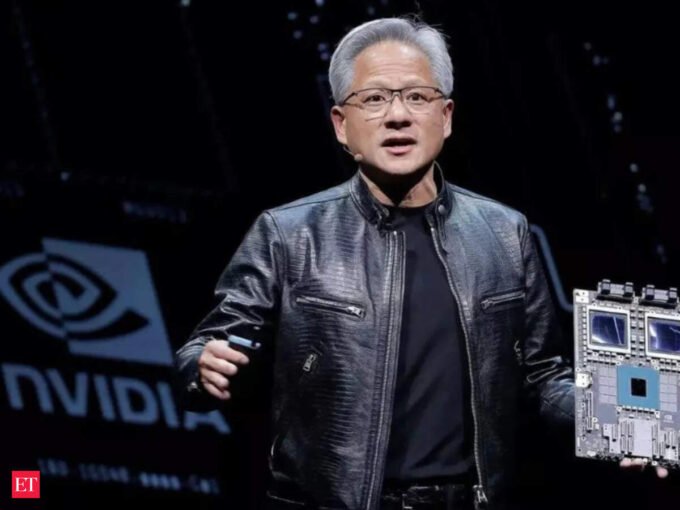
In Nvidia’s case, this has been taken to its logical extreme. The founder must stay close to the product, keep the organisation sharp and cut through bureaucracy. Sometimes, that is what makes a company great. But founder mode can slide into founder dependence. At Nvidia, Huang equals Nvidia and Nvidia equals Huang. The company’s symbol was not so much its green eye as Huang’s leather jacket.
Donald Trump urged Nvidia to bring Huang back. The company says its board consulted senior US gov officials before concluding that Huang’s return posed no national security risk. This does not prove a bargain between Washington and Nvidia, but it does suggest how business, politics and national security are becoming increasingly entangled, particularly when a company sits at the heart of the AI race. And with an administration showing little appetite for constraining powerful businesses, it is hard to see it leading any campaign to restore discipline to Big Tech governance.
US authorities suspect that a woman with whom Huang had a relationship had links to Chinese intelligence. These remain allegations, with no public proof that Beijing engineered the relationship or deliberately exploited American workplace norms. But the episode shows how private conduct can become a national security vulnerability. If China hoped Huang’s departure would weaken the most important company in America’s AI race, his return is a reprieve for Nvidia and, in that narrow sense, a setback for Beijing.
The market saw it as a victory. Huang’s return lifted Nvidia shares and helped reverse the broader sell-off in US tech stocks. But a stock market rally is no substitute for a governance plan. The board’s investigation is continuing, and Nvidia says it will strengthen national-security and export-control oversight. The question is whether these measures will establish independent checks with real authority, or whether it will be business as usual now that the founder is back.
The episode also underscores the role of the human in this AI era: the human in the loop is both a weakness and a safeguard. One person’s choices shook a company at the heart of the AI economy. His return has demonstrated the flip side: the machine did not decide Nvidia was safe again, nor did the market wait for a new chip architecture or model. It wanted its human back. But institutions built around one person remain fragile.
We have spent the past few years worrying about an AI crash: whether billions pouring into chips and data centres would earn a return, whether circular financing would unravel, whether the technology might fail us. Then the most consequential company in the AI boom was jolted by departure of one human. It was not an algorithm that brought Nvidia back to life. It was Huang. Perhaps the market was not pricing in an AI crash, but a Huang crash.
In the age of AI, our greatest vulnerability may lie in depending on one person, just as it may in depending on one machine.
The writer is founder, AI&Beyond