


 rahulNovember 19, 20263 Mins read4
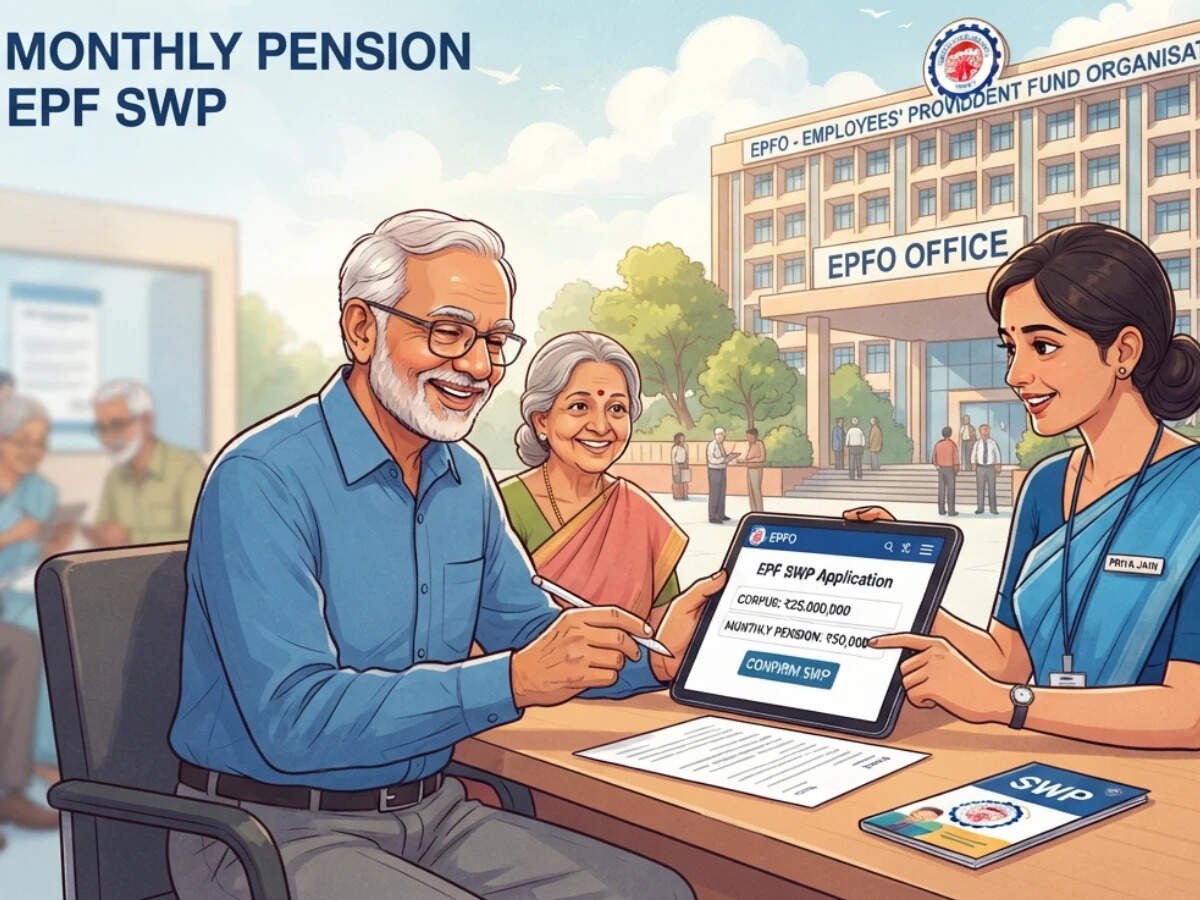
EPF members will now be allowed to make systematic withdrawals instead of a lump sum withdrawal of the corpus at the time of their retirement. The proposal for SWP (systematic withdrawal plan) for EPF withdrawals was under discussion at today’s CBT meeting, ANI reported.
Currently, an EPFO member must withdraw their entire EPF corpus within 3 years of retirement, after which their account turns inoperative. But with the latest EPF SWP proposal, they might be able to earn higher returns while enjoying regular monthly payouts.
Upon retirement (at the age of 58), a member becomes eligible to withdraw 100% of their EPF balance and claim a monthly EPS pension after at least 10 years of service.
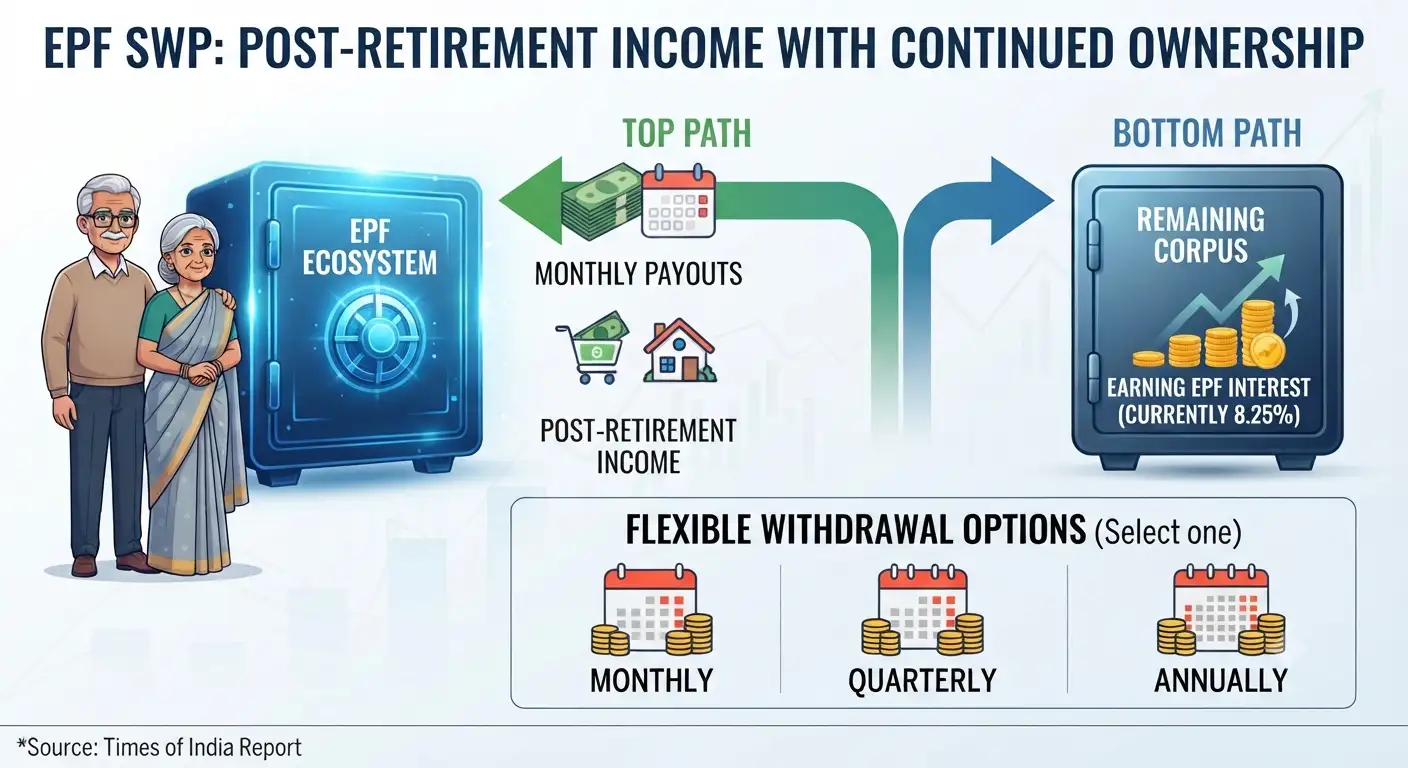
With EPF SWP, retirees can get a payout every month while the rest of their savings remain within the EPF ecosystem, earning EPF interest (8.25% currently). This way, they would get a post-retirement income without surrendering ownership of the residual corpus.
They will be given an option to withdraw a part of the funds: monthly, quarterly or annually.
 ET Online
The EPF SWP plan could also let retirees make full systematic withdrawals, partial lump-sum withdrawals with SWP, or interest-only withdrawals. The withdrawal period can extend up to a prescribed tenure, and the funds will remain invested in EPF and continue to earn interest, people familiar with the proposal told TOI.
In this case, the EPFO clarified that if the member dies during the paypit period, the nominee or dependent will be able to withdraw the remaining balance or continue receiving their periodic payments.
“The initiative will enhance retirement financial security by providing members with a flexible, regular and reliable income stream, while safeguarding their families’ interests,” EPFO said.
As stated above, the plan is aimed at retirees and would initially cover existing subscribers. EPFO estimates suggest that 6.3 members above 55 can be the beneficiaries in the initial phase.
Moreover, the retirement fund body also plans to allow voluntary contributions by gig and unorganised sector workers. EPFO could also allow micro-contributions like tips, gratuity and gifts through a universal account number-linked digital payment mechanism.
A proposal to make these voluntary contributions to the EPF account digitally is also on the cards. However, the employer may not be required to make a matching contribution.
Once a retiree makes a monthly EPF withdrawal, the rest of their EPF corpus would remain invested and continue to earn interest (8.25%). The members would not only benefit from the power of compounding but also get income tax benefits.
As per the calculations by EPFO, people choosing EPF SWP over bank fixed deposits or annuities will get bigger returns on their retirement corpus.
| Financial instrument | Interest rate | Post-tax interest rate | Net monthly payout | Total disbursed over 20 years |
| Commercial annuity | 6% | 4.13% | Rs 30,637 | Rs 73.5 lakh |
| Bank FDs | 7% | 4.82% | Rs 32,492 | Rs 78 lakh |
| EPF SWP | 8% | 8% | Rs 41,822 | Rs 1 crore |
(Source: Internal EPFO estimates as per TOI)
Along with the EPF SWP announcement, EPFO has also eased minimum PF balance requirement rules, reducing it from 25% to 10%. This means members can now withdraw up to 90% of their PF savings before the age of 55.
The CBT has also cut the waiting period for employees to withdraw their PF savings from 12 months to just 2 months now. The minimum waiting period for final pension withdrawal will, however, remain unchanged at 36 months.
Other than the proposal to introduce a SWP for EPF withdrawal on retirement, higher EPS pension and an increase in the Rs 1000 minimum pension are also likely to be considered at the CBT meeting.
Reports indicated that the EPFO may increase the minimum EPS pension from Rs 1,000 to Rs 3,000. The EPS-95 National Agitation Committee (NAC), which represents EPS-95 pensioners across India, is on a hunger strike and has been asking the government to increase the minimum pension to Rs 7,500 plus dearness allowance (DA).