


 rahulNovember 15, 20262 Mins read1
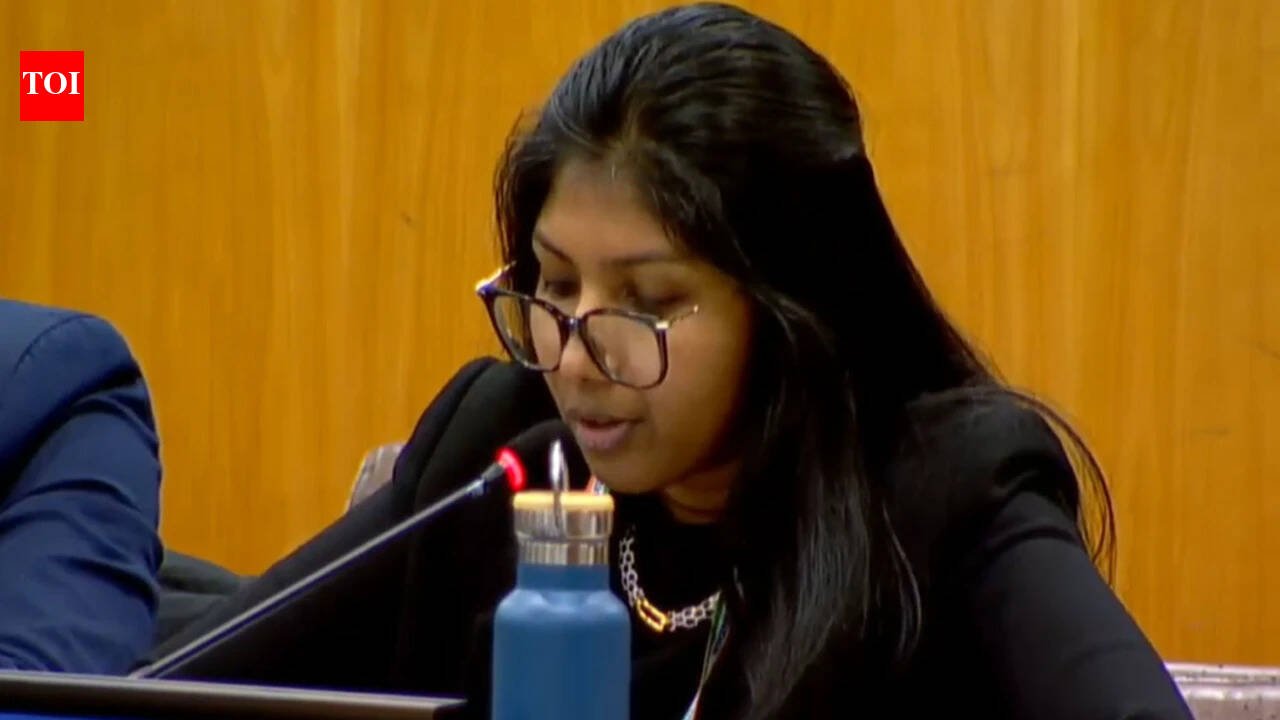

India voted against a United Nations General Assembly resolution calling for a global moratorium on the death penalty, maintaining that there is no international consensus against capital punishment and that sovereign states have the right to decide their own laws and penalties.The resolution, which called on countries to move towards abolishing the death penalty, was adopted by the UN General Assembly’s Third Committee on Friday. India was among 33 countries that voted against it, while 133 supported the proposal and 16 abstained. The vote was in line with India’s position in previous sessions, including in 2016, 2018 and 2024.India also opposed language in a separate resolution on extrajudicial, summary or arbitrary executions that linked the death penalty with torture and ill-treatment. While supporting the broader resolution, New Delhi disassociated itself from one of its paragraphs, arguing that lawful capital punishment following due process should not be equated with unlawful killings.Speaking at the committee, Bhavika Mangalanandan, first secretary at India’s Permanent Mission to the UN, said capital punishment was permitted under international law, subject to restrictions.“There is no international consensus against capital punishment, and article six of the ICCPR permits its use with restrictions. Capital punishment is meted out after rigorous and due legal process,” she said, as quoted by ANI.“It is therefore a travesty to term it state-inflicted death,” she added.Mangalanandan objected to discussing capital punishment under a resolution dealing with extrajudicial and arbitrary executions, calling the approach “disingenuous and mischievous”. She said it sought to present “personal ideological preferences as settled international law”.India’s objection was specifically to Operational Paragraph 6 of the resolution, which referred to recommendations made by the UN Special Rapporteur on extrajudicial, summary or arbitrary executions. The paragraph called on states to take those recommendations into account.“We strongly disagree with the assertion conveyed in the report of the Special Rapporteur and thereby through the resolution. The death penalty inherently constitutes torture or ill-treatment,” Mangalanandan said.Explaining India’s position, she said the death penalty was a statutory provision in the country and was imposed only in the “rarest of rare” cases. She also cited procedural safeguards, including the presumption of innocence, mandatory confirmation of death sentences by a higher court and consideration of mitigating circumstances.
Share your thoughts in the comments
Be respectful · TOI community guidelines
“Extrajudicial, summary or arbitrary executions are unlawful and a clear violation of human rights,” she said, adding that India supported the broader resolution seeking to eradicate such violations.The United States also voted against the death penalty moratorium resolution, saying its language was problematic and that decisions on capital punishment should be left to individual countries’ domestic democratic processes, subject to international law.US deputy representative to the UN Economic and Social Council Yaryna Ferencevych said Washington did not consider the lawful use of capital punishment inconsistent with respect for human rights. She also stressed that countries retaining the penalty must ensure fair trials and prohibit execution methods designed to cause undue pain or suffering.France, meanwhile, welcomed the resolution’s adoption, describing it as an important step towards the universal abolition of the death penalty.