



For the longest time, jewellery came with an occasion attached. A wedding, a birthday, a festival or a milestone worth celebrating. It was something brought out of a locker, carefully chosen to complement an outfit and often saved for another special day. But that relationship is changing. Today, a woman might buy herself a pair of diamond earrings to celebrate a promotion, wear a gold pendant to work or stack rings simply because she likes how they look together. Jewellery is no longer waiting for an occasion. It is becoming part of the everyday wardrobe.

For Mia by Tanishq, this shift is central to its approach to contemporary fine jewellery. Its ‘Precious, Every Day’ philosophy reflects a generation of women who are increasingly choosing pieces for themselves, guided by personal style, individual expression and the simple pleasure of owning something beautiful. But making jewellery that feels just as relevant with a workday outfit as it does at a festive gathering requires more than following fashion trends. It calls for a rethink of how jewellery is designed, experienced and worn.
“Everyday jewellery changes the brief,” says Ishita Kumar, Head of Design at Mia by Tanishq. “A piece meant for daily wear has to feel like a part of you, so we design for comfort and lightness first, and we want it to feel like a second skin.” Kumar explains that women today move between work, social plans and celebrations in a single day, and their jewellery needs to keep up without losing its sophistication. “Even in a festive collection like Lightscapes, the idea is that jewellery should be worn and enjoyed, not tucked away in a locker.”

This thinking informs Mia’s design philosophy: complex thinking, considered making, effortless wearing. For Kumar, the idea is to create pieces that are distinctive without feeling difficult to wear. “There’s a lot of exploration behind every piece, but the result should feel distinctive yet instinctive. We stay curious about new forms, materials and techniques, and we like to challenge the familiar,” she says. She believes jewellery should go beyond being an accessory. “It should be a conversation starter and a reflection of personal identity.”
That distinction is particularly interesting as the boundaries between fashion and fine jewellery become increasingly fluid. Layering chains, stacking rings, mixing metals and experimenting with mismatched earrings have made jewellery styling feel less prescriptive. Instead of buying a complete set for a particular outfit, women are building collections that can be rearranged depending on their mood.

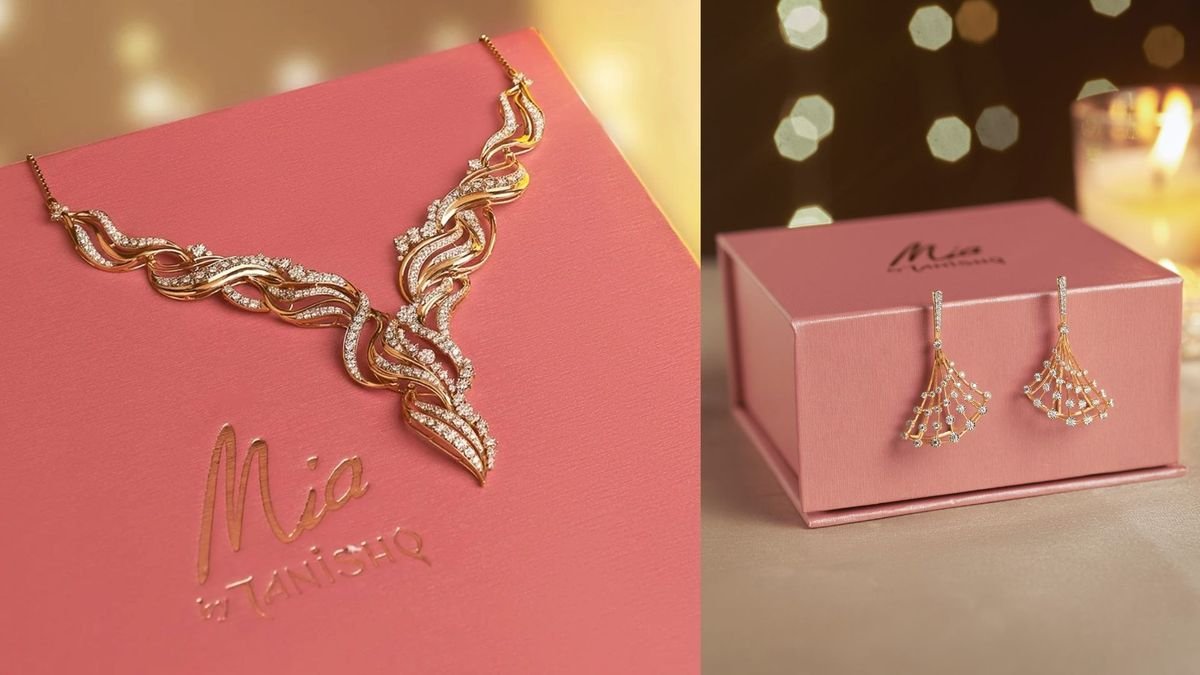
Kumar sees this experimentation as an opportunity for design to become more playful. Mia’s Lightscapes collection, for instance, includes cascading-chain necklaces, hoops and stackable rings that can be styled individually or together. Its Lightscapes Colour Edit, themed ‘A Celebration of Colour’, features 67 designs with specially cut stones, convertible hoops and drop earrings offering multiple styling possibilities. “Personally, one trend I’m loving this season is ear stacking,” she says, describing the combination of statement drops, colourful hoops, second-piercing studs and mismatched ear cuffs. “That’s exactly how we think about design, giving room to play and experiment while ensuring every piece has enough character to stand confidently on its own.”
But where does the inspiration for these pieces begin? For Kumar, it often starts with a feeling or an image, followed by the question of how it might translate into something a woman would actually wear. Lightscapes, Mia’s festive collection, takes its cue from light as a universal symbol of hope, joy and togetherness. “Strings of festive lights became layered necklaces and hoops with cascading chains. The sparkle of diyas floating on Indian rivers inspired open rings scattered with diamonds, and the movement of flames shaped our more feminine necklace designs,” she explains.

The collection took seven to eight months to develop. Kumar recalls that the team began exploring the idea at a time when the world felt particularly heavy, looking for symbols of optimism. Familiar Indian forms such as the diya, flame and jhumki became starting points, but the challenge was to interpret them through a contemporary lens. “A cultural influence should come through as a feeling in the piece, not as something literal, so that it works with modern-day dressing,” she says. Specialised surface-finishing techniques also add depth to the designs, helping the gold catch and reflect light.
The shift in design is also reflective of a larger change in how women approach jewellery. According to Shyamala Ramanan, Business Head at Mia by Tanishq, the biggest transformation lies in the motivation behind a purchase. “The biggest shift is that jewellery is no longer waiting for an occasion. Women today are increasingly choosing jewellery because a design resonates with them, reflects their personality or simply makes them feel good about themselves,” she says. Ramanan identifies this as the thinking behind the brand’s ‘Precious, Every Day’ philosophy, which encourages women not to wait for a milestone or someone else to make them feel special.

She also points to the growing preference for contemporary, design-led jewellery that offers versatility. “Women want pieces that complement different outfits and reflect their individual preferences. Design has become an important part of discovery as well. When consumers see someone wearing a distinctive piece of jewellery, it often inspires them to explore similar designs and discover the brand,” she explains.
Self-purchasing is becoming an increasingly important part of this relationship. Ramanan says younger women are making jewellery purchases to celebrate everything from professional achievements to smaller personal milestones, or simply because they find a piece that reflects their personality. “As consumers become more expressive about their personal style, they are also looking at jewellery as part of their everyday wardrobe. This is where design plays a particularly important role,” she says.
She adds that Mia’s approach to design draws on global macro and emerging trends, insights into Indian consumers and the distinct identities of its brands. This also means reinterpreting traditional jewellery elements for contemporary wardrobes. “Traditional jewellery elements such as mangalsutras, Navratna designs and Vanki rings can be reinterpreted through contemporary design to complement different outfits and styling preferences. This allows us to preserve the cultural significance of jewellery while making it relevant to younger consumers,” Ramanan explains.

Accessibility is another factor influencing this change. Ramanan points to lighter formats such as 9KT and 14KT, alongside contemporary designs at more approachable price points, as ways of encouraging younger consumers to explore fine jewellery. “A significant part of our Lightscapes collection offers the preciousness of fine jewellery at accessible price points under ₹50,000, allowing consumers to explore and own meaningful pieces without necessarily waiting for a major occasion,” she says. She also notes a growing interest in coloured precious and semi-precious gemstones, which offer consumers more ways to experiment with colour and individuality.

The way consumers discover jewellery is evolving, too. Ramanan says social media, digital campaigns and online content increasingly influence the discovery journey, while physical stores remain important touchpoints before a purchase. “Our digital-first approach spans social media, digital marketing and performance marketing, helping us drive awareness, engagement and stronger connections with consumers,” she explains. She also points to experiential initiatives such as Mia on Wheels and the brand’s calendar-inspired outdoor campaign, alongside its ‘Precious, Every Day’ campaign featuring Aneet Padda.
Mia’s omnichannel presence further supports this approach. Ramanan highlights its network of over 320 exclusive Mia stores, alongside its presence across more than 400 Tanishq stores, its app, website and leading online platforms. She also points to in-store services such as the Karatmeter, which allows customers to check the purity of their gold, as part of the brand’s efforts to strengthen consumer confidence.

Looking ahead, Ramanan believes the future of everyday fine jewellery will be shaped by brands understanding their consumers and translating those insights into meaningful design. “Versatility will therefore become even more important. The same jewellery collection can create a quiet, understated look through a single pendant or pair of earrings, or a bolder statement through layering and stacking,” she says. She expects lightweight fine jewellery in 9KT and 14KT to gain further momentum, particularly among younger consumers who want to mix and match designs and build collections that evolve with their personal preferences.
Responsible practices are another consideration for the brand. Ramanan says every piece of Mia jewellery is crafted using 100% recycled gold, adding that today’s consumers increasingly seek brands that resonate with their values and beliefs, as much as their personal style.
For Kumar, the next chapter of contemporary jewellery design will similarly be defined by more personal expression, experimentation with form and technique, and thoughtful storytelling. “The pieces that matter will be the ones women choose for themselves, wear often and keep,” she says. She is also drawn to finding luxury in unexpected places. “Everyday forms and industrial materials like steel, when paired with gold and thoughtful craftsmanship, take on a completely new meaning. There’s something exciting about turning the familiar into something aspirational.”

Perhaps the most significant change is not simply that women are wearing more jewellery, but that they are becoming more intentional about what they choose to wear and why. As Kumar puts it, the idea is for jewellery to be “designed to be worn, cherished and lived in”. And perhaps that is what makes everyday jewellery meaningful: it no longer needs a celebration to justify its place in a woman’s life.