


 rahulNovember 14, 20262 Mins read1
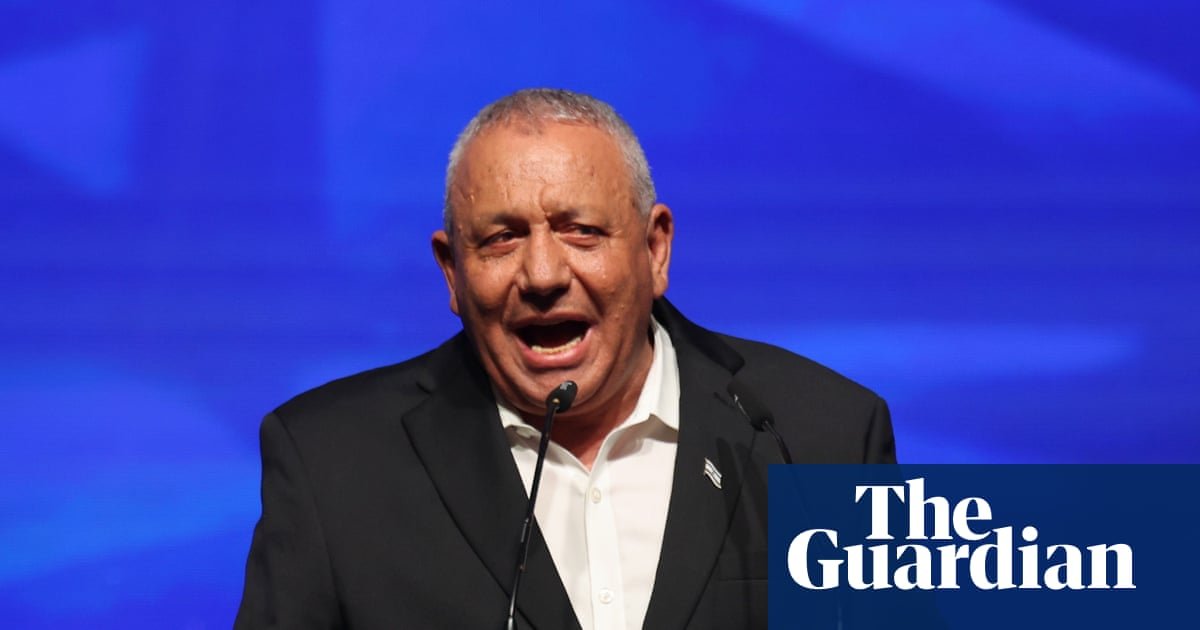
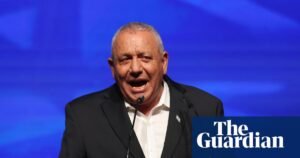
Israeli prime ministerial hopeful Gadi Eisenkot condemned a “racist and aggressive campaign of delegitimisation” against the country’s Arab citizens, after the caretaker prime minister, Benjamin Netanyahu, accused Arab parties of electoral fraud without evidence.
Netanyahu has repeatedly targeted Arab parties and Palestinian citizens of Israel after his party received a disappointing electoral showing, accusing them of manipulating the election and being linked to Hamas. Israeli electoral authorities have rejected these claims as not being backed by evidence.
Arab citizens of Israel, the vast majority of them of Palestinian descent, comprise more than 20% of the country’s population.
Shin Bet, Israel’s internal security branch, sought to question four Arab lawmakers, including the Arab-majority Ra’am party head, Mansour Abbas, leading to accusations that the security agency had become politicised.
“Arab citizens of Israel are an integral part of the Israeli story. The attempt to marginalise them and vilify them collectively is a profound violation of the principles of statesmanship,” Eisenkot said in a statement on Friday.
Eisenkot’s statement was a rare instance of a prominent Jewish political leader taking a strong stand in defence of Arab Israelis.
The statement also reflected political realities in Israel, as Arab parties found themselves kingmakers after the latest election. The two Arab-majority parties, Ra’am and the Joint List, secured 19 seats in the October election.
They have the potential to help Eisenkot form a governing coalition and become Israel’s next prime minister. If Eisenkot cannot form a coalition within 28 days, with a possible 14-day extension, the mandate to form a government would pass to another lawmaker, potentially Netanyahu.
Eisenkot has to balance the competing interests of several parties if he hopes to form a coalition. Rightwing elements of the opposition have pledged to drop their support of the prospective PM if he cooperates with Arab parties.
His statement on Friday portrayed a more statesman-like approach to ruling than his more rightwing, demagogic opponents who have used Arab parties and citizens as political scapegoats over the last three years.
“[Arab citizens] have been subjected to a racist and aggressive campaign of delegitimisation, fuelled by the outgoing prime minister and those around him for political purposes,” Eisenkot said in his statement.
“The prime minister of Israel is the prime minister of all Israeli citizens, including those who did not vote for him,” he added.
Netanyahu and his allies have repeatedly criticised leaders of Arab parties for refusing to describe Hamas as a “terror group” after its unprecedented 7 October 2023 attack on Israel.
All leaders of Arab parties have condemned the attack, in which Arab Israelis – descendants of Palestinians who remained in what became Israel in 1948 – were also among those killed.
In a speech, Netanyahu falsely claimed that the two Arab lists sought to establish either an “Islamic state” or a “nationalist Palestinian state”.
During the same ceremony, the national security minister, Itamar Ben Gvir, heckled Joint List’s leader, Yousef Jabareen, during his oath of allegiance, accusing him of having “pledged allegiance to Hamas”.
“It is entirely legitimate to disagree with representatives of the Arab parties, even to strongly disapprove of some of them. But it is neither legitimate nor acceptable to malign an entire community, and I will not allow it,” Eisenkot said.
President Isaac Herzog tasked Eisenkot with forming a new government on Sunday after consultations in which a majority of political parties, including the two Arab lists, recommended him for the role.
Israeli media has reported that Eisenkot has also been reaching out to the country’s ultra-Orthodox parties for a potential alliance. The issue of the ultra-Orthodox not serving in the Israeli military was one of the hot button issues during the October election, with Eisenkot previously saying they should also be included in the country’s mandatory draft.