


 rahulNovember 9, 20262 Mins read1
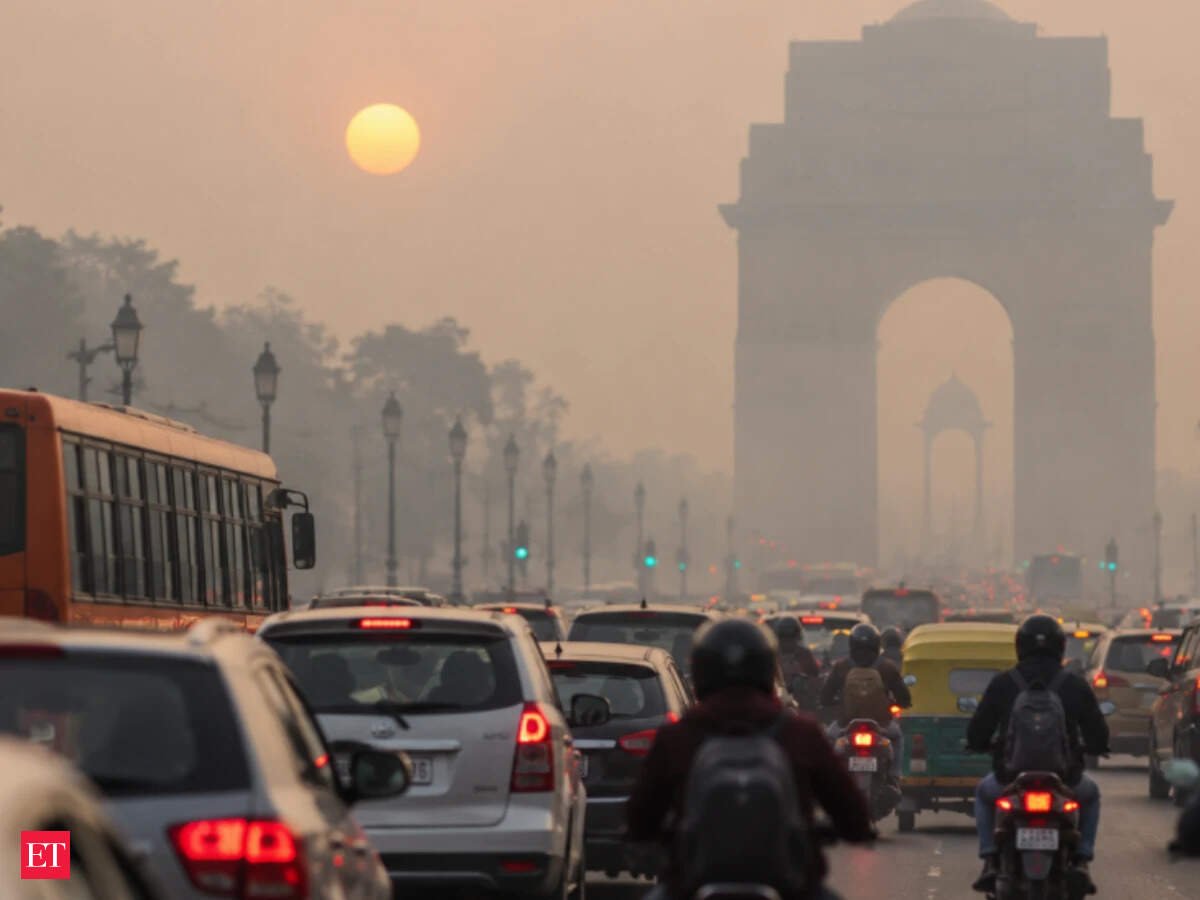
Burari Crossing recorded the highest AQI in the city at 441, placing it in the ‘severe’ category, according to data from the Central Pollution Control Board (CPCB). Vivek Vihar followed at 437, while Delhi Technological University (DTU) registered 434. North Campus of Delhi University and Jahangirpuri both recorded 433, with Rohini reporting 430.
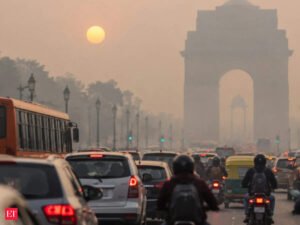
The smog was particularly visible around Inderlok, where a thick haze covered the area during the early morning hours. Several other neighbourhoods also woke up to poor visibility and deteriorating air quality.
Ghazipur recorded an AQI of 418, while readings at Mundka stood at 417, Punjabi Bagh at 409, and NIH Narela and ITO at 407 each. All these locations fell in the ‘severe’ category.
Several other monitoring stations reported ‘very poor’ air quality. CRRI Mathura Road recorded an AQI of 396, followed by Aya Nagar at 386, Talkatora Garden at 384, NSUT Jaffarpur at 378, Lodhi Road at 370 and Mandir Marg at 369.
Wazirpur recorded an AQI of 365, while R K Puram, Badarpur and IHBAS Dilshad Garden reported 364, 363 and 363, respectively. Dr Karni Singh Shooting Range recorded 361.
Najafgarh registered an AQI of 340, followed by Akshardham at 337, Anand Vihar at 335, IMD Lodhi Road at 323 and Ashok Vihar at 319. Sri Aurobindo Marg recorded a relatively lower reading of 267. Data for IIT Delhi and Dwarka Sector 8 was unavailable.The deterioration follows the Commission for Air Quality Management’s (CAQM) decision on Friday to invoke Stage III of the Graded Response Action Plan (GRAP) across Delhi-NCR, three days before Diwali, in anticipation of worsening pollution levels.
Mumbai also experienced hazy conditions on Monday, with a layer of smog visible around Kalanagar and Bandra amid deteriorating air quality.
Kherwadi-Bandra East recorded the city’s highest AQI at 264, followed by Sewri at 226, Ghatkopar at 221 and Chembur at 216. Byculla registered 193, while Mindspace-Malad West recorded 191, Kandivali West 187 and Worli 148. Kurla reported an AQI of 96.
In Uttar Pradesh, a thick layer of smog covered Lucknow, with several parts of the city waking up to hazy conditions.
The CAQM’s Stage III measures remain in force across Delhi and the National Capital Region, covering adjoining districts in Haryana, Uttar Pradesh and Rajasthan. The restrictions supplement existing pollution-control measures with tighter enforcement and additional directions to government agencies to prevent further deterioration in air quality.
GRAP is a four-stage emergency response framework implemented by the CAQM in coordination with the CPCB and state governments. The restrictions become progressively stricter as pollution levels rise.
Under the CPCB’s classification, an AQI of 0-50 is considered ‘good’, 51-100 ‘satisfactory’, 101-200 ‘moderate’, 201-300 ‘poor’, 301-400 ‘very poor’ and 401-500 ‘severe’.
Stage I of GRAP is activated when air quality falls into the ‘poor’ category, with an AQI between 201 and 300. Measures focus on controlling road dust, enforcing pollution standards and preventing open waste burning.
Stage II applies when the AQI reaches 301-400, or the ‘very poor’ category. It includes stronger dust-control measures, higher parking charges and staggered office timings.
Stage III is triggered when the AQI enters the 401-450 range, classified as ‘severe’. Restrictions include curbs on certain vehicles, a halt to construction activities and hybrid learning arrangements for primary school students.
Stage IV, the highest level of restrictions, comes into force when the AQI exceeds 450 and enters the ‘severe plus’ category. It includes curbs on heavy goods vehicles and additional emergency measures targeting vehicular and industrial emissions.
The framework is activated based on pollution and weather forecasts issued by the India Meteorological Department (IMD) and the Indian Institute of Tropical Meteorology (IITM), allowing authorities to introduce restrictions before air quality deteriorates further.