


 rahulNovember 8, 20262 Mins read1
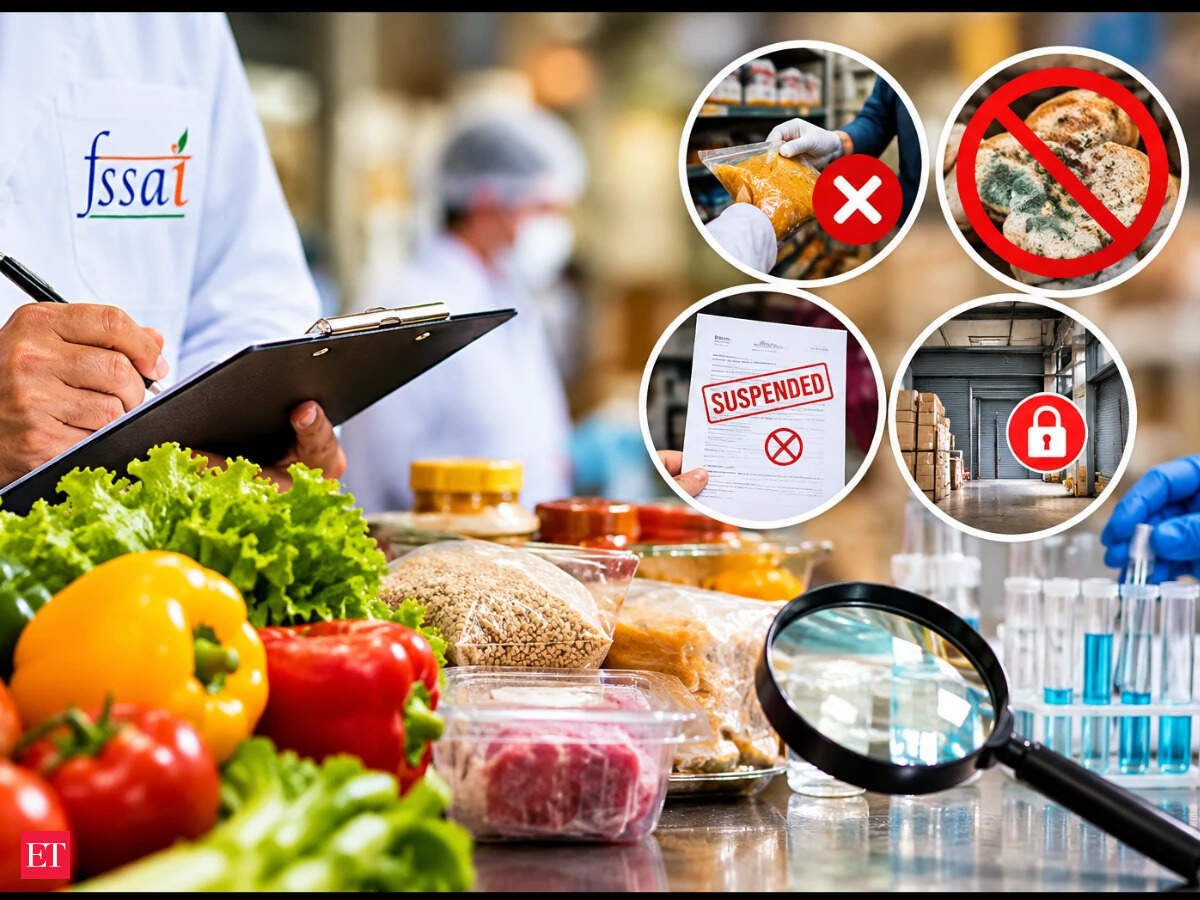
According to the figures shared by FSSAI, authorities seized 3,279.57 metric tonnes of food products during the enforcement exercise. The seized products were estimated to be worth Rs 81.80 crore.
The authority described the seizures as a significant enforcement action against banned and non-compliant food products.
The drive involved inspections across different parts of the food supply chain, with officials checking establishments for adherence to food safety requirements.
The inspection campaign also led to regulatory action against food businesses found to be falling short of prescribed standards.FSSAI’s figures show that authorities issued 10,047 improvement notices. These notices are intended to require food business operators to address identified shortcomings and improve compliance.
In addition, 1,133 food licences were suspended and 52 licences were cancelled. Authorities also sealed 314 establishments as part of the enforcement action.
The action underlines the regulatory measures available to food safety authorities when businesses fail to meet the required standards.
Food sample collection and laboratory analysis formed another part of the nationwide exercise.
As per the data shared by FSSAI, authorities collected 43,939 food samples, of which 23,648 were analysed. A total of 2,273 samples were found to be non-compliant.
The exercise also resulted in 410 prosecutions being initiated against those facing action over food safety violations.
FSSAI said it was continuing to work with State Food Safety Authorities to improve adherence to prescribed food safety standards across the food ecosystem.
The nationwide inspections are part of efforts to strengthen enforcement and address violations by food businesses. The authority said its focus remained on maintaining food safety standards through inspections and coordinated action with state-level agencies.