Burnham says he has not proposed return to EU freedom of movement, and that voters ‘need to be boss’ on Brexit rethink
Good morning. In a Today programme interview broadcast this morning at 8.10am, Shabana Mahmood, the home secretary, ended by saying this about her plans to tighten the rules that determine when foreign workers and their dependants can get settlement.
As a result of these changes, roughly half a million people who were going to settle at five years are not now going to settle. So on any measure, these are still very significant changes.
She is right, as Libby Brooks explains in her First Edition briefing on the story this morning.
But that does not mean it has not been awkward for Mahmood, who recorded the Today interview, and other interviews, last night. Although her plans amount to a very significant tightening of the indefinite leave to remain (ILR) rules, they are notably less strict than the version she announced last November, which is why they are reasonably being described as a U-turn. In her interviews she had to make two significant concessions.
-
Mahmood appeared to accept that her U-turn could cost billions. She insisted that, compared with doing nothing, her plans will lead to significant savings. But she would not dispute claims that the savings would have been far higher if she had stuck to the 2025 plans. When the BBC’s Iain Watson put it to her that the concessions would in effect cost about £7.5bn, Mahmood just said an impact assessment would be published in due course.
I will post more from these interviews soon.
Mahmood was also quite interesting on freedom of movement, an issue which has been yanked into the headlines again by an interview that Burnham gave to ITV for a documentary being broadcast tonight. Burnham said:
I have not proposed freedom of movement coming back.
I do believe that we should have an honest discussion with people about how immigration has changed since the Brexit vote because the shorter-term migration of people coming from Europe and then going back has been replaced with long-term settlement in bigger numbers, and that was the Boriswave …
I think public opinion has changed nationally.
But I want to be really clear on this issue. I will not run ahead of public opinion. The public need to be the boss when it comes to whatever happens with Brexit.
This is true, and in some respects just old news. Burnham has not made any specific proposals for a new relationship with the EU; he has just opened a debate on this.
But, in opening that debate, Burnham clearly implied that there would be a strong case for fighting the next election on a pledge to take the UK back into the single market, which would involve accepting freedom of movement rules. And Burnham has said that he would like the UK to rejoin the EU in his lifetime, which of course would also mean embracing freedom of movement. The language in the ITV interview implies Burnham is a bit nervous about being seen to have pre-judged where the debate might end up.
Freedom of movement also came up in Mahmood’s interviews. On Sky News, she refused to say what she felt about the UK rejoining the freedom of movement system. And, on the Today programme, she implied that she had not had much warning about Burnham’s decision to open up a debate on this in his speech to Labour’s conference. She also stressed that Labour was “absolutely bound by the terms of our manifesto”, which ruled out single market membership before the next election. She gave the impression that, like John Healey and Jonathan Reynolds, she is not 100% aligned with Burnham’s pro-EU aspirations.
Here is the agenda for the day.
10am: Kemi Badenoch gives a speech on defence at a rally in London.
11.30am: John Healey, the chancellor, takes questions in the Commons.
Noon: Downing Street holds a lobby briefing.
After 12.30pm: MPs resume their debate on the budget.
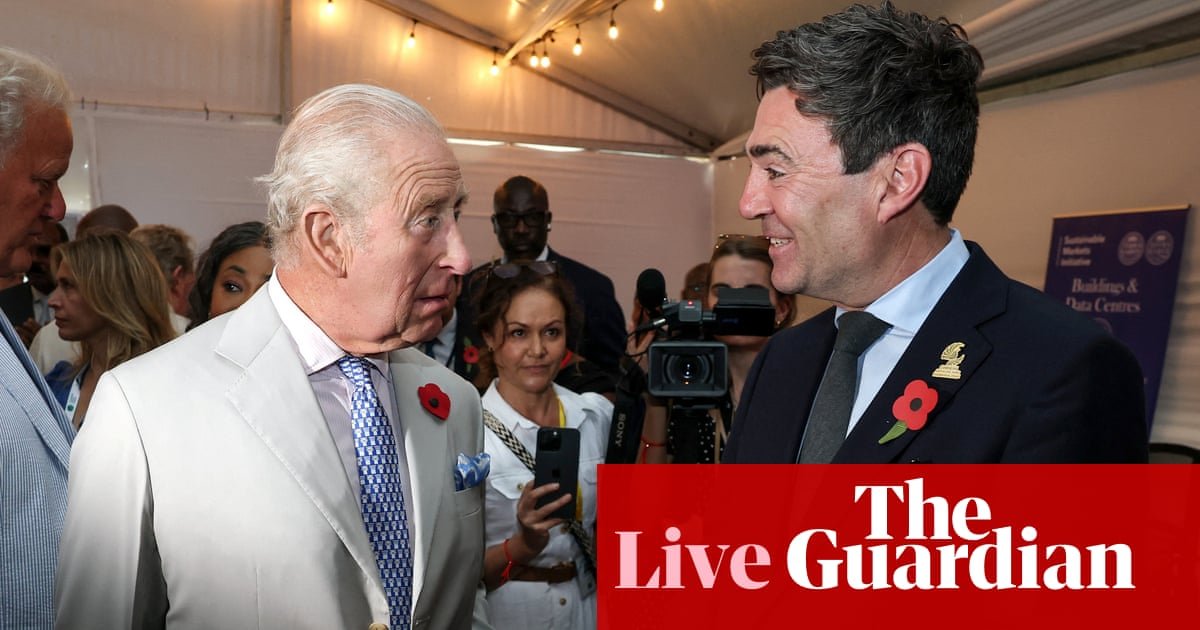
2pm (UK time): Andy Burnham and King Charles attend the opening ceremony for the Commonwealth heads of government meeting (Chogm) in Antigua. Later Burnham will be attending a heads of government meeting.
I’m afraid we are no longer able to have comments open below the line every day on this blog. If you want to contact me, please email politics.live@theguardian.com. You can use this email to flag up corrections, comments for publication, questions or complaints.

Key events
After her speech, Badenoch took questions from journalists.
Q: Should companies take responsibility for their own cyber security, or is it a job for the state?
Badenoch said private companies should take their security seriously, and get their systems upgraded.
But the government had to work with them too. And it needed to get its own house in order, she said.
Kemi Badenoch has been giving a speech on defence at a rally in London. Here are extracts released by CCHQ overnight.
Hackers have taken control of supermarket fridges and freezers across Europe, turning up the temperatures and destroying thousands of pounds of food. Imagine someone being able to ruin the food in your local supermarket without ever setting foot inside …
North Korean hackers have just stolen more than $6bn in cryptocurrency. Hostile states can steal billions to help finance their regimes without firing a single shot …
Hackers targeted power and heating plants in Poland, shutting down equipment at one facility supplying heat to 50,000 people. The operators prevented a wider disruption, but imagine someone being able to threaten your heating from behind a computer screen …
The threats are already reaching into our everyday lives, but Labour is failing to take them seriously. Last week’s Budget was the moment to fund defence, but instead we got more delays, more excuses and another plan to make a plan.
While Britain faces growing threats, Labour is busy apologising for things that happened 200 years ago, entertaining demands for reparations and watering down immigration plans to please its backbenchers. Meanwhile, businesses are closing, welfare spending is rising and defence is being neglected.
Mahmood does not contest claim care worker ILR U-turn will mean DWP saving billions less than under original plan
This is what Shabana Mahmood said in her interview with the BBC’s Iain Watson when he put it to her that the care worker U-turn in her ILR announcement yesterday (see 9.11am) would mean the government saying £7.5bn less than under the original plans. This figure seems to be based on Mahmood saying earlier this year the original plans would save £10bn, and her estimate that three-quarters of workers who would have been covered are now included in the exemption announced yesterday.
Look, I’m not going to just give you a number. It will be laid out properly in an impact assessment.
But we do already know that the changes that I have announced today, including the changes for the cohort that will now not get settlement at five years, including care workers not working in care who are most likely to fall upon the state once they got settlement, they will now be waiting longer, and that does represent billions in savings to the DWP.
If you are interested in where the £10bn figure came from in the first place, what it means and whether it is fair, there is a lot more on that in an analysis here.
Deal finalised to remove Brexit checks on food and animal products
The EU and the UK have completed their deal to remove Brexit checks on imports and exports of food and animal products ranging from sausages and cheese to leather goods and flowers, Lisa O’Carroll reports.
Burnham says he has not proposed return to EU freedom of movement, and that voters ‘need to be boss’ on Brexit rethink
Good morning. In a Today programme interview broadcast this morning at 8.10am, Shabana Mahmood, the home secretary, ended by saying this about her plans to tighten the rules that determine when foreign workers and their dependants can get settlement.
As a result of these changes, roughly half a million people who were going to settle at five years are not now going to settle. So on any measure, these are still very significant changes.
She is right, as Libby Brooks explains in her First Edition briefing on the story this morning.
But that does not mean it has not been awkward for Mahmood, who recorded the Today interview, and other interviews, last night. Although her plans amount to a very significant tightening of the indefinite leave to remain (ILR) rules, they are notably less strict than the version she announced last November, which is why they are reasonably being described as a U-turn. In her interviews she had to make two significant concessions.
-
Mahmood appeared to accept that her U-turn could cost billions. She insisted that, compared with doing nothing, her plans will lead to significant savings. But she would not dispute claims that the savings would have been far higher if she had stuck to the 2025 plans. When the BBC’s Iain Watson put it to her that the concessions would in effect cost about £7.5bn, Mahmood just said an impact assessment would be published in due course.
I will post more from these interviews soon.
Mahmood was also quite interesting on freedom of movement, an issue which has been yanked into the headlines again by an interview that Burnham gave to ITV for a documentary being broadcast tonight. Burnham said:
I have not proposed freedom of movement coming back.
I do believe that we should have an honest discussion with people about how immigration has changed since the Brexit vote because the shorter-term migration of people coming from Europe and then going back has been replaced with long-term settlement in bigger numbers, and that was the Boriswave …
I think public opinion has changed nationally.
But I want to be really clear on this issue. I will not run ahead of public opinion. The public need to be the boss when it comes to whatever happens with Brexit.
This is true, and in some respects just old news. Burnham has not made any specific proposals for a new relationship with the EU; he has just opened a debate on this.
But, in opening that debate, Burnham clearly implied that there would be a strong case for fighting the next election on a pledge to take the UK back into the single market, which would involve accepting freedom of movement rules. And Burnham has said that he would like the UK to rejoin the EU in his lifetime, which of course would also mean embracing freedom of movement. The language in the ITV interview implies Burnham is a bit nervous about being seen to have pre-judged where the debate might end up.
Freedom of movement also came up in Mahmood’s interviews. On Sky News, she refused to say what she felt about the UK rejoining the freedom of movement system. And, on the Today programme, she implied that she had not had much warning about Burnham’s decision to open up a debate on this in his speech to Labour’s conference. She also stressed that Labour was “absolutely bound by the terms of our manifesto”, which ruled out single market membership before the next election. She gave the impression that, like John Healey and Jonathan Reynolds, she is not 100% aligned with Burnham’s pro-EU aspirations.
Here is the agenda for the day.
10am: Kemi Badenoch gives a speech on defence at a rally in London.
11.30am: John Healey, the chancellor, takes questions in the Commons.
Noon: Downing Street holds a lobby briefing.
After 12.30pm: MPs resume their debate on the budget.
2pm (UK time): Andy Burnham and King Charles attend the opening ceremony for the Commonwealth heads of government meeting (Chogm) in Antigua. Later Burnham will be attending a heads of government meeting.
I’m afraid we are no longer able to have comments open below the line every day on this blog. If you want to contact me, please email politics.live@theguardian.com. You can use this email to flag up corrections, comments for publication, questions or complaints.