


 rahulOctober 24, 20264 Mins read7
It’s the art museum that almost never was.
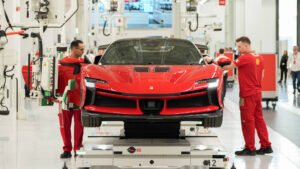
More than 20 years after billionaire François Pinault dropped plans to build a contemporary art museum on a former Renault factory site near Paris, blaming red tape, a new contemporary art center has opened in its place with an exhibition celebrating car culture.
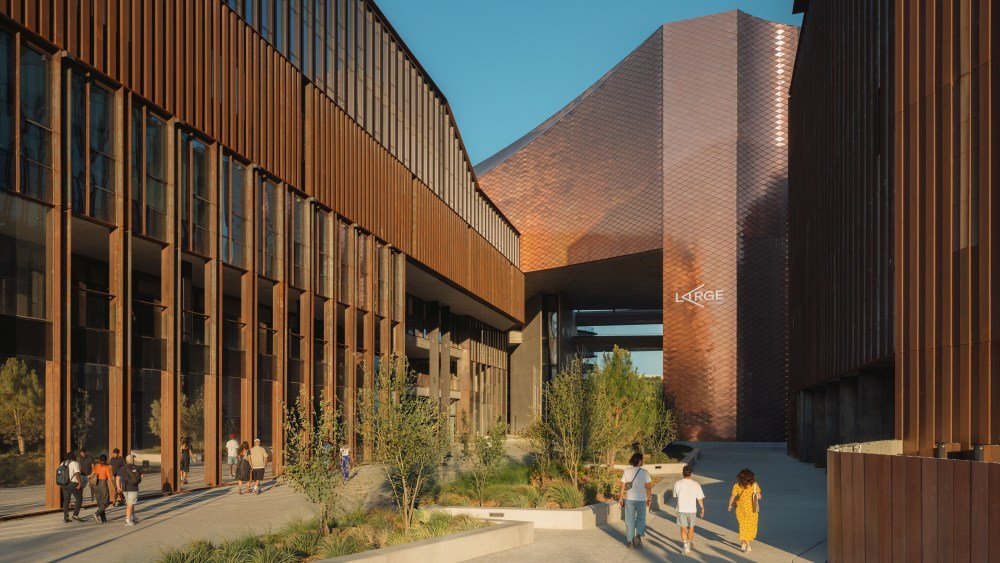
The 53,800-square-foot building, dubbed Le Large, is the passion project of Laurent Dumas, founder and president of the Emerige real estate group and its philanthropic arm, the Emerige Endowment Fund.
Designed by Pritzker Prize-winning Catalan firm RCR Arquitectes, it seeks to position Île Seguin, an island on the Seine in the western suburb of Boulogne-Billancourt, as a cultural magnet — home to a cluster of attractions that also includes the Seine Musicale music and performing arts center, a sculpture park and a multiplex.
“For me, it’s a story that began 44 years ago, when I bought my first painting at the age of 18,” said Dumas, who previously served as chairman of the board of directors of the Palais de Tokyo contemporary art museum.
“Le Large is an opening onto the wider world — an opening that is as broadly generous as possible, extending to people with limited access to the arts,” he added.
Emerige has spent some 200 million euros on the Pointe des Arts cultural district, which also includes a hotel, he said. Nearly half the museum is free to visit, including a central atrium and a coffee shop on the fourth floor with a panoramic terrace.

The interior of Le Large art center on the Pointe des Arts, Île Seguin.
© RCR Arquitectes and CALQ
Nicolas Trouillard/Courtesy of Le Large
Dumas has tapped Paula Aisemberg, former director of La Maison Rouge in Paris, to head the nonprofit organization. It will host two major exhibitions per year, designed to appeal to a broad audience, with free workshops for kids.
“These thematic and monographic projects are conceived as large-scale narratives: artistically ambitious, but still accessible to audiences encountering the work for the first time,” Aisemberg said.
Exhibitions will draw from Dumas’ personal collection of close to 2,000 works, partnerships with leading art institutions, and original commissions.
“Le Large’s mission is to showcase and support artists from the French art scene, whatever their backgrounds — from emerging generations to more established figures. The production of new works is central to these exhibitions,” Aisemberg said.
The inaugural show is curated by Cecilia Alemani, who is in charge of the public art program presented by the High Line in New York City, and was the artistic director of the 59th Venice Biennale.
Titled “Imaginary Engine,” it is rooted in the site’s industrial legacy, and includes the first major exhibition in France of masterpieces from the Renault Group’s Fund for Art and Culture.

Julio Le Parc, “Paintings in a Frieze,” 1971-1974.
Collection of the Renault Fund for Art and Culture, Boulogne-Billancourt
Julio Le Parc © ADAGP, Paris, 2026
Diane Arques © ADAGP, Paris, 2026/Courtesy of Le Large
Starting in the ‘60s, the automotive giant invited artists into its manufacturing plants, commissioning works like Julio Le Parc’s multicolored frieze made with industrial car paint, which previously decorated the staff cafeteria.
Now restored, it’s on public display for the first time, alongside creations by artists including Jean Dubuffet, Jean Tinguely and Victor Vasarely, who redesigned the Renault logo in 1972.
Catherine Gros, vice president of art, heritage and philanthropy at Renault Group, noted the factory once employed more than 30,000 people, producing a car every 90 seconds. A hotbed of strikes, it shaped the nation’s labor movements.
“There was a famous saying: ‘When Billancourt sneezes, France catches a cold,’” she said.
The exhibition celebrates these workers, many of them immigrants, through exhibits like the photographs of Robert Doisneau, who worked for Renault full-time from 1934 to 1939.
It features 17 new commissions, including Mohammed El Khatib’s “R12 Cathedral,” an installation featuring a Renault R12 with a roof rack piled with luggage that evokes North African families driving home for the holidays.

Mohamed El Khatib,
“R12 cathédrale,” 2026.
© Mohamed El Khatib
Aurelen Mole/Courtesy of Le Large
The show questions the car as object of desire through feminist or queer perspectives, and examines how humans and machines will interact in future.
“It’s about trying to shake a little bit the narrative,” Alemani explained. “I chose to focus on a story that is less known, and somehow maybe more European, than the American mythology of car culture.”
Luminaries like Judy Chicago are featured alongside rising stars like Bianca Bondi, who has created an installation around an abandoned Renault 9 that is slowly disintegrating under vegetation and saltwater.
Looking back on the origins of the project, Dumas said that, unlike Pinault, he was fortunate to receive the backing of local officials, who have approved plans to improve public transport access to Île Seguin, including the Grand Paris Express, set to roll out from next year.
“I want to mention him because a great deal of nonsense has been said. The reason François Pinault was unable to build his museum was beyond his control: it was because he lacked the support of the local elected official at the time,” Dumas said.
Pinault triumphantly returned to the French capital with the opening of his Bourse de Commerce in 2021.

Selma Selman,
“Painting on Metal, Mercedes-Benz,” 2022.
View from Rijksakademie’s installation, Amsterdam, Netherlands
Sander van Wettum/Courtesy of Le Large
Dumas hopes Le Large will become a highlight of the city’s art map itself, with two further shows in the works: a large-scale installation by Eva Jospin featuring masterpieces from the Kugel antiques gallery, and an exhibition by Martin Barré.
“This place must be open to everyone. We want a program that speaks to all audiences, including those who are not that into contemporary art. Hopefully, it will spark their interest — and make them want to come back again and again,” Dumas said.