


 rahulOctober 23, 20262 Mins read3
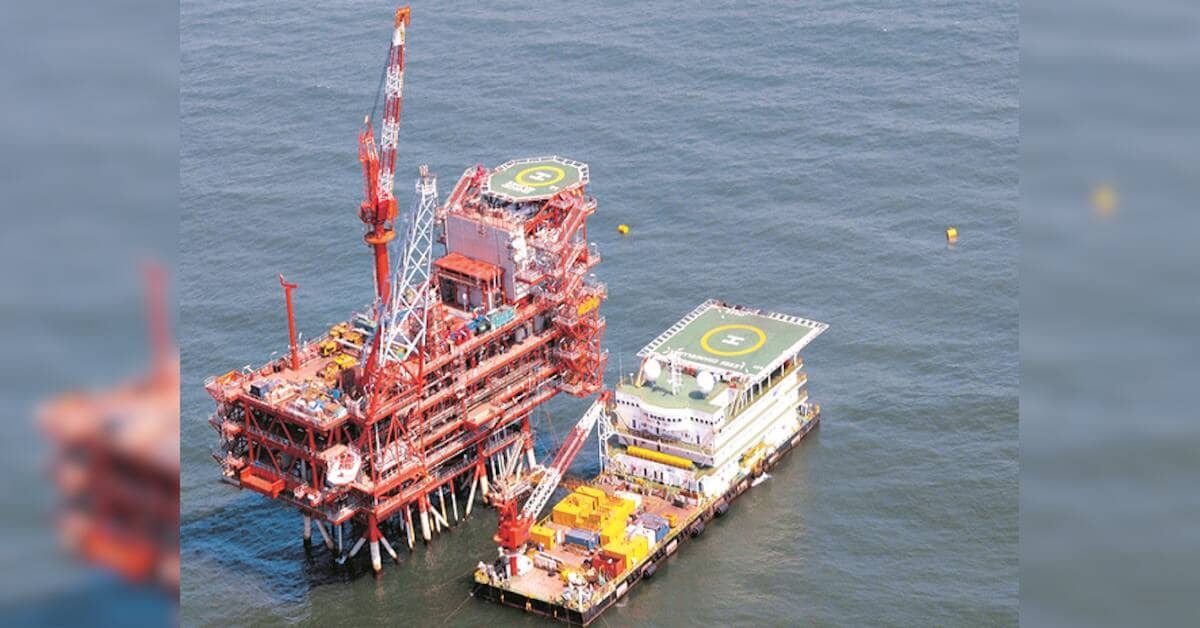
State-run Oil India Ltd (OIL) has discovered natural gas in the Matsyapuri formation in the Krishna-Godavari (KG) Basin, marking a significant development in its hydrocarbon exploration efforts, the company announced on Friday.
The discovery was made at the Godavari-1 well, an appraisal well drilled in the shallow offshore waters of the KG Basin in the discovered small field (DSF) block (KG-DSF/GSKW/2018). The block was awarded to OIL, which operates it as the sole operator, in the DSF bid rounds.
The company said hydrocarbons were encountered in one of the selected pay zones at a depth of 2,024-2,027 metres.
“Production testing of the zone started from 16th October 2026 and resulted in flow of natural gas to the surface at a flow rate of about 1 lakh standard cubic metres per day (SCUMD) with maximum flow rate of 2 lakh SCUMD achieved on continuous testing with composition of condensate at the rate of about 170 bopd (API @ 60 °F is 55.8) and water with Well Head Pressure of 1815 pounds per square inch (psi),” said OIL in an exchange filing.
The discovery in the Matsyapuri formation is notable because the formation had not previously been appraised for hydrocarbons, according to Oil India. The company is now preparing to test the next higher hydrocarbon-bearing zone in the well.
The Krishna-Godavari Basin, located along India’s eastern coast, is one of the country’s key sedimentary basins for oil and natural gas exploration. It hosts several onshore and offshore hydrocarbon discoveries and is an important region for efforts to increase domestic energy production.
India’s two largest oil and gas explorers, state-run Oil and Natural Gas Corporation (ONGC) Ltd and private player Reliance Industries Ltd (RIL), also have a presence in the Krishna-Godavari Basin, where both companies operate producing assets.
The latest discovery by Oil India in the KG Basin comes after ONGC reported a natural gas discovery in September in a deepwater exploratory well in the Mahanadi Offshore Basin off the Odisha coast. Similarly, OIL had reported the presence of natural gas in its third exploratory well, Vijayapuram-3, in the Andaman offshore basin in June.
The developments highlight ongoing efforts by state-run explorers to expand India’s domestic production as the country remains heavily dependent on imports to meet its oil and gas requirements. Discoveries that can be developed commercially could help increase domestic supplies and reduce reliance on overseas energy sources.
To support deepwater and ultra-deepwater exploration in the country, the government has launched the Samudra Manthan scheme with an outlay of Rs 84,084 crore until 2030-31. The scheme provides fiscal support for large-scale seismic surveys, drilling of 60 deepwater and ultra-deepwater exploratory wells, shared offshore production infrastructure and the development of domestic oil and gas manufacturing and services.