If everyone must work from the office, why is the office so ugly?
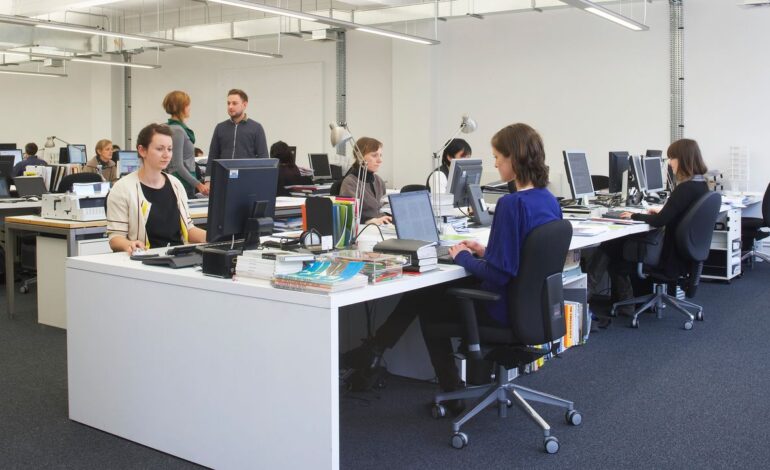

Now we have desks, and we spend surprising amounts of energy making them ours, respecting invisible lines between our workspace and the next. There are the collectors whose desks look like Pop Mart museums, the minimalists with nothing but a laptop, the ones surrounded by family, the people nurturing an Apple ecosystem, and the ones who, with millennial-coded corporate humour, make it abundantly clear they’d rather be literally anywhere else. The desks are often paired with chairs that provide an illusion of ergonomic comfort. But no matter how well-designed a chair is, after two hours of sitting upright, you can’t help it when your shoulders begin to hunch. A few couches or bean bags wouldn’t hurt.
“While the open desks are a great tool for a sense of community at work”, says Gangwani, “they can also drain energy.” For introverts, being in a space where people can constantly reach you can be exhausting. There is nowhere to disappear. Your colleagues can see when you’re typing, when you’re thinking, when you’re staring blankly into the middle distance.
Zoning out at work is a necessity. Your eyes need a break from staring at a screen. Your brain needs moments to wander, particularly if your job consists largely of thinking. Daydreaming is surprisingly productive—until you realise you’ve been staring directly at a coworker struggling to open a packet of crisps. If any office designers are reading this (I really, really, hope there are), I’d like to request some good art. I don’t expect to be greeted by a Rembrandt, but it would be nice to have a view of something soothing, stimulating, inspiring, rather than something I have to actively avoid making eye contact with.
Aanya Nair, who is required to work from the office only twice a week, quite enjoys those days. “I’m definitely more locked in at home because it does get distracting,” she says. “But at the same time, it makes it a lot easier to talk to my coworkers or ask them easy questions.” I do cherish the moments when I’m struggling and a coworker notices, wheels their way to my side and offers a solution. Sanjana Hattangdi, who has to clock in an unfortunate five days in the office each week, isn’t quite as enthusiastic. “I sit right by the corridor, so I feel like people are constantly hanging around me and looking into my screen.” She also points out that even something as simple as taking a break can feel performative. “My manager is very encouraging of me taking breaks, but people who don’t have that kind of relationship could feel like someone’s constantly watching them.” Maybe it’s leftover trauma from school but an open-plan office is steeped in a sense of surveillance. The feeling that somebody in authority might notice if you stop looking busy for even a minute.
Despite all the team-bonding activities HR could dream up, the one that actually works is spilling tea with your colleagues—often about other colleagues. That has now become a dying art, not just because it’s a workplace hazard, but because it has become so easy for anyone to eavesdrop.