
A dangerous parasite is spreading north through Central America into the US, and its weakness may be a very specific smell
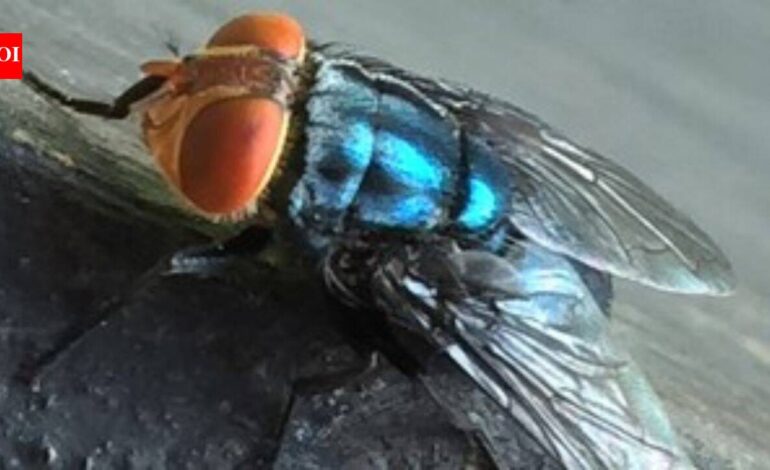

A research project that quite literally involves studying stink may help protect livestock, pets and wildlife from one of the most destructive parasites in the Americas. At Colorado State University, professor Jessica Metcalf is investigating the foul-smelling chemical signals that attract the New World screwworm, a flesh-eating blowfly whose return to the United States has alarmed animal health officials. The parasite was eradicated in the U.S. more than 50 years ago, but it was detected again in Texas in early June, making better detection tools more urgent than ever, according to Phys.org.At the centre of Metcalf’s work is a simple but powerful question: what exactly is this fly smelling when it finds an open wound? The answer could help scientists design more effective traps and prevent the parasite from spreading further across the region.
CJP Jantar Mantar Protest Updates
Why the smell matters
Most people associate bad smells with danger, and for good reason. When a wound begins to smell, it may be infected and filled with bacteria. Those bacteria release chemical byproducts that humans find unpleasant; but the New World screwworm finds it irresistible.Metcalf explains that people use these bacterial cues as warnings, helping them avoid spoiled food and other unsafe material. The fly, however, uses the same signals for a very different purpose. To a screwworm, the smell of bacteria means a possible place to lay eggs, and that open wound becomes the ideal target.The New World screwworm does not feed on dead tissue. Instead, the adult fly lays eggs in wounds or body openings, and the larvae that hatch feed on living flesh. That is what makes the parasite so dangerous. It can infest any warm-blooded animal, including cattle, sheep, goats, pets and even people, although the risk to humans in the U.S. remains low. If left untreated, infestation can become deadly, as per the CDC.
Representative image
It further shared that as of July 23, the parasite had been detected in cattle, sheep, goats and two dogs in Texas, and in one dog in New Mexico. That spread has intensified the push to improve surveillance and keep the pest from moving farther north.
The challenge with current traps
Detecting the parasite early is one of the most important steps in controlling it. But that is easier said than done. One of the most widely used lures in current traps is based on smells from rotting meat, which means it tends to attract a closely related fly called the secondary screwworm, a species that feeds on dead flesh.That creates a major problem. Traps can quickly fill up with the more common secondary screwworm, making it harder to notice the more dangerous New World screwworm. In other words, the trap gets crowded with the wrong visitor.Metcalf’s goal is to change that by building lures that are more specific to the New World screwworm. Instead of rotting-meat odors, her team is focusing on the bacterial smells associated with wounds. These smells are known as volatile organic compounds, or VOCs, chemical compounds that evaporate easily and travel through the air as scent.
What the team is studying
The research team will compare the VOCs that attract the New World screwworm with those that attract the secondary screwworm. The key question is whether the flesh-eating parasite is drawn to a different set of smells than the decomposer species that prefers dead tissue.The study also looks at the bacteria carried by both kinds of blowflies. These insects do not act alone; they carry microbial partners that can help them communicate and identify suitable hosts. In some cases, the bacteria themselves signal to other flies that a body or wound is available, which can worsen an infestation.By identifying which bacteria are present on the New World screwworm and the secondary screwworm, Metcalf and her collaborators hope to design better monitoring tools. The same knowledge could eventually be used not only to trap the pest, but also to redirect it away from live animals.
From decomposition science to animal protection
Metcalf’s work may sound unusual, but it is built on years of careful study. She says her team has spent 15 years studying the relationship between insects, bacteria and animal decomposition. Because the New World screwworm evolved from a decomposer insect, her lab was already well prepared to investigate it.That background also gives the project a second layer of value. Metcalf’s decomposition research has forensic applications, too. Her team has shown that the microbes present on a body can help determine the time of death, which is useful in criminal investigations.In that sense, the same science that helps solve forensic cases can also help protect agriculture. The underlying idea is the same: if you understand how insects and bacteria interact around decaying or damaged tissue, you can use that knowledge to build practical tools for surveillance and control.
A wider effort to stop spread
The stakes are high because the screwworm is not just a local nuisance. It is part of a wider regional outbreak that has moved through Central America and into Mexico, with U.S. officials warning that the risk remains concentrated in affected areas. The USDA reported the first animal case in the current U.S. outbreak on June 3, 2026, and continued detections have kept animal health agencies on alert.That is why research like Metcalf’s matters. Better traps mean better monitoring, and better monitoring means faster response. In a pest outbreak where every delay can matter, being able to identify the right fly at the right time may make all the difference.Metcalf’s project will be carried out with CSU colleagues Kayla Borton and Kelly Wrighton, using advanced genomic and chemical analysis tools through the Colorado State Microbiome Network, or CoSMic.
Would you support funding for research on innovative pest traps?
3k+ users shared opinion today
5k+ users already voted today
3k+ users shared opinion today
Why this research stands out
What makes this study especially interesting is its unusual logic: the key to stopping a parasite may lie in understanding the smell it loves most. The same bacteria-driven odor that warns humans of infection may be the very signal screwworms use to find vulnerable animals.If Metcalf’s team succeeds, the result could be a smarter generation of traps, improved surveillance and possibly even new strategies for steering the parasite away from living hosts. That would be a major win for livestock producers, veterinarians, wildlife managers and public health officials alike.For now, the work may be stinky. But if it helps stop a flesh-eating parasite from gaining ground, the science behind it could be invaluable.