


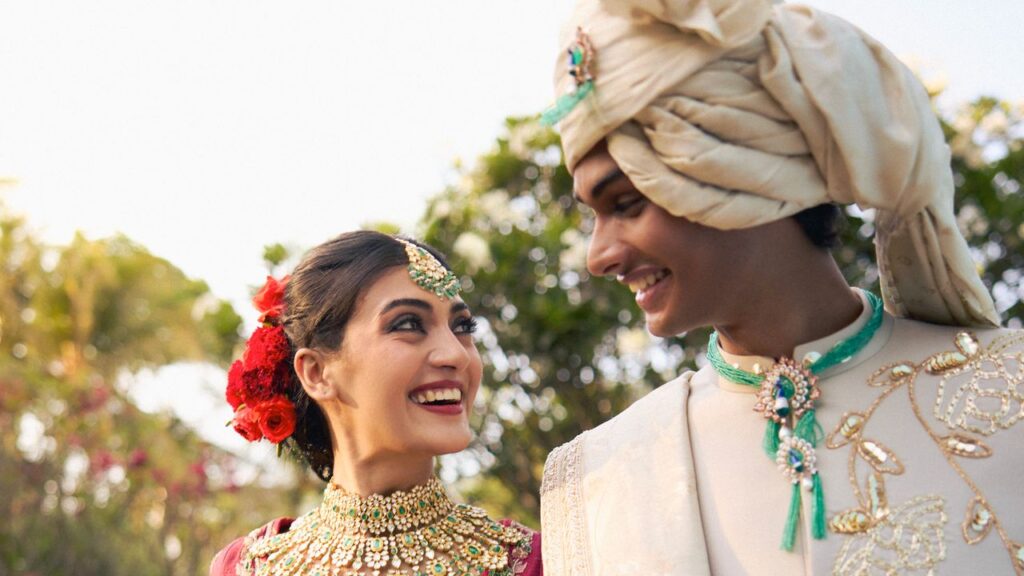
Wedding planning has a habit of taking over both the calendar and the camera roll. An outfit appointment leads to a jewellery appointment; the jewellery alters the neckline which then revives the beauty conversation everyone thought had been settled three weeks ago.
Vogue Wedding Atelier brings these together over three days at the Taj Palace, New Delhi, from August 7 to 9, 2026. Its second edition includes Indian designers, jewellery houses, international maisons and specialists working across beauty and wedding production. Visitors can view new collections, attend masterclasses and designer talks, and explore dedicated spaces for saris and menswear. Here are ten reasons to request an invitation.
1. See more than 60 wedding brands under one roof
Vogue Wedding Atelier brings together more than 60 brands across couture, jewellery and wedding services. The fashion selection includes major Indian couture houses alongside textile-led labels and contemporary occasionwear designers. Jewellery houses from across the country share the space with international names working in couture, watches and crystal. Dedicated sections cover saris and menswear, while beauty, gifting and wedding services take the planning beyond what the couple will wear.
Having everything in one place makes comparison far easier. You can see whether a necklace works with the blouse you are considering, look for a reception outfit after choosing the ceremony lehenga, or explore gifts between designer appointments. It is a rare chance to plan several parts of the wedding without spending the day ricocheting across the city.
2. Preview new collections for 2026
The new collections at Vogue Wedding Atelier revisit familiar elements of Indian bridalwear—mirror work, Mughal imagery, Banarasi weaving and the colour red—through very different techniques.
In BARADARI–Bridal 2026, Abhinav Mishra layers his signature mirrors with crystals, zari, dori and dabka across lehengas, capes and sherwanis. Rahul Mishra turns gardens, sunsets and Mughal arches into embroidered imagery for Couture Festive 2026, using zardozi, resham, sequins and pearls.
Textile development drives other collections. Kshitij Jalori introduces original brocades and his first bridal red after years of avoiding the colour, while Tilfi brings Banarasi handloom together with brass repoussé. With early access to the collections, visitors get an early look at how designers are reworking established bridal codes for the coming season.
3. Vogue Café debuts in India
Vogue Café makes its Indian debut at Vogue Wedding Atelier after editions in London, Milan, Paris and New York. The pop-up café offers a break between exhibition spaces and masterclasses. Visitors can review photographs, compare what they have seen and decide whether a particular outfit deserves a second look over coffee.
4. The groom’s wardrobe gets proper attention
At the new groom’s section at the Vogue Wedding Atelier, grooms can plan for the entire celebration instead of selecting one sherwani shortly before the deadline and hoping accessories will perform a miracle.
The selection moves from kurta sets and bandhgalas to tuxedos and sharply tailored eveningwear. Ridhi Mehra introduces menswear with sherwanis and kurta sets developed alongside the bridal collection. Sarah & Sandeep will present its contemporary suit and wedding lines, while Kanakavalli’s Anga Vastra range includes veshtis made in Kanchipuram silk.
The breadth also makes coordinated dressing easier to manage. A couple can share a colour or textile without matching every motif and becoming the human equivalent of a wedding monogram.
5. Compare jewellery styles from across India
Legacy jewellers will gather alongside contemporary houses to showcase jewellery styles that range from polki and cocktails essentials to heirloom-worthy pieces in heritage settings, temple jewellery and more.
This makes it easier to consider the jewellery wardrobe as a whole: what belongs at the wedding, what can be worn at the surrounding events and what the family collection already provides.